



Welsh Cupboard on Chest
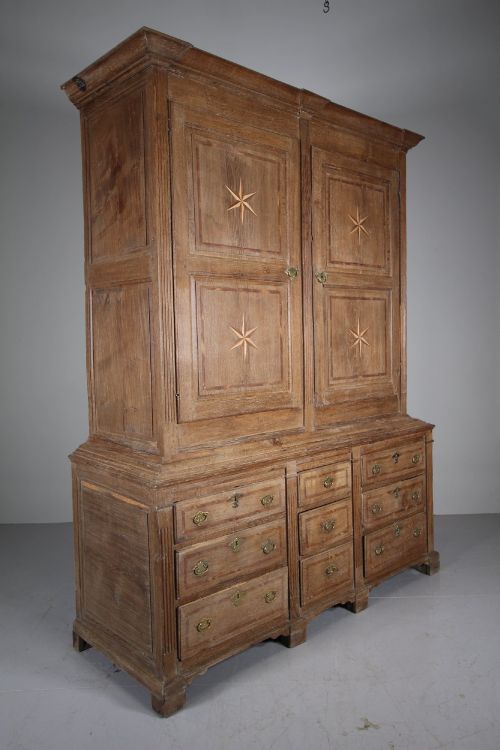
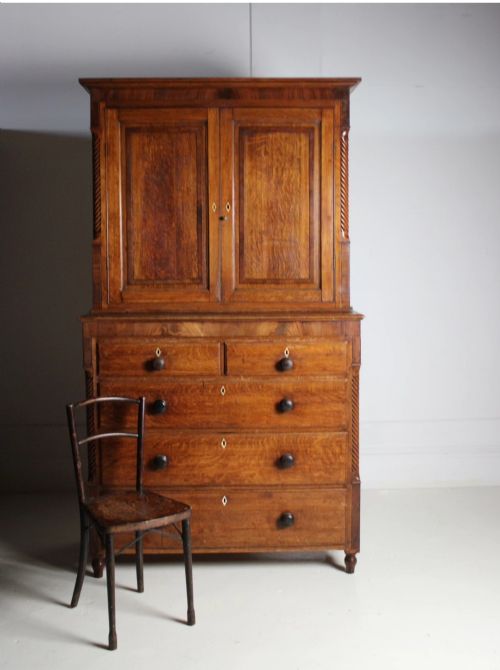
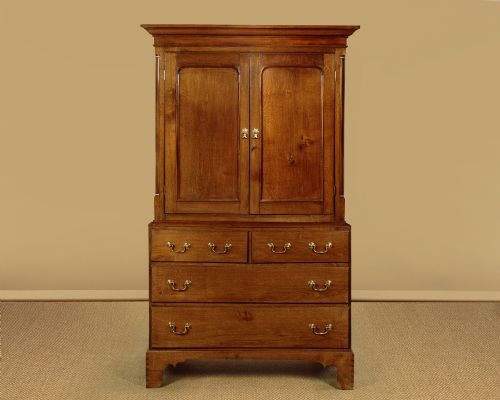
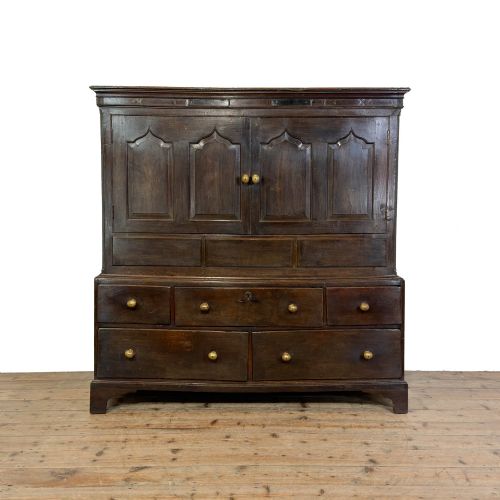
These heavy timbers give a welsh cupboard on chest its architectural presence, combining lower storage chests with upper enclosed shelving.
Welsh Cupboard on Chest
A welsh cupboard on chest sits firmly in domestic vernacular furniture traditions, combining sturdy lower box storage with upper enclosed shelving sections. Most examples encountered here stem from the eighteenth and nineteenth centuries, carrying regional characteristics particular to Welsh cabinet makers.
Forms range from low press cupboards and housekeeping units to towering two-stage press cupboards and linen presses. Many pieces integrate drawers or hanging spaces within their oak frames, reflecting the changing domestic requirements of rural households.
Makers utilised local timbers, occasionally incorporating marquetry inlay, bone inlay, or brass hardware. The resulting furniture balances utilitarian storage demands with disciplined Georgian stylistic restraint.
Evaluating craftsmanship
Finer examples demonstrate superior timber selection, with carefully matched oak boards showing consistent grain patterns across large panel doors and drawer fronts. The integration of decorative elements like bone inlay or marquetry distinguishes ambitious regional pieces from plain utilitarian storage.
Proportion and scale dictate the visual balance between the lower chest base and the upper cupboard stage. Subtle variations in cornice moulding, panel thickness, and original brass or iron hardware separate standard country workshop output from exceptional vernacular cabinet work.
Welsh Cupboard on Chest Retail Price Guide 2026
Typical asking prices for welsh cupboard on chest among the pieces listed under this phrase on Sellingantiques today, from the lower quarter to the upper quarter. They describe what is for sale here now, not the wider market.
Materials appearing alongside oak include brass, bone, iron, fruitwood, and porcelain.
The Welsh Cupboard on Chest Glossary
- Press cupboard
- A large storage furniture piece featuring upper doors enclosing shelves and lower drawers or a coffer base. They were traditionally utilised for storing folded linens and garments.
- Vernacular furniture
- Domestic pieces made by regional craftsmen using local materials rather than following metropolitan stylistic dictates. These items prioritise functional utility over courtly fashion.
- Chest on stand
- A raised storage box set upon a distinct supporting framework or base. This elevation protects contents from damp floors and creates a lighter overall silhouette.
- Marquetry inlay
- The intricate technique of fitting contrasting wood veneers into shaped recesses to form decorative patterns. It adds visual enrichment to plain oak surfaces.
- Linen press
- A specialised tall cabinet designed specifically for flattening and storing household linens. Internal sliding trays hold textiles smooth under pressure.
Welsh Cupboard on Chest: Frequently Asked Questions
What is a welsh cupboard on chest?
These imposing two-part storage items combine a heavy lower chest or base with an upper cupboard section designed for household provisions or textiles. They represent traditional rural craftsmanship rooted in eighteenth and nineteenth century domestic life.
Built primarily from solid oak, the forms include press cupboards, linen storage units, and housekeeping cupboards. They served as central storage fixtures in substantial rural homes.
How are these cupboards dated?
Dating relies on construction techniques, timber preparation methods, and stylistic cues inherited from Georgian vernacular design. Hand-sawn boards, forged iron fixings, and specific moulding profiles help place pieces within the seventeenth, eighteenth, or nineteenth centuries.
Regional construction quirks also provide clues to chronological origin. Changes in hardware styles, such as brass pulls versus iron latches, further narrow down the period of manufacture.
Where were these pieces made?
The pieces originate primarily from Welsh rural workshops and country domestic settings where local oak was readily available to regional joiners. These makers worked within distinct vernacular traditions separate from London guild standards.
Their geographical origins are evident in robust timber scantlings and practical design adaptations tailored to Welsh country households. Local material availability dictated the choice of oak and secondary fruitwoods.
How should I care for oak furniture?
Maintain stable indoor humidity levels and keep solid oak furniture away from direct heat sources to prevent timber shrinkage or splitting. Regular dusting with a dry cloth preserves the wax finish and natural patination.
Avoid silicone-based polishes which can degrade historic surface finishes over time. Feeding the dry oak with traditional beeswax occasionally keeps the timber nourished and resilient.