




Welsh Countryside Artwork
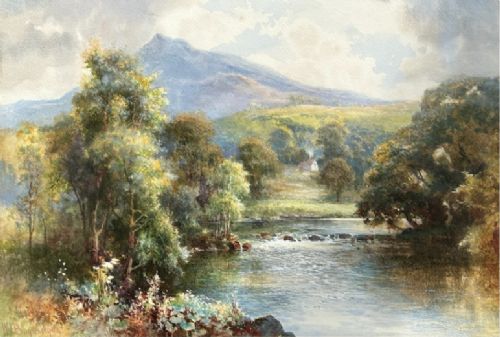
Welsh countryside artwork captures the pastoral beauty and dramatic topography of Wales through historical watercolours and oils.
Welsh Countryside Artwork
Welsh countryside artwork captures regional scenery from the nineteenth and early twentieth centuries, depicting rivers, valleys, and mountainous terrain. Buyers searching this phrase meet framed watercolours and oil paintings portraying recognisable locations such as North Wales and Cardigan Bay.
The material record spans nineteenth-century pieces up to the mid-twentieth century, showcasing Victorian realism alongside Edwardian and traditional British approaches. Common formats include original oil paintings on canvas or wood panel alongside detailed paper watercolours.
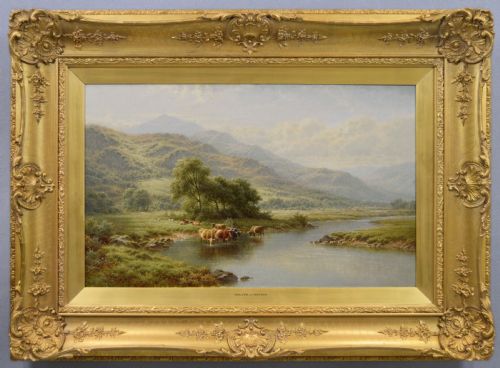
Subjects frequently centre on rural life, featuring cattle, figures, and pastoral views set against Welsh peaks like Moel Siabod. These pieces range from intimate river scenes to expansive valley landscapes executed by named period artists.
How they were made
Painters utilised oil paint applied to canvas, wood panel, or card, building rich textures to represent rugged terrain and atmospheric skies. Watercolours on paper provide lighter, translucent depictions of Welsh rivers and coastal bays.
Surviving works often retain period framing executed in gesso and giltwood, complementing the painted surface. Support structures rely on traditional wood and canvas preparations typical of British nineteenth and early twentieth-century workshops.
Cows make frequent appearances in these valleys, outnumbering the human figures by a comfortable margin.
What varies in quality
Superior execution shows in the handling of light across mountainous topography and the careful rendering of atmospheric weather in Welsh valleys. Weaker examples rely on formulaic foliage and static compositions that lack topographical conviction.
The strength of provenance and the clarity of artist attribution elevate certain pieces above anonymous topographical output. Finely preserved giltwood frames and untouched original canvas surfaces further distinguish the upper tier of works.
Sidney Richard Percy·Thomas Spinks·Walter J Watson·Harold Lawes·William Langley·Henry Brittan Willis·David Bates·William Mander
The Welsh Countryside Artwork Glossary
- Gesso
- A plaster-like material applied to wood before gilding or painting. It provides a smooth base for ornate picture frames.
- Giltwood
- Timber carved and coated with gold leaf. This material frequently appears in period frames housing nineteenth-century landscapes.
- Watercolour
- Pigment ground in a water-soluble binder and painted onto paper. It produces translucent washes suited to river and coastal views.
- Wood Panel
- A rigid wooden support used by artists in place of canvas. It offers a firm surface for detailed oil painting.
Welsh Countryside Artwork: Frequently Asked Questions
How do I date a Welsh landscape painting?
Dating relies on stylistic clues, framing materials, and artist biographies recorded in the work. Nineteenth-century pieces often display detailed realism, whereas later twentieth-century examples shift towards impressionistic brushwork.
Signatures, exhibition labels, and canvas stamps on the reverse provide further chronological evidence. Comparing the depicted topography with historical maps helps confirm the active period of the artist.
Where were these paintings displayed?
These works hung primarily in domestic drawing rooms and parlours across Britain during the Victorian and Edwardian eras. Owners favoured scenes celebrating rural tranquility and national topography.
Subsequent generations maintained these landscapes in traditional home settings, valuing the regional connection to Wales. Today, they remain suited to period interiors and gallery walls alike.
What subjects appear most often?
River valleys, mountain ranges, and coastal bays dominate the regional subject matter. Artists frequently recorded specific locations such as the River Llugwy and Cardigan Bay.
Staffage figures and grazing cattle often populate the foreground to establish scale against dramatic peaks. Pastoral scenes emphasise the agricultural and natural harmony of the Welsh terrain.
Are watercolours as durable as oils?
Works on paper require careful protection from direct sunlight to prevent fading of the delicate pigments. Glazing with appropriate glass helps shield watercolours from atmospheric moisture.
Oil paintings on canvas or wood prove more resilient but still benefit from stable indoor humidity. Both mediums survive well when kept away from extreme environmental fluctuations.