
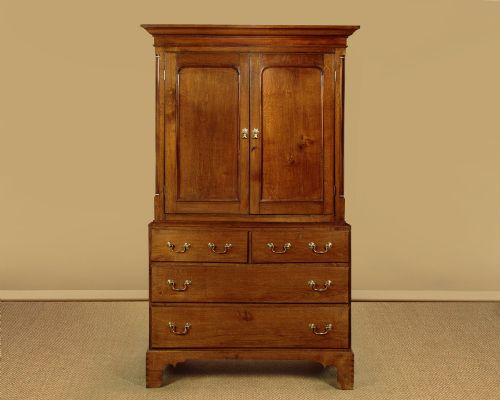
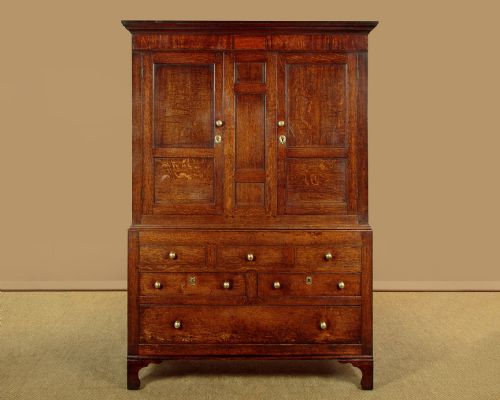


Welsh Clothes Press
A welsh clothes press is a substantial storage piece built for domestic linen and garments, uniting regional vernacular craft with Georgian design.
Welsh Clothes Press
When you search for a welsh clothes press, you encounter large timber storage furniture designed to house household textiles and clothing. The forms seen here span press cupboards, linen presses, livery cupboards, and hanging cupboards, originating from eighteenth-century and nineteenth-century periods.
You are most likely to meet oak examples from the Georgian era, often showing regional characteristics specific to areas such as Cardiganshire and Mid Wales. These pieces frequently utilise a two-stage construction, combining lower cupboard space with upper sections intended for hanging or folding linens.
The objects vary from low press cupboards to tall architectural cabinets, reflecting the domestic storage needs of Welsh country houses and farmsteads. Vernacular details distinguish these regional pieces from standard English urban cabinet work.
Materials and construction methods
The primary material across these pieces is solid oak, complemented by secondary timbers such as pine used for internal shelving and drawer linings. Joinery relies on traditional pegged mortise and tenon frames, panelled doors, and hand-cut dovetails within the drawer construction.
Surface ornamentation is restrained, occasionally incorporating marquetry inlay, bone inlay, or applied paint finishes to highlight the structural panels. Hardware consists of brass and iron handles, hinges, and escutcheons fitted to secure heavy timber doors.
Housekeepers historically kept linens fresh inside these heavy oak carcasses using lavender sprigs tucked behind pegged panels.
Assessing quality in regional cabinetry
Quality rests upon the selection of timber and the integrity of the vernacular joinery. Superior examples demonstrate dense, well-figured oak boards with harmonious grain patterns across the front panels and cornices.
Proportion and proportion balance define the better pieces, where regional idiosyncrasies do not compromise the structural strength of the two-stage carcass. The crispness of hand-planed mouldings and the retention of original brass or iron hardware further distinguish finer items.
The Welsh Clothes Press Glossary
- Press cupboard
- A large storage cabinet featuring enclosed shelving or hanging space, historically used for linen and garments. These pieces often incorporate a dual-stage layout with upper and lower compartments.
- Livery cupboard
- An early form of storage furniture designed for provisions or clothing, pre-dating dedicated wardrobes. They typically display robust panelled doors and ventilation piercings.
- Vernacular
- Architecture and furniture created by local craftsmen using regional traditions and native materials rather than formal academic styles. This approach prioritises utility and local availability of timber.
- Two stage
- A structural configuration where the cabinet is built in two distinct vertical sections, usually a larger lower base supporting an upper cupboard. This method aided transportation through narrow farmhouse doorways.
- Marquetry inlay
- Decorative patterns formed by fitting contrasting pieces of wood into carved recesses within the primary timber surface. It appears sparingly on select regional surfaces.
Welsh Clothes Press: Frequently Asked Questions
What is a welsh clothes press used for?
These large timber cabinets were historically utilised for storing household linens, blankets, and folded garments in domestic settings.
Today, they function as substantial wardrobe and storage units within bedrooms or hallways, accommodating modern clothing alongside books or general household items.
How do I date an antique press cupboard?
Dating relies on examining construction techniques, timber preparation methods, and stylistic details such as mouldings, panel configurations, and hardware. Earlier eighteenth-century pieces often display hand-sawn boards and pegged joinery.
Comparative analysis with regional examples from specific localities like Cardiganshire helps narrow down the period of manufacture between the Georgian and Victorian eras.
Where were these cupboards made?
They were produced by local joiners and country cabinet makers working in Welsh rural workshops and farmsteads. Regional traditions heavily influenced their construction.
Makers utilised native hardwoods, particularly oak, sourced from local woodlands to build furniture suited to Welsh domestic architecture.
How do I care for an oak press?
Maintenance involves keeping the timber away from direct heat sources and rapid humidity fluctuations to prevent wood movement and splitting. Regular dusting with a dry cloth preserves the dry-waxed finish.
Applying occasional appropriate beeswax feeds the historic oak surface without sealing the pores of the timber.