



Weathered Iron Planter Pot
These weathered iron planter pot pieces bring industrial strength and timeless garden gravitas to any terrace.
Weathered Iron Planter Pot
When you search for a weathered iron planter pot, you encounter robust garden vessels shaped from durable metal or cast in heavy forms. These utilitarian yet decorative objects anchor outdoor spaces with grounded silhouettes.
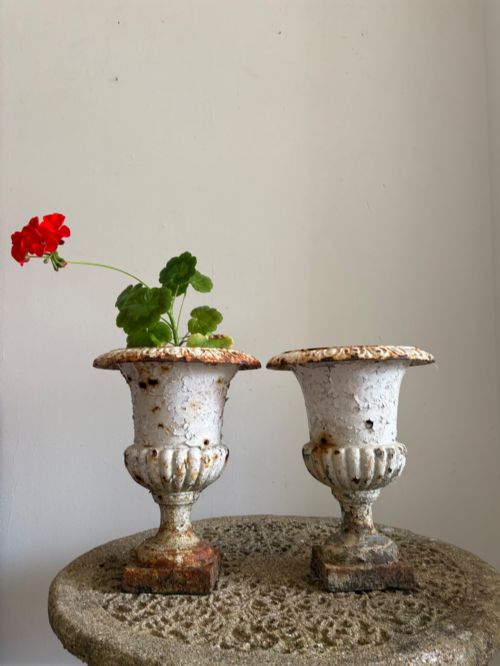
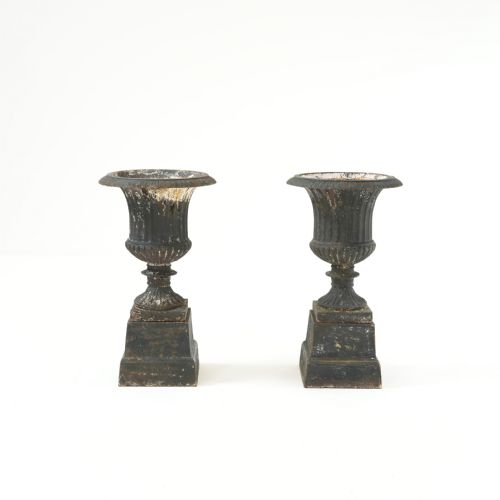
The most common examples on this page date from the Victorian period through the early twentieth century. You will frequently find matching pairs designed to frame pathways or accentuate formal garden entrances.
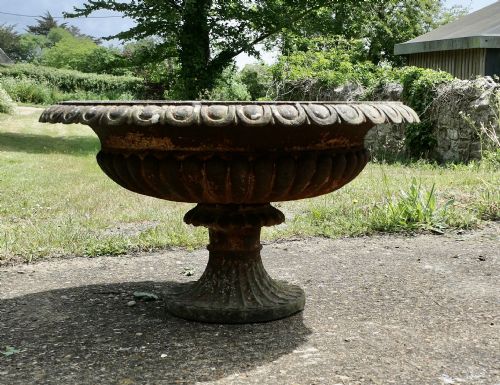
Forms range from classical campana shapes and gadrooned bodies to rustic strapwork constructions. They balance heavy metal engineering with ornamental flourishes suited to nineteenth century landscape design.
How they were made
Foundry workers poured molten metal into sand moulds to create solid cast iron bodies. This technique allowed for crisp fluting and ornate neoclassical details that endure decades of outdoor exposure.
Wrought iron strapwork versions required blacksmiths to hammer and bend heated bars into open geometric cages. Sheet iron and steel variants utilised riveted plates for lighter, industrial garden containers.
Many surfaces received layers of protective paint or developed natural oxidation over time. These patinas provide the characteristic weathered texture prized in traditional garden design.
The listings on this page span the Victorian era, Edwardian period, and mid-twentieth century, featuring cast iron, wrought iron, and steel.
What varies in quality
The distinction between standard containers and superior examples lies in the crispness of the casting. Finer pieces retain sharp relief on gadrooning and foliage motifs without distortion from worn moulds.
Wall thickness and structural integrity dictate the longevity of each vessel. Heavier metal gauge and intact drainage channels separate workshop masterworks from lighter utility wares.
Original painted surfaces or honest, stable patinas command greater appreciation than modern over-painting. The balance between structural soundness and age-related weathering determines the tier of the piece.
The Weathered Iron Planter Pot Glossary
- Campana urn
- A bell-shaped garden vessel with an everted rim, commonly mounted on a pedestal base. This classical silhouette originated in antiquity and found widespread favour in Victorian gardens.
- Gadrooned
- Decorated with a series of convex curves or flutes moulded into the body of the vessel. This ornamental detail adds textural depth to the lower bowl of cast iron planters.
- Strapwork
- Ornamental work composed of flat, interlaced bands of metal resembling leather straps. Wrought iron versions utilise this technique for openwork garden containers.
- Terracotta
- Fired clay used alongside iron in garden ornament collections. While distinct from metal, these porous pots share similar traditional garden functions.
Weathered Iron Planter Pot: Frequently Asked Questions
Are these planters heavy to move?
Cast iron and steel vessels possess substantial weight, especially when filled with soil and plants. Positioning them often requires two people or mechanical assistance.
Once placed in a garden setting, their mass prevents tipping during strong winds or heavy storms.
Can I leave them outside in winter?
Cast iron and heavy metal garden vessels withstand frost and low temperatures effectively. Ensuring proper drainage prevents trapped water from expanding and cracking the metal.
Elevating pots slightly off the ground on feet or plinths protects the base from standing moisture.
How do I clean a weathered iron planter pot?
Gentle brushing removes loose dirt and organic debris without disturbing the historic surface patina. Harsh chemical cleaners strip protective oxidation and original paint layers.
Allowing the natural weathering process to continue preserves the antique character of the metal.
Do these pots have drainage holes?
Most traditional garden urns and planters include central drainage apertures in the base. This prevents waterlogging and protects plant roots from decay.
Checking the base condition ensures proper water management for your plantings.