





Weathered Iron Garden Pots
Weathered iron garden pots bring classical gravitas and enduring structure to a terrace, and you will find sturdy cast examples waiting here.

Weathered Iron Garden Pots
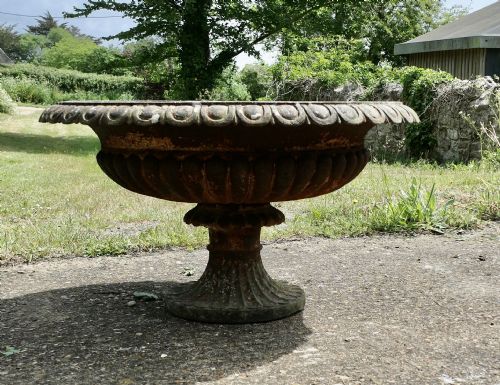
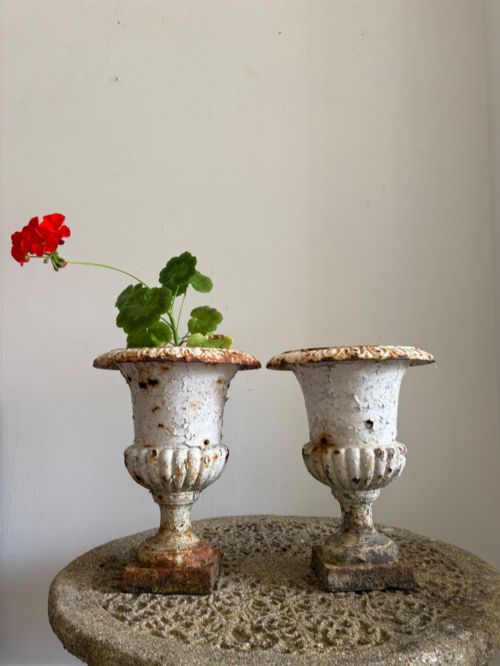
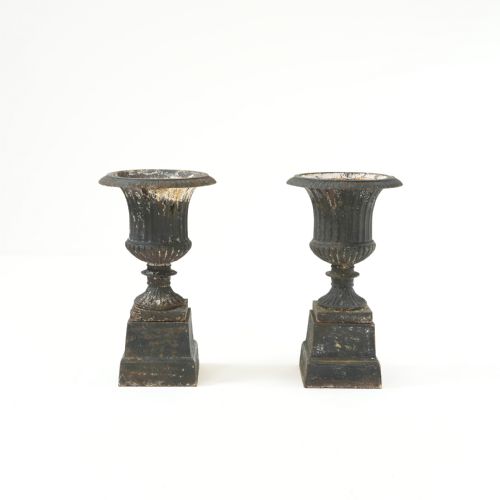
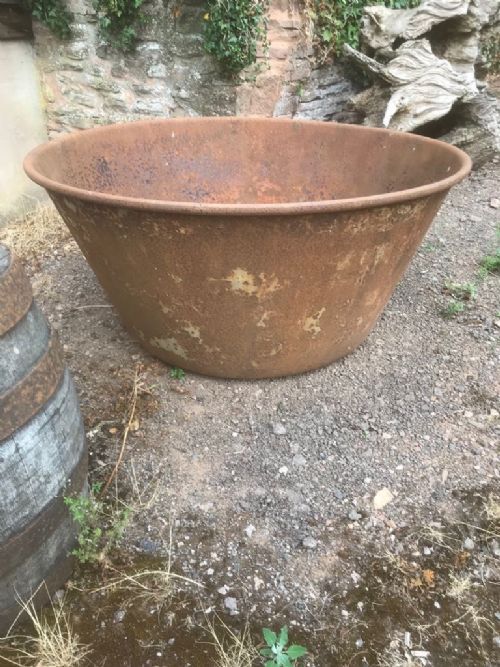
Weathered iron garden pots span robust Victorian campana urns and tall classical planters designed to anchor outdoor spaces. When you search for weathered iron garden pots, you encounter heavy cast iron vessels shaped by decades in English gardens.
The pieces on this page lean heavily towards nineteenth century and Victorian production, alongside early twentieth century pairs. These sturdy garden urns and planters range from compact decorative pots to large fluted forms standing on stone or iron plinths.
How they were made
Foundries produced these heavy vessels by pouring molten metal into sand moulds, creating thick walls that could withstand frost and outdoor weight. Manufacturers utilised cast iron for its ability to hold crisp neoclassical and Gothic revival details.
Some examples combine cast elements with wrought iron strapwork or sheet metal construction. Surfaces often retain layers of original distressed paint or natural rusted patination earned through long exposure to the elements.
Weathered Iron Garden Pots Retail Price Guide 2026
Typical asking prices for weathered iron garden pots among the pieces listed under this phrase on Sellingantiques today, from the lower quarter to the upper quarter. They describe what is for sale here now, not the wider market.
Gardeners occasionally discover stubborn nineteenth century drainage holes blocked by centuries of forgotten soil and root growth.
What varies in quality
Quality rests in the crispness of the casting and the proportion of the classical ornament, from gadrooned rims to heavy fluted bodies. Superior pots display clean lines and deep relief work that remains sharp beneath layers of weathered paint.
The presence of matching pairs elevates a piece above solitary utilitarian vessels, particularly when they retain their original supporting plinths. Structural integrity and genuine age separate fine nineteenth century examples from later utilitarian castings.
The Weathered Iron Garden Pots Glossary
- Campana urn
- A bell shaped garden vessel with a flared rim and tapering body, popular in classical and Victorian design. These form the bulk of traditional garden ornamentation.
- Gadrooned
- Decorated with a series of convex curves or flutes moulded in a parallel pattern around the body or rim. This ornamental detail adds visual weight to the vessel.
- Strapwork
- Ornamental work formed of flat, interlaced bands of metal, often seen on utilitarian or Gothic revival planters. It provides structural reinforcement alongside decorative appeal.
- Plinth
- A heavy rectangular or square base that elevates an urn or planter above the ground. Proper plinths complete the classical silhouette of garden display pieces.
Weathered Iron Garden Pots: Frequently Asked Questions
How do I clean weathered iron pots?
Brush away loose dirt and debris gently using a soft bristle brush to protect the aged surface patination and original paint.
Avoid harsh chemical strippers or abrasive pads that remove the historical character and rusted protection built up over decades.
Can these pots stay outside in winter?
Cast iron vessels withstand cold temperatures well due to their heavy metal walls, though proper drainage prevents ice expansion.
Elevate the base slightly off frozen ground using pot feet so moisture escapes freely through the drainage hole.
How do I date a cast iron urn?
Examine the casting seams, surface texture, and stylistic markers such as Victorian neoclassical motifs or Gothic revival strapwork.
Heavier sand casting methods and worn distressed paint layers typically point towards nineteenth century English manufacture.
What plants suit deep iron urns?
Trailing ivy, box balls, and structural conifers contrast sharply against the dark metal and classical lines of these planters.
Ensure adequate internal plastic lining or gravel layers protect the inner walls if planting directly into older vessels.