



Weathered Cast Iron Urn
Weathered cast iron urn pieces bring classical gravity to garden spaces through durable metal forms and time-worn paint.
Weathered Cast Iron Urn
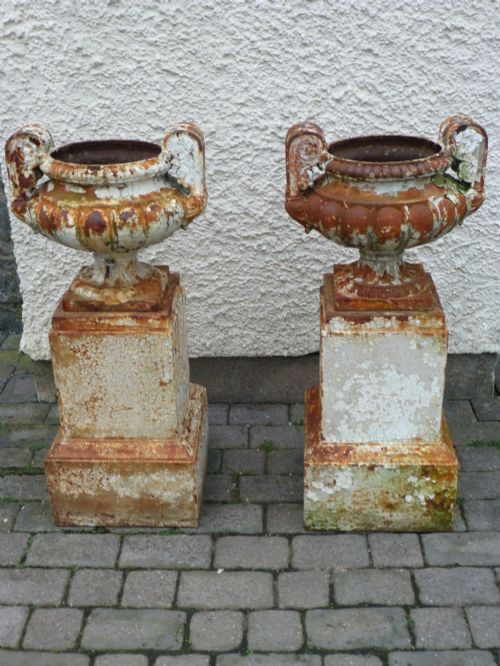
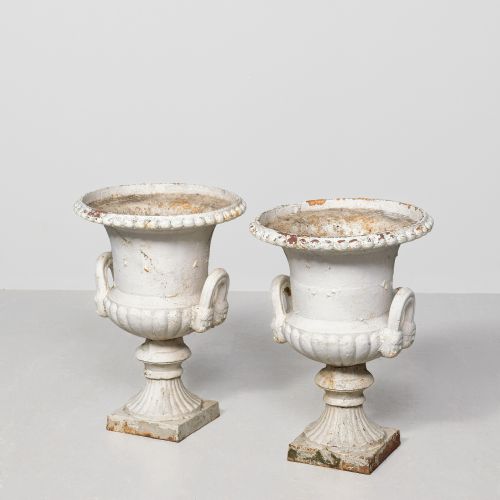
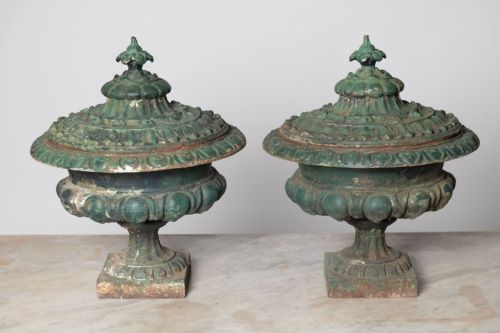
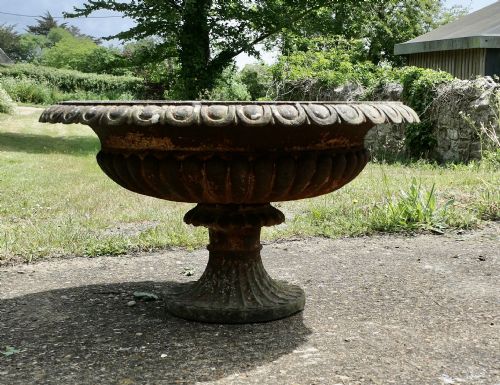
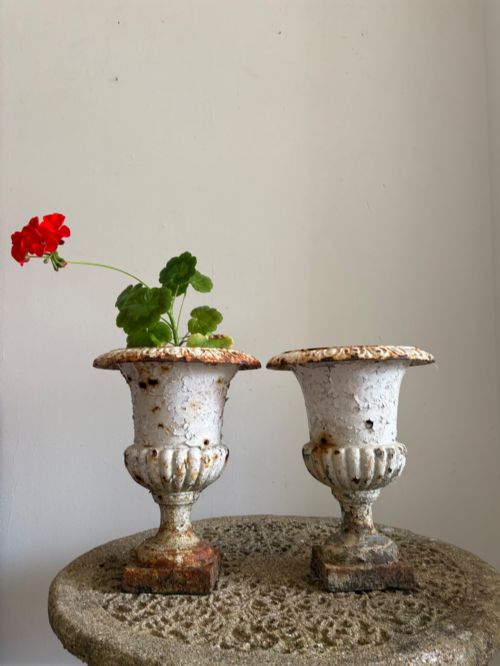
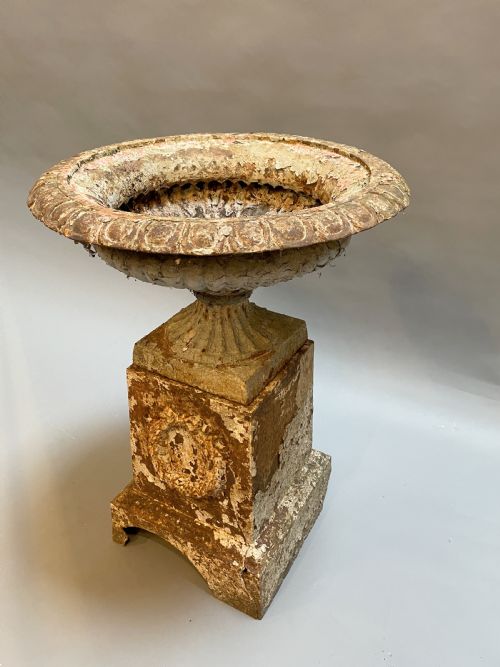
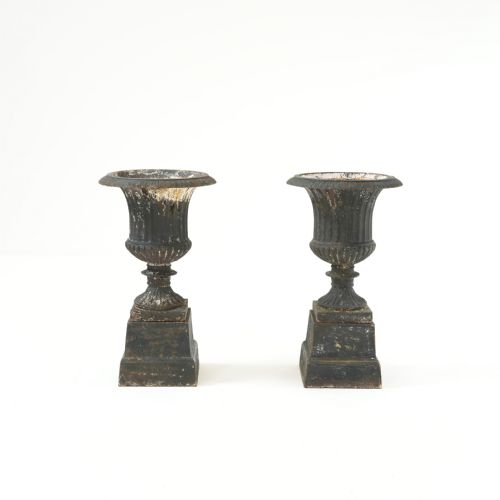
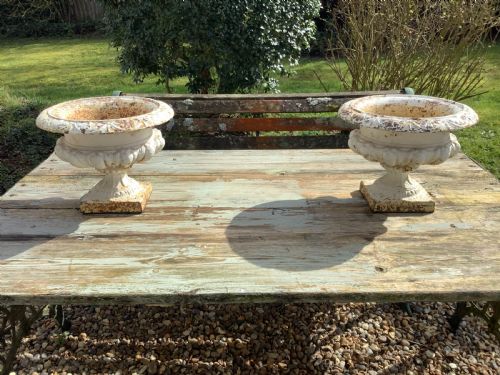
A weathered cast iron urn takes the form of heavy garden vessels designed for outdoor display, often appearing as deep bowl shapes set upon matching plinths. When searching for a weathered cast iron urn, buyers encounter garden planters and tazza urns that draw upon classical forms originating from nineteenth-century foundry traditions. These pieces frequently surface as pairs, offering symmetrical presence for terrace settings, garden pathways, and stone courtyards.
The dominant style visible across the selection follows nineteenth-century neoclassical and Victorian classical revival aesthetics, featuring gadrooned rims and campana profiles. Dating ranges from the Regency period through to mid-twentieth-century examples, with nineteenth-century and Victorian items forming the core of the available pieces. Origin points include English foundries alongside French chateau and country designs, reflecting broad European garden ornamentation traditions.
Foundry methods and materials
Production relies on molten metal poured into moulds to create heavy cast iron vessels with substantial structural wall thickness. Foundries such as Falkirk and Andrew Handyside utilised traditional sand-casting techniques to shape elaborate classical ornamentation, including fluted bodies and distinct rim details.
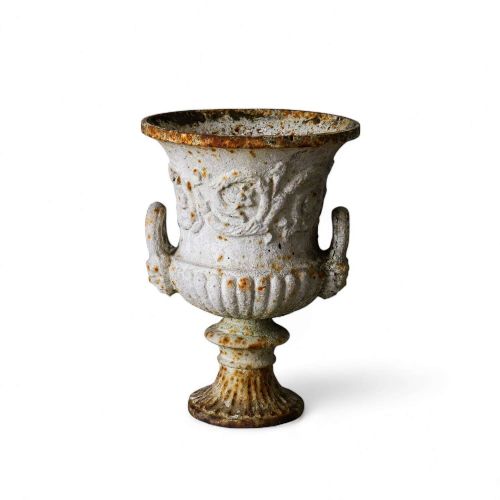
Surface finishes incorporate layers of paint over raw metal, which over decades develops flaking and weathering through exposure to outdoor elements. Original stone-effect or painted coatings interact with rust and weathering to produce the characteristic aged patination found on these garden antiques.
Some nineteenth-century foundry workers snuck secret initials into the gadrooned folds, turning heavy iron into hidden signatures.
Evaluating quality and authenticity
Quality rests upon the crispness of the cast ornamentation and whether the vessel retains its matching original plinth or lid. Pieces produced by documented foundries display sharper detailing in gadrooning and classical motifs than anonymous later castings.
The integrity of the metal body and the authenticity of the surface patination distinguish finer examples. Genuine age-related weathering and original distressed paint layers hold greater appeal than uniform modern repainting.
Falkirk Carron foundry·Andrew Handyside
The Weathered Cast Iron Urn Glossary
- Gadrooned
- A decorative carved or cast motif consisting of convex curves or fluting arranged in a parallel series around the rim or body of an urn.
- Tazza
- A shallow bowl-shaped vessel mounted on a stem and foot. In garden metalwork, this form provides a wider display area for plants compared to deep campana urns.
- Plinth
- The base block upon which a garden urn stands. Original matching plinths elevate the vessel and complete the classical architectural silhouette.
Weathered Cast Iron Urn: Frequently Asked Questions
How do I place an urn in a garden?
These vessels suit placement on terrace edges, flanking garden gateways, or serving as focal points at the end of stone pathways. Their substantial weight provides stability outdoors without requiring permanent fixing.
Pair arrangements look particularly effective when positioned symmetrically on either side of an entrance or at the top of stone steps.
Are these urns frost resistant?
Cast iron possesses inherent strength against cold weather, though adequate drainage is essential to prevent trapped water from expanding inside the bowl during freezing conditions. Raising the base slightly off the ground helps protect the metal from prolonged dampness.
Ensuring soil is properly packed and not blocking internal drainage holes maintains the condition of the iron through winter seasons.
How do I date a cast iron urn?
Dating relies upon stylistic markers such as nineteenth-century neoclassical proportions, gadrooned detailing, and the presence of foundry marks from makers like Falkirk or Andrew Handyside. Earlier examples from the Regency and Victorian periods often feature heavier casting and distinct patination.
Comparing the form against documented Victorian and Edwardian garden ornament catalogues helps narrow down the production era.