


Waterfall Display Stand
A waterfall display stand offers tiered open shelving for books and objects, combining graduated shelves with practical storage.
Waterfall Display Stand
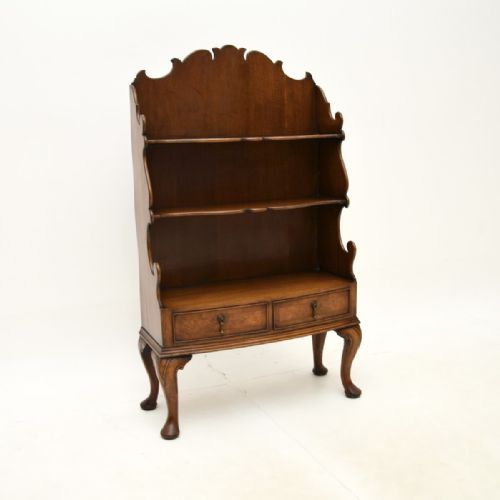
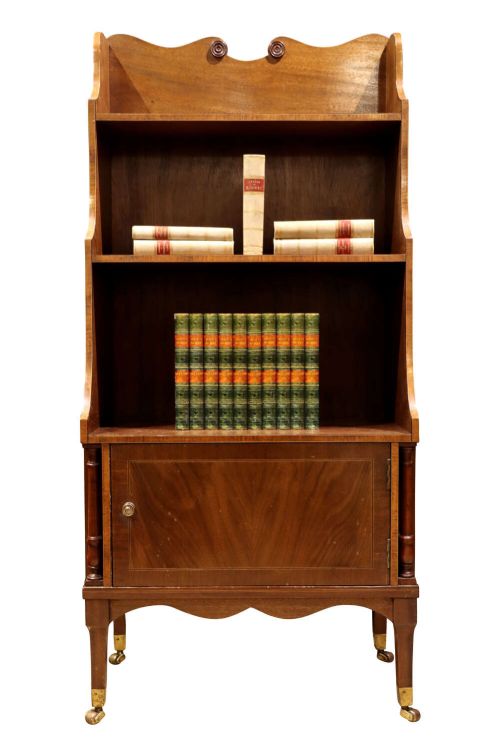
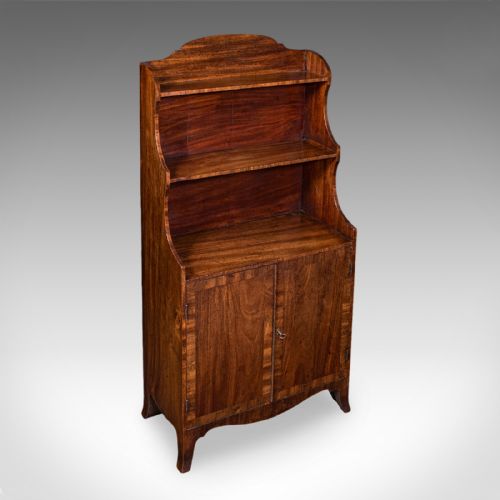
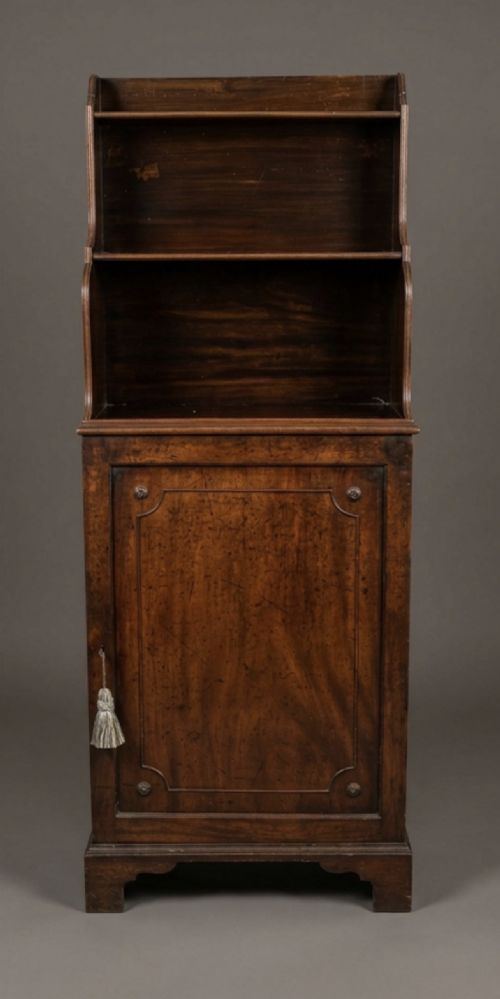
A waterfall display stand provides graduated shelves that step back from bottom to top, creating a distinct descending profile. These pieces function primarily as open bookcases or display shelving for books, ceramics, and cabinet pieces.
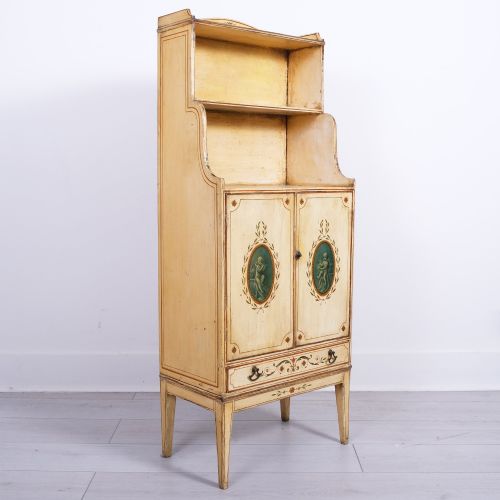
The form appears in mahogany, oak, rosewood, and satinwood, often featuring lower cupboards or drawers beneath the open tiers. Examples range from compact Georgian pieces and Regency designs to Edwardian and Victorian iterations.
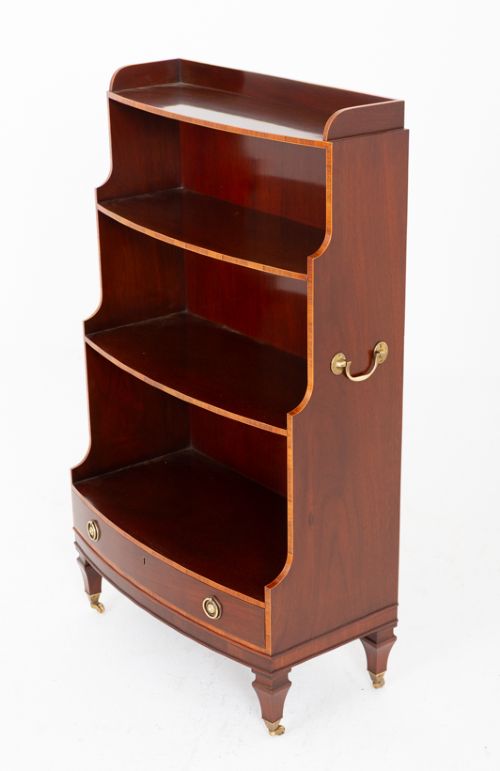
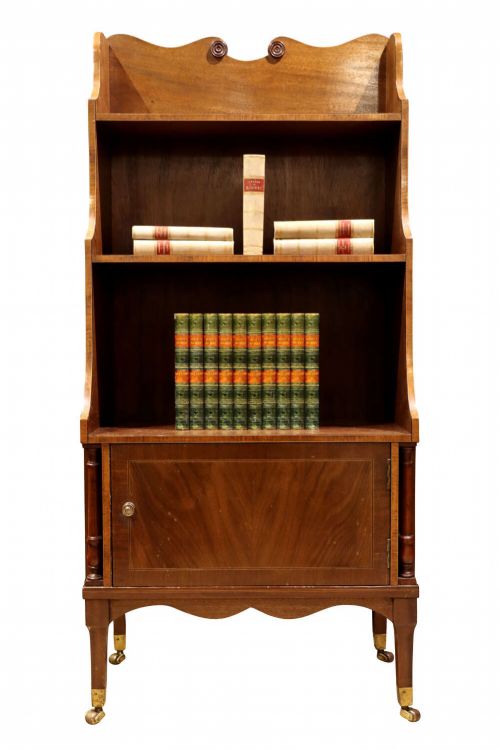
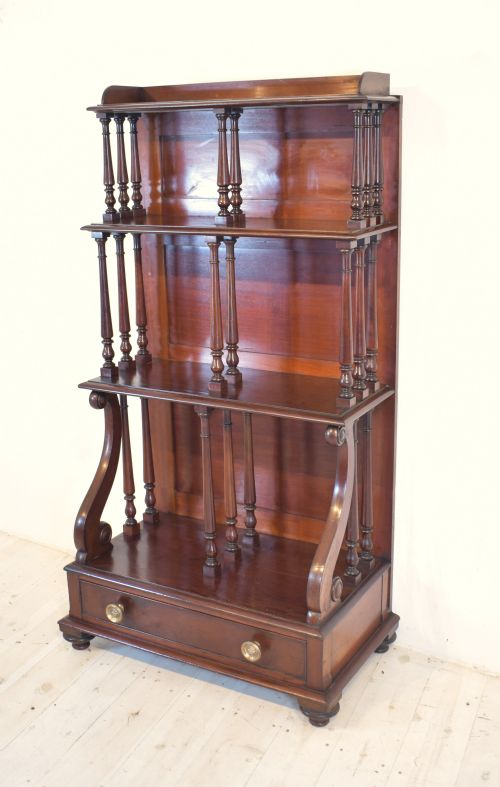
Makers construct these stands as freestanding furniture, sometimes incorporating brass castors, fret-cut brackets, or gallery rails along the upper tiers. The configuration adapts easily to different room layouts while holding a substantial volume of volumes.
Materials and construction methods
Makers utilise timbers such as mahogany, rosewood, oak, and satinwood, frequently selecting flame mahogany veneers for the principal surfaces. Selected pieces incorporate inlaid details and painted finishes.
Structural elements include open tiered shelving supported by side panels or turned columns, occasionally mounted upon brass castors. Lower sections frequently integrate enclosed cupboards with doors or single drawers.
Selected tiered stands roll smoothly across the rug on tiny brass shoes, ready to follow you from the parlour to the library.
Distinctions in quality
The refinement of the timber selection dictates the overall merit of the piece, with figured grains and rich natural patination marking out superior examples. Plain timber surfaces reflect more utilitarian workshops.
Gillows
The Waterfall Display Stand Glossary
- Waterfall bookcase
- A piece of furniture featuring open shelves that step back progressively from the lowest tier to the highest. This design maximises display space while maintaining a compact footprint.
- Etagere
- A set of open shelves used for displaying ornaments and small objects. These pieces stand freely and often feature multiple ascending tiers.
- Flame mahogany
- Mahogany timber cut to reveal a distinctive flamed or swirling grain pattern. Cabinet makers prize this decorative veneer for principal display surfaces.
- Chiffonier
- A small sideboard or low cabinet equipped with shelving or drawers. Examples occasionally incorporate tiered display sections above the lower cupboard base.
- Brass castor
- A small wheel mounted on a swivel attached to the base of furniture legs. These fittings facilitate the movement of heavier display stands across floor surfaces.
Waterfall Display Stand: Frequently Asked Questions
What is a waterfall display stand?
A waterfall display stand is a piece of furniture featuring open shelves that descend in a stepped progression from top to bottom. The design creates an open silhouette suited for displaying books and decorative objects.
Such stands appear in various woods, including mahogany, oak, and rosewood, and frequently incorporate lower cupboards or drawers beneath the open tiers.
How were these stands used historically?
Historically, these tiered stands served to hold books, pamphlets, and small decorative ornaments within domestic parlours and libraries. The graduated shelves allowed owners to organise volumes by size while keeping titles visible.
Some iterations included enclosed lower compartments for storing items requiring protection from dust and light.
Where should I place a waterfall stand?
These display stands suit placement against living room walls, studies, or hallways where open vertical storage is required. Their graduated depth ensures they occupy less visual space than standard rectangular bookcases.
Freestanding versions equipped with castors can be repositioned easily within a room as furnishing arrangements change.
How do I identify different periods?
Georgian and Regency examples typically feature fine mahogany or rosewood construction with clean lines and occasional brass fittings. Edwardian and later pieces often incorporate inlaid details, lighter satinwood, or oak frames with fret-cut sides.
Examining the secondary woods and construction joints helps confirm the approximate manufacturing era of the stand.