


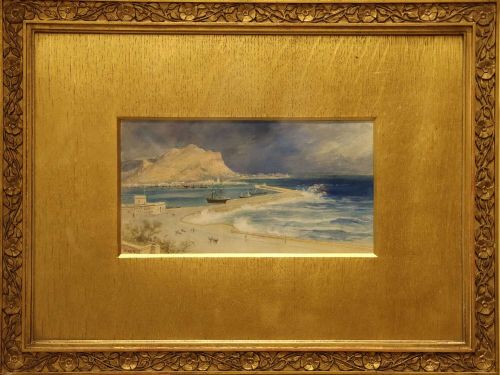
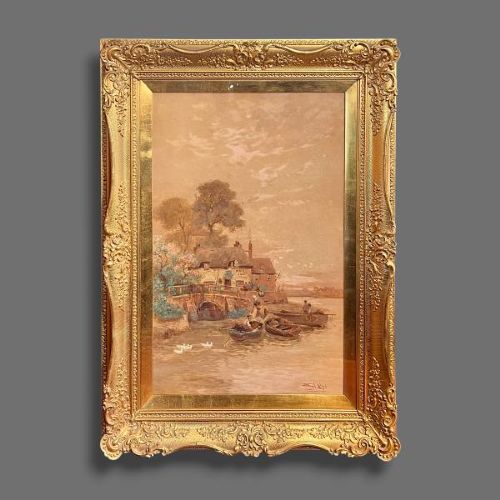
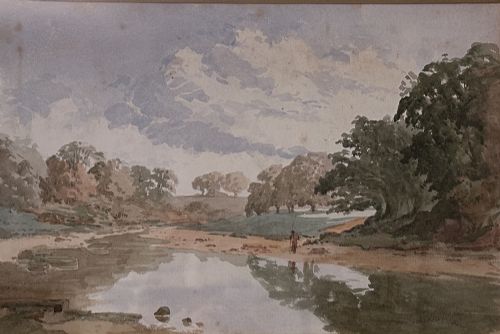
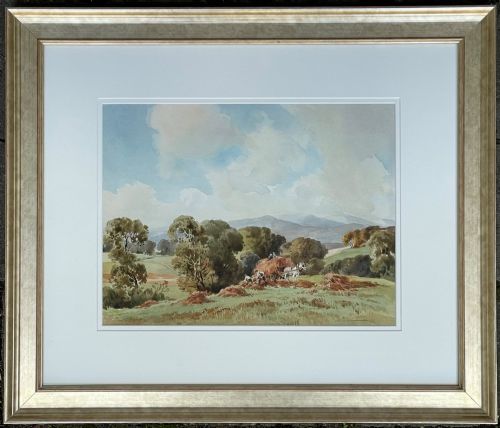
Watercolour Landscape Scene
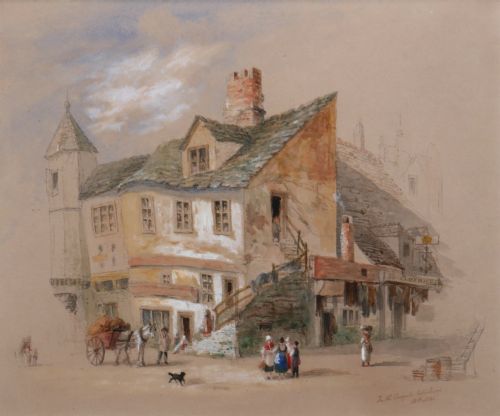
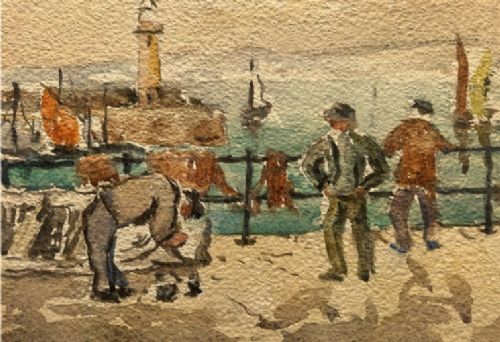
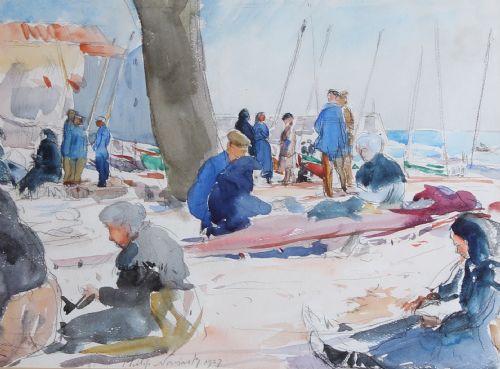
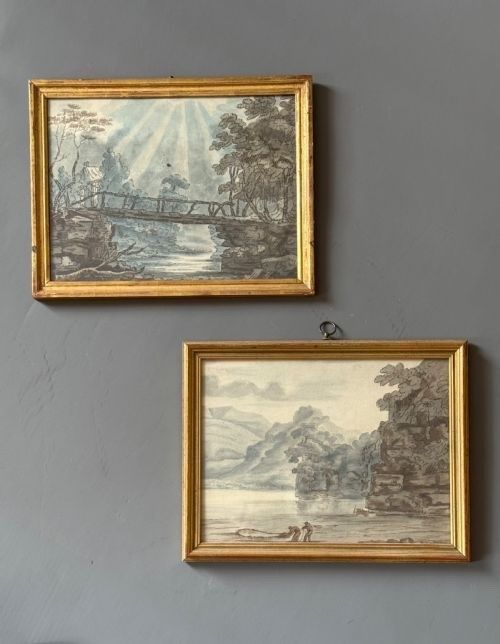
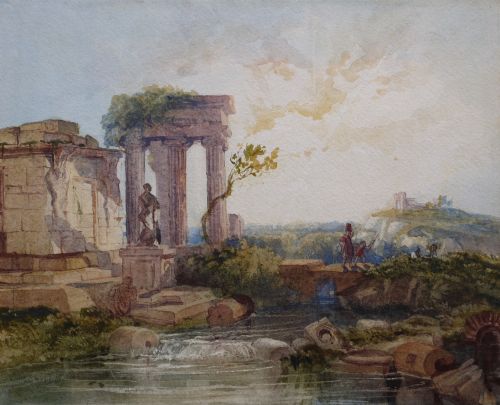
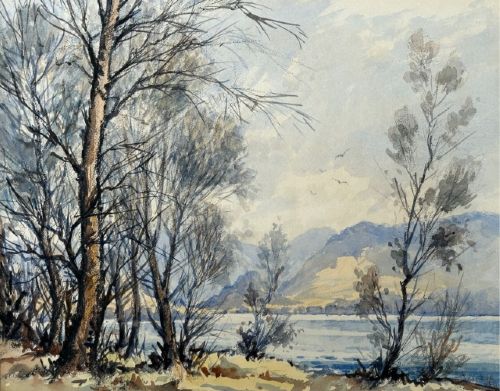
A watercolour landscape scene captures topography and atmosphere through fluid pigment on paper, offering collectors a direct link to nineteenth and twentieth century views.
Watercolour Landscape Scene
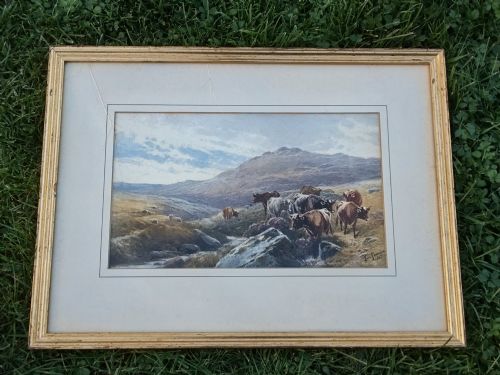
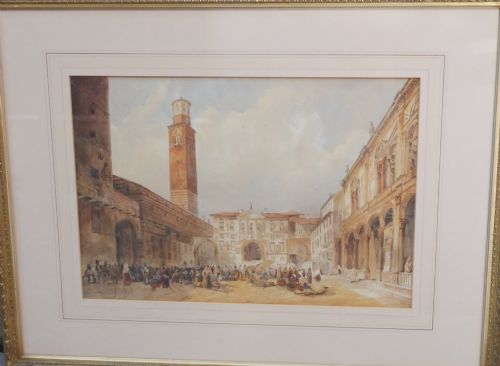
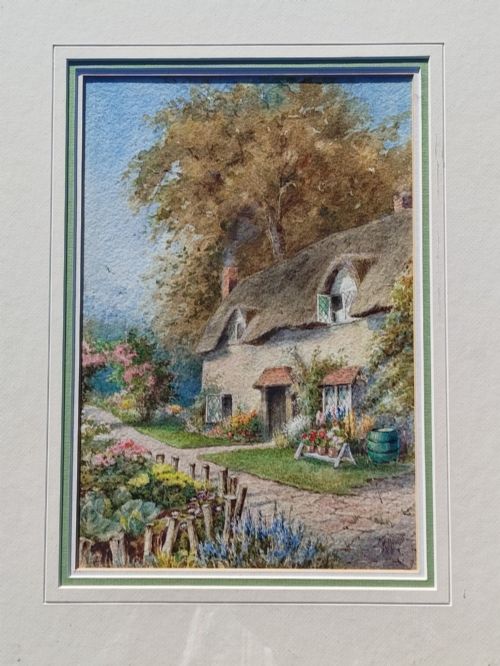
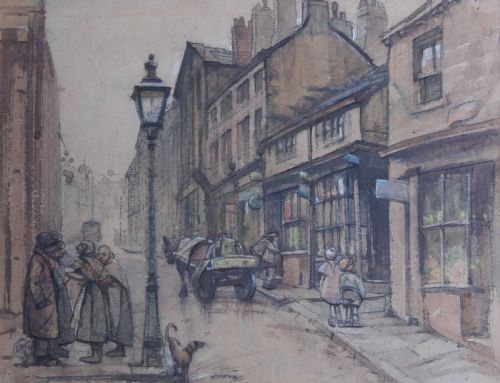
When you search for a watercolour landscape scene, you encounter original British and European works executed across the nineteenth and early twentieth centuries. These paintings depict rural pastures, coastal harbours, and townscapes rendered by artists working from observation or imagination.
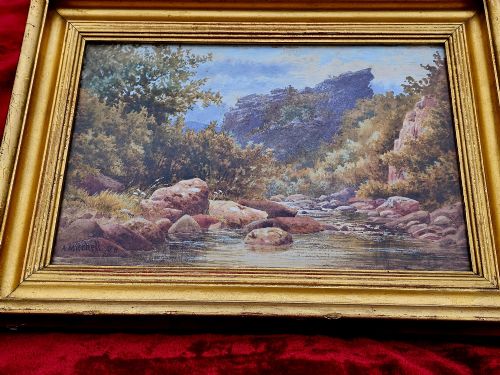
The selections available here range from Victorian pastoral watercolours to Edwardian coastal views and early twentieth century impressionist renderings. Most examples arrive framed behind glass in wood or gilded surrounds that protect the delicate paper supports.
Subjects stretch from local English country cottages and Scottish lochs to Mediterranean harbours in Italy and Sicily. Such variety reflects the travels and domestic sketching habits of artists working within realist, impressionist, and traditional pastoral traditions.
Materials and Technique
Painters applied watercolour pigment suspended in water onto heavy paper supports, frequently incorporating pen and ink line work to define architectural details or foliage. Artists utilised the natural white of the paper to create highlights, layering translucent washes to build depth and atmospheric tone.
Framing typically involves glass protection set within wooden frames, occasionally enhanced with gold leaf moulding or gilded mounts. These protective measures preserved the fugitive pigments from fading and kept the reactive paper stable in domestic interiors over generations.
Watercolour Landscape Scene Retail Price Guide 2026
Typical asking prices for watercolour landscape scene among the pieces listed under this phrase on Sellingantiques today, from the lower quarter to the upper quarter. They describe what is for sale here now, not the wider market.
Nineteenth century artists often packed portable paint boxes for sketching weather changes instantly.
Assessing Quality
Quality rests upon the handling of light and atmospheric perspective, distinguishing masterly composition from stiff topographical illustration. A superior sheet demonstrates confident brushwork and controlled washes that establish depth without muddying the paper.
The reputation of the artist and the specificity of the location elevate certain works above anonymous sketches. Stronger examples retain vibrant pigment saturation and clear provenance, whereas lesser items suffer from excessive fading and weak draughtsmanship.
Thomas Miles Richardson Jnr·James Orrock·Richard Principal Leitch·Robert Thorne Waite·Hector Caffieri
The Watercolour Landscape Scene Glossary
- Watercolour pigment
- Finely ground colour particles mixed with a water-soluble binder. This medium allows artists to apply luminous, transparent glazes across paper surfaces.
- Wash
- A fluid layer of diluted watercolour spread across paper. This technique establishes uniform skies, water, or background distances.
- Gilded wood
- Timber frames finished with a thin layer of gold leaf or metallic powder. These surrounds provide period framing that complements nineteenth century watercolours.
- Topographical
- Representing specific real-world locations with geographical accuracy. Many Victorian and Edwardian watercolours served as visual records of towns and rural vistas.
Watercolour Landscape Scene: Frequently Asked Questions
How do I care for antique watercolours?
Keep watercolours away from direct sunlight to prevent the pigments from fading and the paper from yellowing. Framing with conservation grade UV-blocking glass provides essential protection in domestic environments.
Avoid hanging these works in damp areas such as kitchens or bathrooms where moisture can damage the paper support and encourage mould growth.
Are these paintings original works?
The items listed are hand-painted original works on paper rather than mechanical reproductions or prints. Artists applied wet pigment directly to the sheet, resulting in unique surface textures visible under close inspection.
Signatures, monograms, and exhibition labels frequently accompany these pieces, helping to confirm their status as authentic period art.
How can I date an antique watercolour?
Dating relies upon stylistic markers, artist signatures, framing materials, and paper characteristics. Victorian and Edwardian works often display specific colour palettes and subject matter tied to nineteenth century painting societies.
Examine the reverse of the frame and paper for old inscriptions, gallery labels, or dated signatures left by the original creator.
What is the difference between an etching and a watercolour?
Watercolours are unique painted images created with liquid pigment applied directly to paper by hand. They rely on translucent washes and brushwork to build form and colour.
Etchings are printed multiple times from a metal plate that has been bitten with acid. They consist of inked lines rather than painted washes.