


Watercolour Harbour Painting
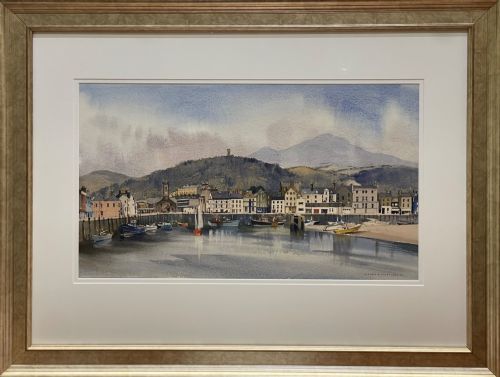
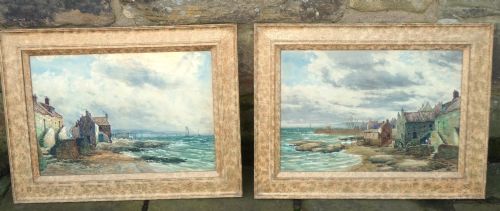
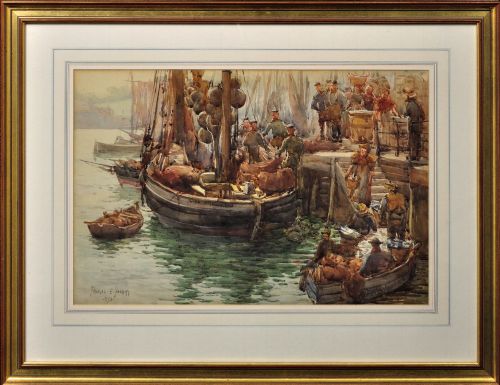
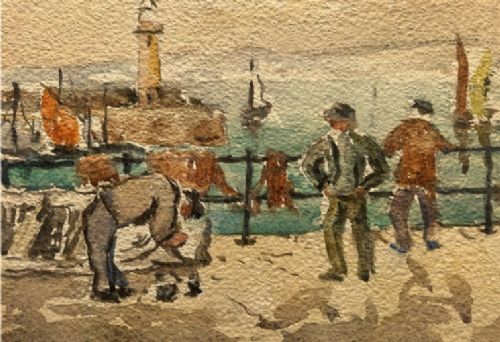
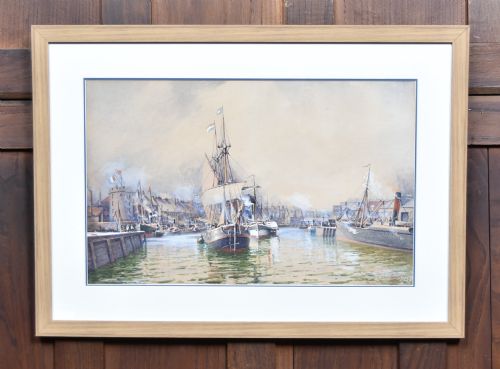
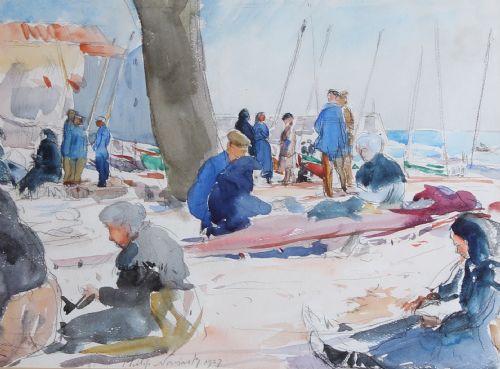
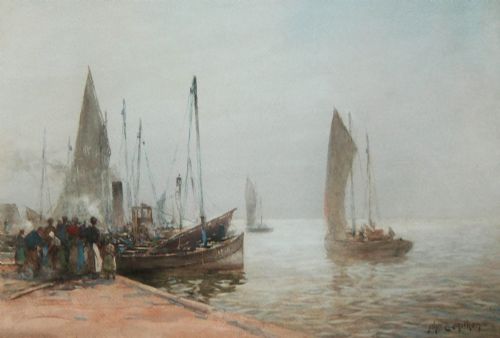
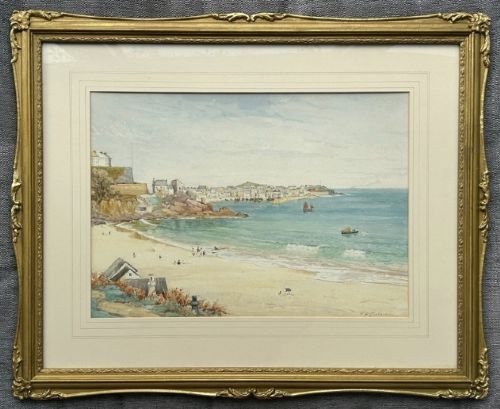
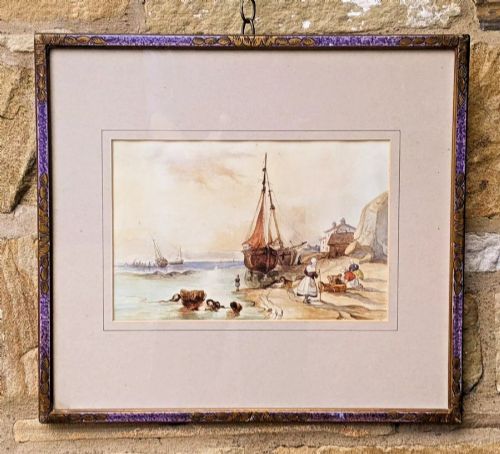
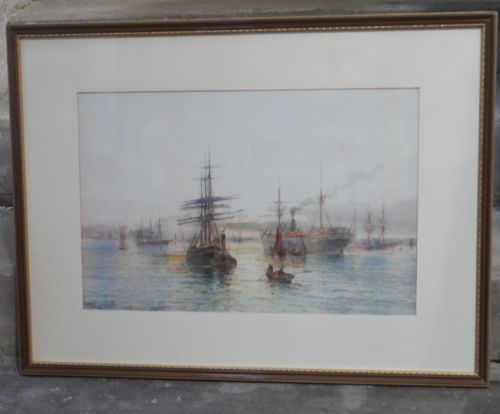
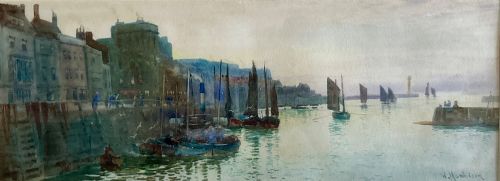
A watercolour harbour painting captures the salt air and bustle of historic coastal docks through translucent washes of pigment on paper.
Watercolour Harbour Painting
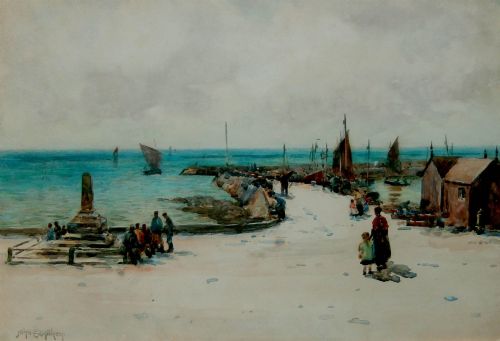
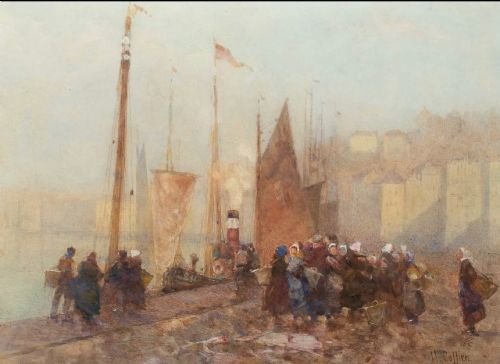
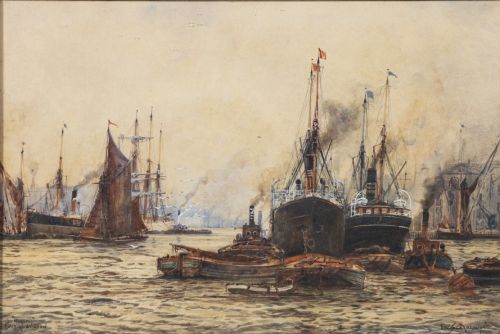
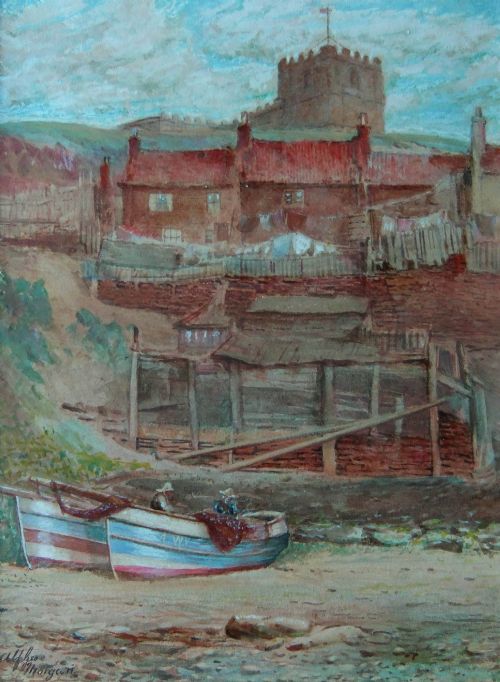
When you search for a watercolour harbour painting, you encounter maritime scenes depicting working ports, fishing fleets, and coastal inlets across Britain and Europe. The selections available span from the Victorian era through the mid-twentieth century, capturing domestic havens like St Ives, Whitby, and Polperro alongside international ports.
Most pieces date from the late nineteenth century to the 1930s, reflecting the popularity of plein air painting and topographical recording during those decades. Artists focused on the daily life of quaysides, showing sailing luggers, mended nets, and returning fishing boats under shifting coastal skies.
The format typically consists of works on paper mounted behind glass within wooden or gilt frames. These range in scale from intimate local sketches to detailed topographical watercolours intended for domestic display.
Materials and Techniques
Artists applied watercolour pigment suspended in water onto heavy paper sheets, often utilising the white of the unpainted paper to capture the glare of light on water and sails. Ink was occasionally employed alongside pigment to define rigging, architectural details, and shoreline structures.
Finished sheets were secured behind protective glass and housed in wooden frames, frequently finished with gilt moulding to complement the domestic interiors of the period. The combination of water-soluble pigments and absorbent paper required precise, confident brushwork since corrections were difficult to conceal.
Watercolour Harbour Painting Retail Price Guide 2026
Typical asking prices for watercolour harbour painting among the pieces listed under this phrase on Sellingantiques today, from the lower quarter to the upper quarter. They describe what is for sale here now, not the wider market.
Listings feature works created across several decades, spanning the Victorian period through the 1950s using watercolour on paper.
Evaluating Quality
Quality rests upon the artist's handling of light, atmosphere, and spatial depth within the translucent medium. Stronger examples demonstrate confident, fluid brushstrokes that convey movement in the water and texture in stone quays without overworking the pigment.
The strength of the composition and the immediacy of the observation distinguish accomplished professional works from routine topographical illustrations. Works that capture the specific quality of light in coastal locations such as Cornwall or Yorkshire show greater artistic command.
George F Pennington·Philip Naviasky·William Woolard·James E Aitken·William Banks Fortescue·Frank William Scarbrough·Hector Caffieri·Alfred G Morgan·William Matthison·Paul Delvaux·Eric Tufnell·Richard Harry Carter·William Lee Hankey·Fred Lawson·Thomas Bush Hardy·Ernest Dade·Arthur Tucker·Tom Clough·Fred Waugh·James Thomas Watts·Samuel Owen·Kate E Booth·Jan van Couver·Ernest F Hill·Stanley Orchart
The Watercolour Harbour Painting Glossary
- Watercolour pigment
- Finely ground colour particles mixed with a water-soluble binder, used to create transparent washes on paper.
- Gilt wood
- Timber framing coated with a thin layer of gold leaf or metallic gilt paint, common in period framing.
- Plein air
- The practice of painting outdoors to capture direct observations of natural light and weather.
- Lugger
- A traditional small fishing vessel carrying lug sails, frequently depicted in nineteenth and early twentieth-century coastal scenes.
Watercolour Harbour Painting: Frequently Asked Questions
How do I date a watercolour harbour painting?
Dates are often indicated by the clothing of figures on the quayside, the rigging of the vessels, or signatures and inscriptions left by the artist. Stylistic shifts between Victorian academic detail and later twentieth-century impressionism also provide reliable chronological markers.
Framing materials and backing papers can offer additional clues, though original frames are occasionally replaced over time.
Where should I hang these watercolours?
Watercolours require protection from direct sunlight to prevent the pigments from fading over time. Position them away from bright south-facing windows and damp areas such as unheated kitchens.
Displaying them at eye level in rooms with stable ambient temperatures ensures the paper and mount remain free from humidity damage.
How do I identify coastal locations?
Artists frequently inscribed the title or location of the harbour directly onto the lower margin of the mount or the reverse of the paper. Landmarks such as abbey ruins, specific lighthouse designs, and regional boat types also help pinpoint the exact port depicted.
Local historical records of fishing fleets and coastal architecture can confirm the setting of unsigned works.
Are these paintings original works?
The listings consist of original hand-painted works executed directly onto paper by individual artists, rather than printed reproductions. Each piece shows the distinct brushwork, pigment pooling, and paper texture unique to watercolour painting.
Signatures, monograms, and preparatory pencil lines beneath the pigment further confirm their status as unique works of art.