





Warm Oak Grandfather Clock
A warm oak grandfather clock brings a rich, honeyed presence and steady mechanical rhythm into a room.
Warm Oak Grandfather Clock
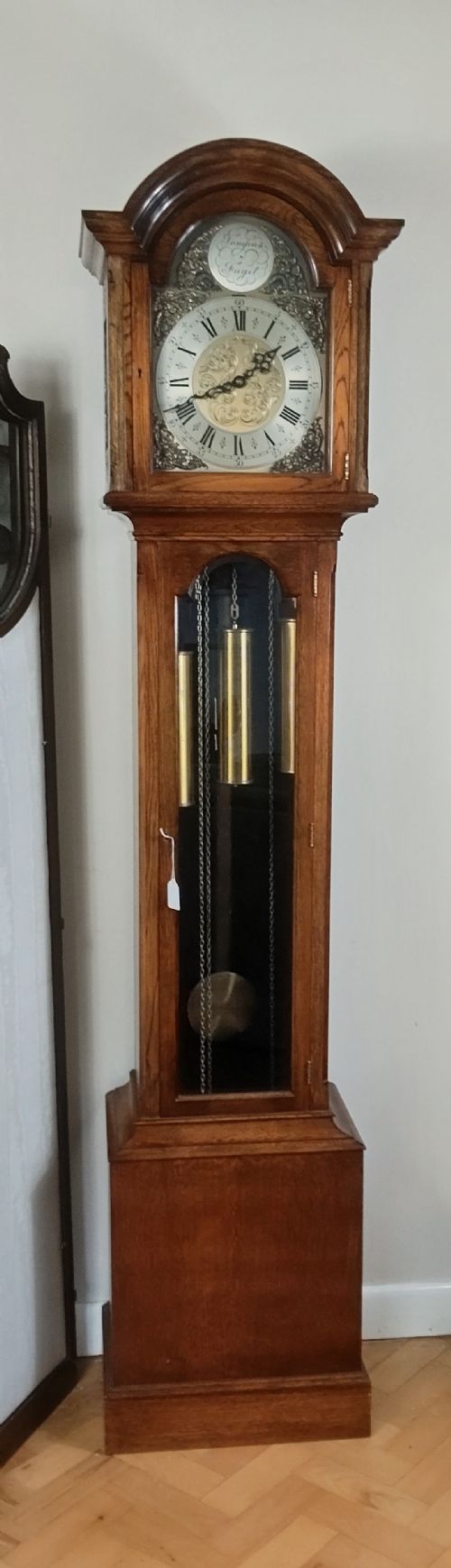
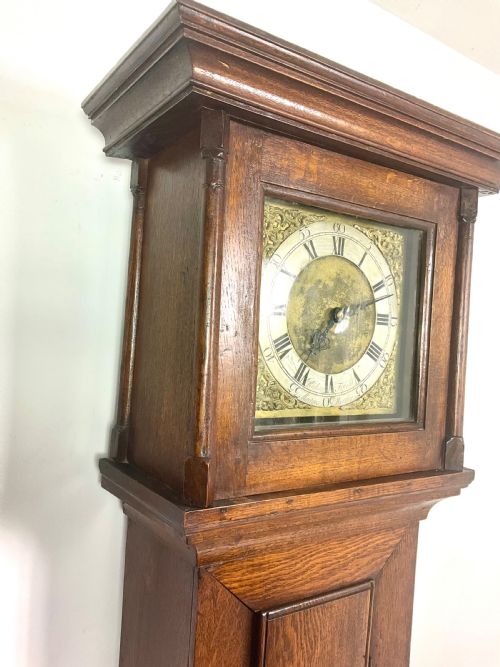
A warm oak grandfather clock is a tall floor-standing timepiece that anchors a room with timber presence and traditional movement. When you search for a warm oak grandfather clock, you encounter tall case clocks originating from periods spanning the early eighteenth century through the Georgian era, Victorian times, and early twentieth-century revivals.
The most common examples on this page date from the Georgian era and the eighteenth century, alongside later nineteenth-century pieces and nineteen-twenties revivals. These timepieces take the form of longcase clocks, varying from single-handed movements to complex quarter-chiming mechanisms housed in oak cases.
Makers and provincial clockmakers marked their dials across regions, from Scottish workshops in places like Ford Pathhead to English towns such as Chester. Whether you encounter a small early Georgian example or a Scottish Victorian piece by David Craig, the core appeal remains the tactile warmth of the timber and the steady swing of the pendulum.
Materials and construction
Cases are constructed primarily from oak, sometimes showing mahogany accents, enclosing brass dials and iron weight-driven movements behind glass door panels. The timber develops a deep, mellow tone over centuries of exposure and polishing.
Movements range from traditional single-handed weight-driven systems to intricate eight-day mechanisms and multi-gong chiming trains. Dial construction combines engraved brass chapter rings with subsidiary seconds and calendar apertures.
Warm Oak Grandfather Clock Retail Price Guide 2026
Typical asking prices for warm oak grandfather clock among the pieces listed under this phrase on Sellingantiques today, from the lower quarter to the upper quarter. They describe what is for sale here now, not the wider market.
Some nineteenth-century Scottish clocks recorded local walks in their titles, naming makers who marched across Ford Pathhead.
Judging quality in longcase clocks
Quality reveals itself in the proportion of the case and the crispness of the brass dial engraving. Finer examples display well-figured timber grain and balanced proportions rather than plain, utilitarian joinery.
Movement sophistication sets individual clocks apart, moving from basic time-only single-handed mechanisms to complex eight-day striking and chiming trains by established makers. The integrity of the dial and the original pairing of movement to case dictate the overall standard.
The Warm Oak Grandfather Clock Glossary
- Longcase clock
- The formal term for a tall pendulum clock housed in a wooden case, commonly known as a grandfather clock. These floor-standing timepieces protect the weights and pendulum within a trunk.
- Chapter ring
- The outer ring on a clock dial that bears the hour numerals. On older brass dials, this is often a separate silvered piece pinned to the dial plate.
- Trunk door
- The long door on the front of the clock case that provides access to the weights and pendulum. Some period examples feature glazed viewing panels or astragal glazing bars.
- Eight day
- A movement design that requires winding once a week rather than every thirty hours. These mechanisms utilise two or three weights suspended by cords or chains.
- Bracket feet
- Small feet supporting the base of the clock case, lifting it clear of the floor. They appear on Georgian and later revival models.
Warm Oak Grandfather Clock: Frequently Asked Questions
How do I wind a grandfather clock?
Winding involves using a crank key to raise the weights inside the trunk back to the top of their drop. Care must be taken not to over-wind the movement.
For weight-driven clocks, pull the weights steadily rather than forcing the key once resistance is felt at the top.
Where should I place an oak clock?
Position the clock against an interior wall away from direct sunlight, heating vents, and dampness. Timber cases react poorly to dramatic temperature fluctuations.
Ensure the floor is firm and level so the pendulum swings with an even beat without catching the case sides.
How do I tell an 18th century clock from a 1930s revival?
Early eighteenth-century clocks feature hand-beaten brass movements, pegged oak frames, and square brass dials with simpler chapter rings. Revival pieces from the nineteen-thirties often house mass-produced chiming movements within honey-coloured oak cases.
Examining the timber inside the trunk and the fixing methods of the movement plate usually clarifies the period.
What does a single-handed clock mean?
Early timepieces often used only an hour hand, relying on precise track divisions to allow reading of the time to the nearest five minutes. These single-handed movements belong predominantly to the seventeenth and early eighteenth centuries.
Reading them requires estimating the minutes between the hour markers rather than checking a minute hand.