


Warm Brown Wooden Bookcase
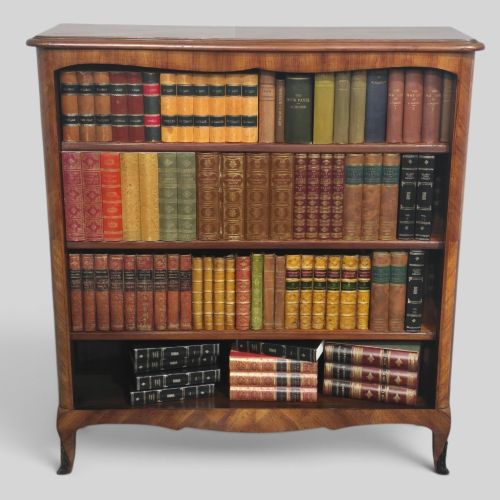
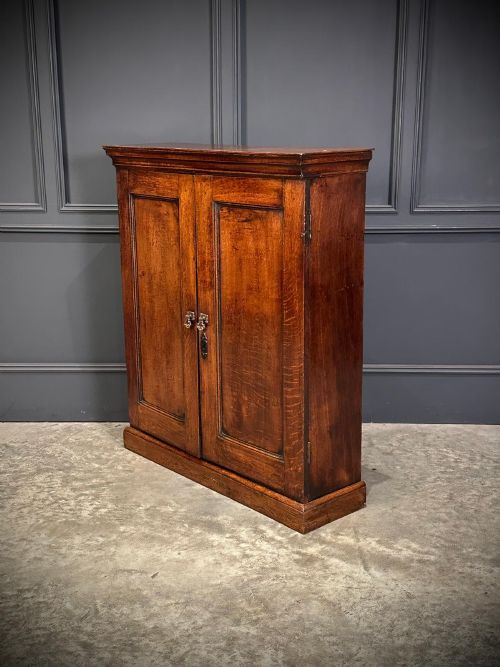
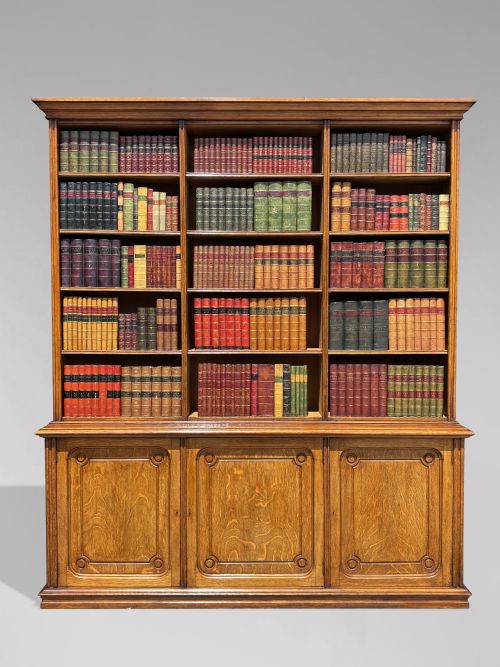
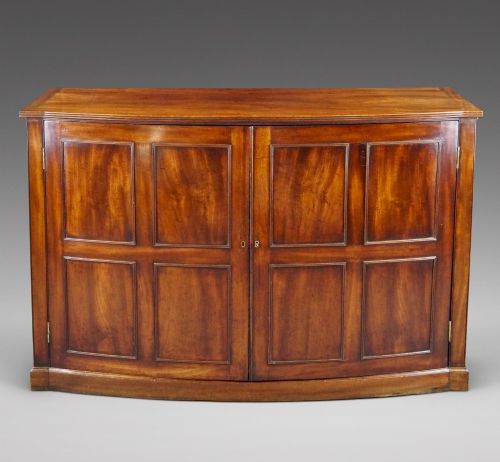
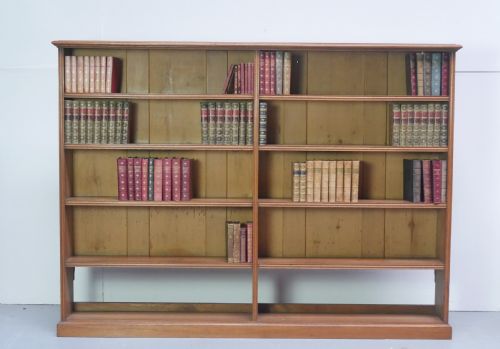
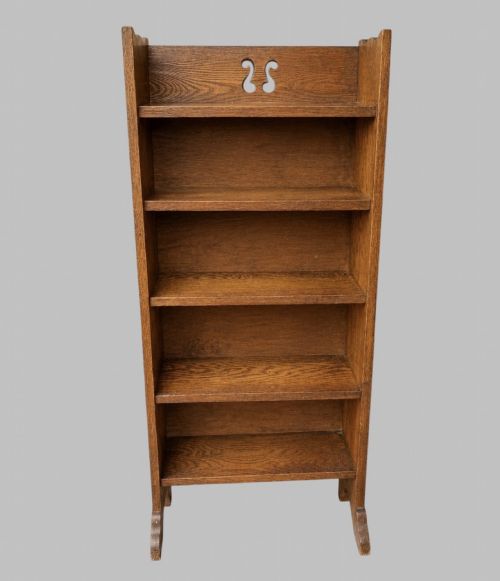
A warm brown wooden bookcase brings rich timber grain and structured practicality into a room.

Warm Brown Wooden Bookcase
The selections span multiple periods, with Victorian and Edwardian examples appearing alongside Georgian, Regency, and 19th-century designs. Tall library bookcases sit alongside smaller waterfall shelves, revolving designs, and pieces featuring inlaid friezes or decorative cut-outs.
Most entries are straightforward utility or library items, though specific forms incorporate glass panels, adjustable shelves, or multi-part construction. The underlying materials dictate the warmth and depth of the brown hue, varying from golden oak to dark polished mahogany.
How they were made
Cabinet makers utilised solid woods and wood veneers such as oak, mahogany, walnut, satinwood, and kingwood to construct these bookcases. Surfaces were finished to highlight the natural grain of the timber, sometimes enhanced with inlaid details in contrasting woods.
Structural elements frequently included adjustable shelving systems, brass hardware fittings, and glass doors where contents required protection. Construction methods span traditional joinery suited to heavy library use as well as specialist forms like campaign cabinets and revolving tiers.
A petite revolving bookcase lets you spin your entire library with a gentle nudge.
What varies in quality
Quality reveals itself in the selection of the timber and the precision of the joinery, separating robust library furniture from lighter domestic pieces. The presence of thoughtful details, such as inlaid friezes, decorative cut-outs, or striking exotic woods like Gonçalo Alves and partridge wood, elevates a piece above standard utility items.
The integration of functional elements like smooth adjustable shelf mechanisms and well-fitted doors or drawers distinguishes finer cabinet work. Heavier, substantial architectural proportions also point to high-grade construction intended for institutional or grand domestic libraries.
Heals
The Warm Brown Wooden Bookcase Glossary
- Adjustable bookcase
- A shelving unit equipped with movable internal shelves to accommodate books of varying heights. This flexibility was standard in larger library pieces.
- Open front bookcase
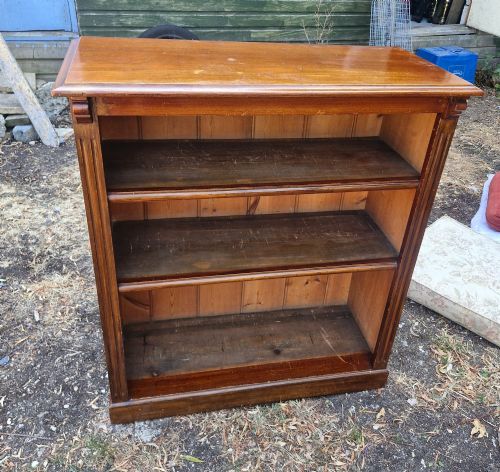
- A cabinet lacking doors, designed for immediate access to books. These units frequently feature decorative cornices or friezes along the top.
- Waterfall bookcase
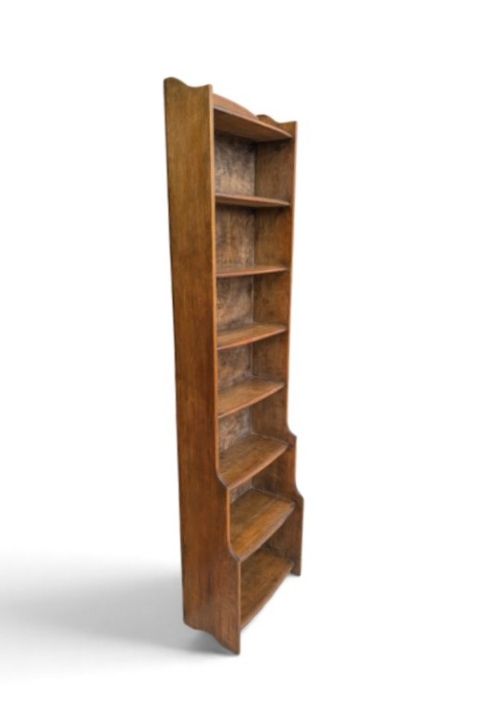
- A stepped shelving unit where each tier is narrower than the one below, creating a cascading profile. These items often date from the Edwardian or 19th-century periods.
- Inlaid frieze
- A decorative band of contrasting wood or material set flush into the upper portion of a bookcase. It adds visual detail above the open shelves.
Warm Brown Wooden Bookcase: Frequently Asked Questions
How do I choose the right size bookcase?
Consider the ceiling height and floor space available in your room before selecting between a tall library bookcase and a low open front unit.
Measure your book collection to ensure standard volumes fit comfortably, noting whether the shelves are adjustable for oversized editions.
What is the difference between open and enclosed bookcases?
Open bookcases provide immediate access to volumes and display the book bindings as part of the room decor. They suit everyday reading spaces where dust accumulation is manageable.
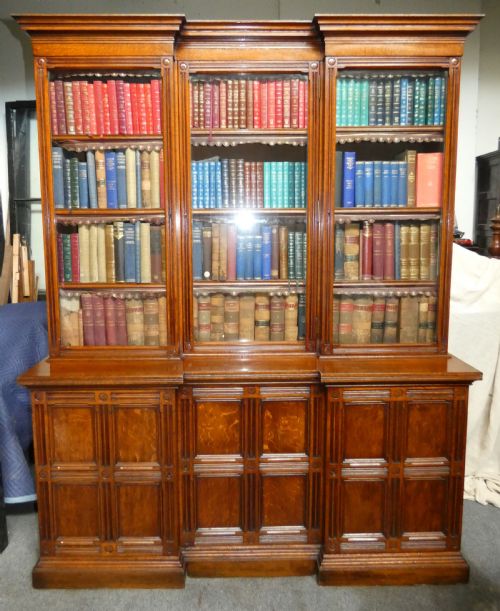
Enclosed bookcases feature glass or solid doors that protect sensitive or older volumes from light and dust. These larger cabinet forms often include lower storage cupboards for additional items.
How do I identify a Victorian bookcase?
Victorian bookcases often utilise dark mahogany or walnut timbers, sometimes featuring substantial carved decoration or architectural pediments. They frequently incorporate adjustable wooden shelving and robust proportions designed for heavy domestic libraries.
Look for period construction traits like hand-cut dovetails in the drawers of associated cabinet bases and traditional brass hardware.
What woods are typical in these bookcases?
Oak and mahogany appear most frequently, offering durable structures and deep brown tones that anchor a room's colour scheme. Walnut, satinwood, and exotic timbers like Gonçalo Alves also feature in specific Regency and Victorian designs.
Each wood species ages differently, developing a rich patina over decades of use.