



Warm Brown Oak Console
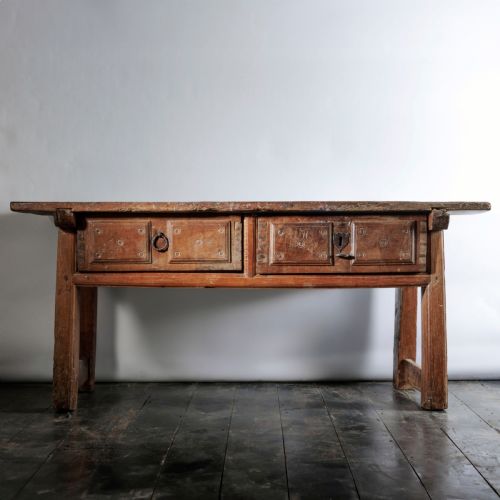
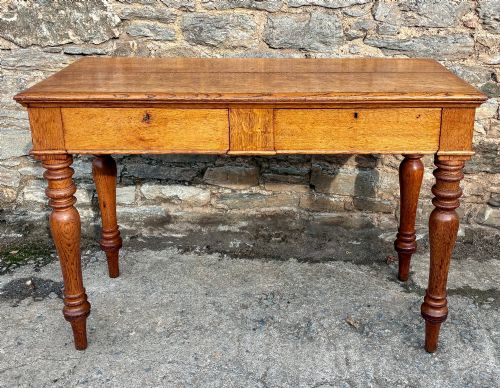
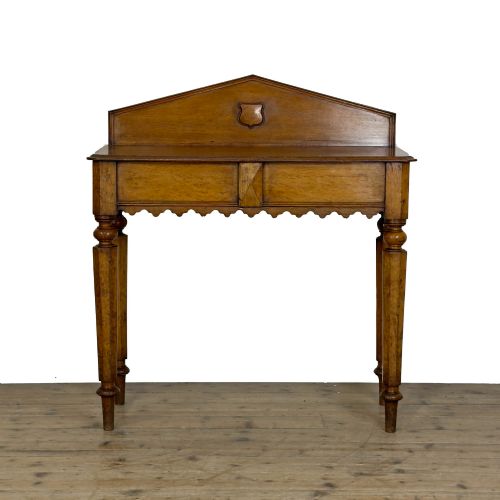
A warm brown oak console brings honest timber, deep patination and sturdy utility straight into a hallway or living space.
Warm Brown Oak Console
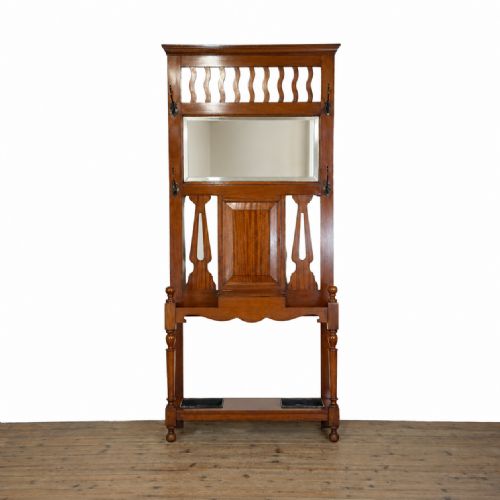
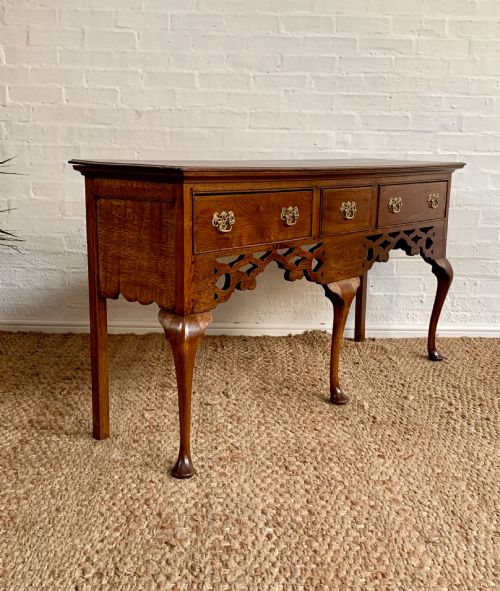
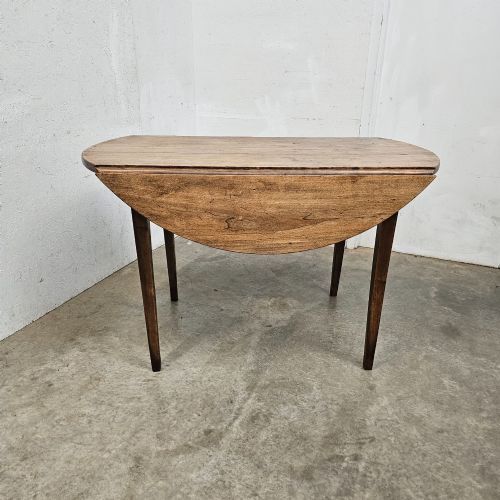
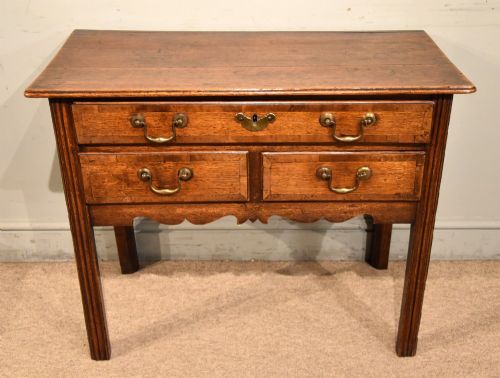
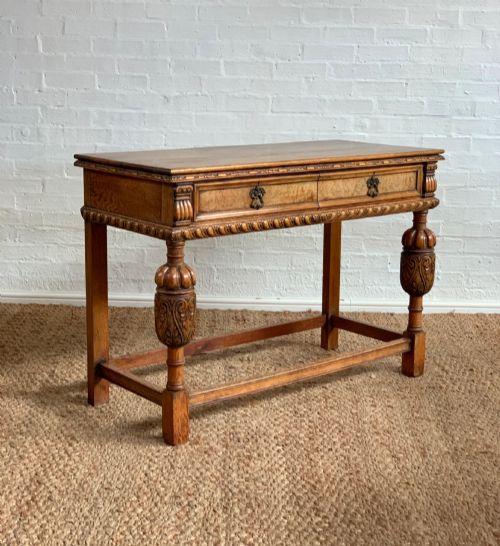
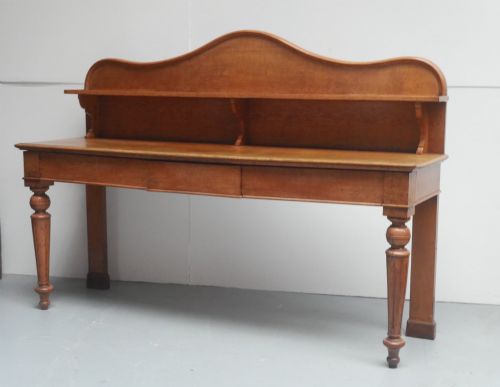
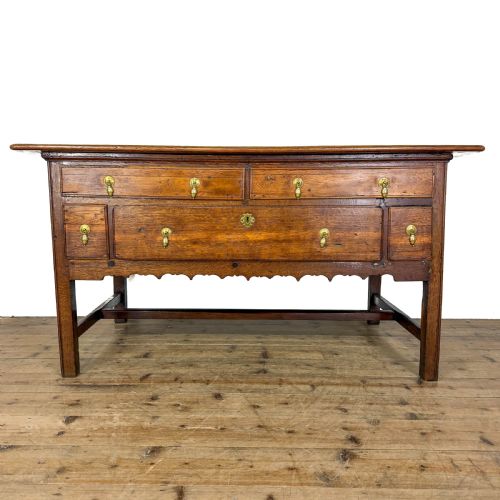
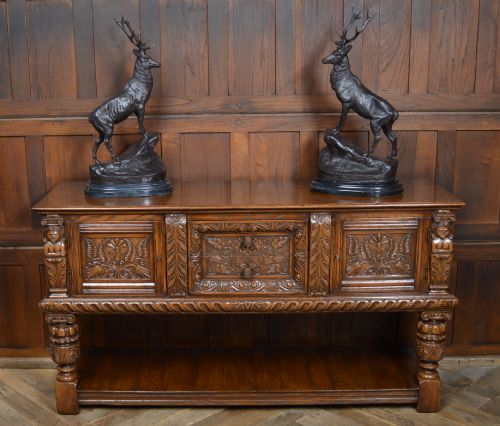
A warm brown oak console or associated side table brings centuries of practical domestic furniture into modern rooms, drawing on forms made for daily utility. When searching for a warm brown oak console, buyers encounter lowboys, dresser bases, serving tables and side tables spanning the Georgian, Victorian and Edwardian periods.
The selection ranges from compact 18th-century lowboys with multiple drawers to larger 19th-century serving tables and vernacular country pieces. These items originate from English, Welsh, Scottish and continental workshops, often constructed to stand against walls in hallways, dining rooms and reception spaces.
Materials and construction methods
Cabinet makers built these tables primarily using solid oak, occasionally incorporating fruitwood, walnut, elm, pine and brass handles or escutcheons. Timbers were selected for durability and figure, showing quarter-sawn figuring or plain boards depending on the regional workshop tradition.
Joinery techniques relied on traditional mortise and tenon frames, pegged joints and hand-cut dovetails for drawer construction. Surfaces finished with natural wax over decades developed the deep colour and patina characteristic of antique hardwood.
Warm Brown Oak Console Retail Price Guide 2026
Typical asking prices for warm brown oak console among the pieces listed under this phrase on Sellingantiques today, from the lower quarter to the upper quarter. They describe what is for sale here now, not the wider market.
Materials recorded across the inventory include oak, fruitwood, walnut, elm, pine, brass and glass.
Evaluating craftsmanship and condition
Quality rests in the integrity of the timber, the crispness of any hand-carved detail such as cabriole legs, and the retention of original brass hardware. Finer examples maintain crisp drawer linings and uncompromised structural frames without excessive timber replacement.
Provenance and regional style influence character, with vernacular pieces showing charming irregularities in drawer placement or board width. Tables retaining their original surface finish and rich colour sit at the higher end of the scale.
Beresford & Hicks London
The Warm Brown Oak Console Glossary
- Lowboy
- A small table with one or more drawers, traditionally used as a dressing table or side table in the 18th century.
- Dresser base
- A long, sturdy table featuring multiple drawers across the front, originally serving kitchens and dining rooms.
- Drop-leaf table
- A table with a fixed central section and hinged flaps that fold down to save space when not in use.
- Patina
- The surface sheen and warm colour developed on wood through decades of handling, polishing and exposure to light.
- Pot board
- An open lower shelf built into the base of a dresser or serving table, historically used for storing pots.
Warm Brown Oak Console: Frequently Asked Questions
What rooms suit a warm brown oak console?
These tables fit naturally into narrow hallways, behind sofas, or as sideboards in dining areas. Their shallow depth allows them to sit flush against walls without blocking circulation.
Larger serving tables and dresser bases require more surrounding floor space, functioning well in wider corridors or principal reception rooms where they provide surface area and drawer storage.
How do I distinguish an 18th-century piece?
Eighteenth-century examples often display hand-cut dovetails with irregular spacing, pegged mortise and tenon frame joints, and native oak timbers showing deep natural patination.
Examining the drawer linings and underside reveals hand-planed surfaces rather than modern machine-sawn marks, pointing to period construction methods.
Can I use an antique lowboy as a desk?
Many lowboys feature shallow drawers and adequate height to function as compact writing tables for laptops or notepads.
Buyers should check the kneehole clearance beneath the drawer frames to ensure comfortable seating posture before daily use as a desk.
How should I care for the wood surface?
Maintain the finish by applying natural beeswax sparingly and buffing with a soft cloth to protect the grain from moisture and drying.
Keep these tables away from direct heat sources and strong sunlight to prevent timber shrinkage and fading of the warm brown tones.