




Walnut Vanity Chest
A walnut vanity chest offers a handsome place for grooming and storage, combining rich timbers with practical drawers and mirrors.
Walnut Vanity Chest
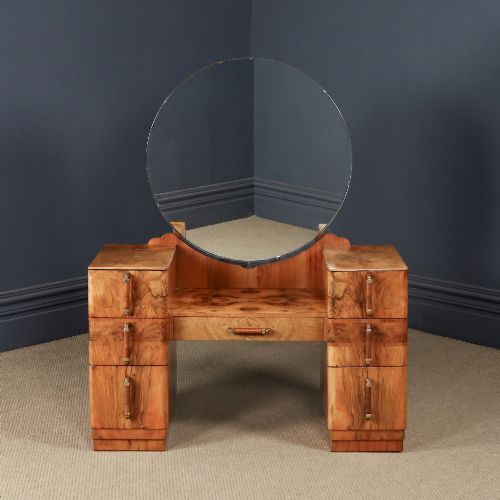
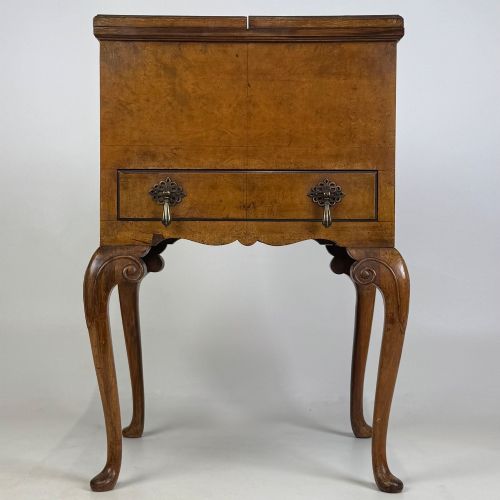
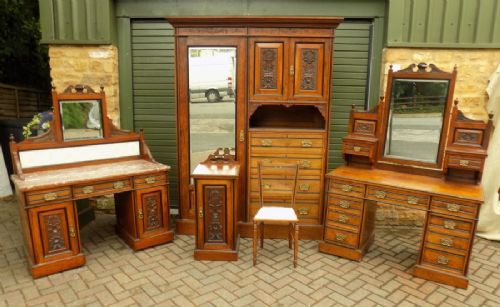
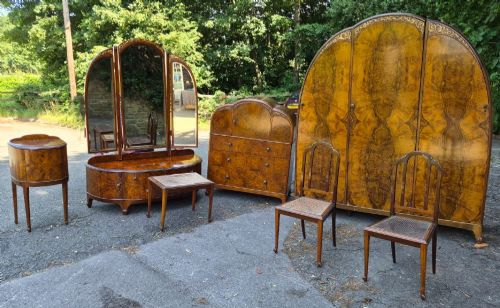
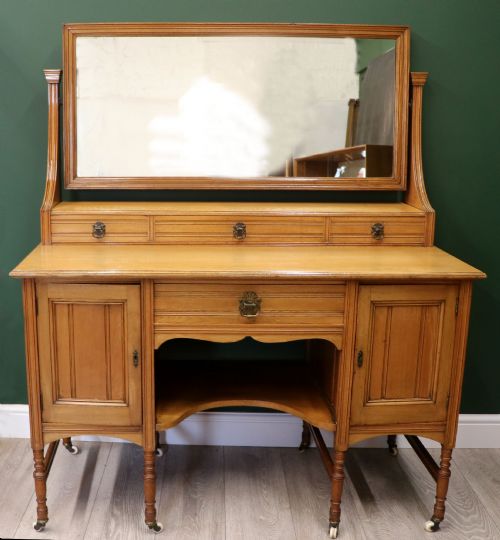
A walnut vanity chest encompasses dressing tables, dressing chests, and lowboys designed for personal grooming and storage. These items appear across multiple periods, including the Victorian era, the Edwardian period, and the Art Deco style of the 1930s.
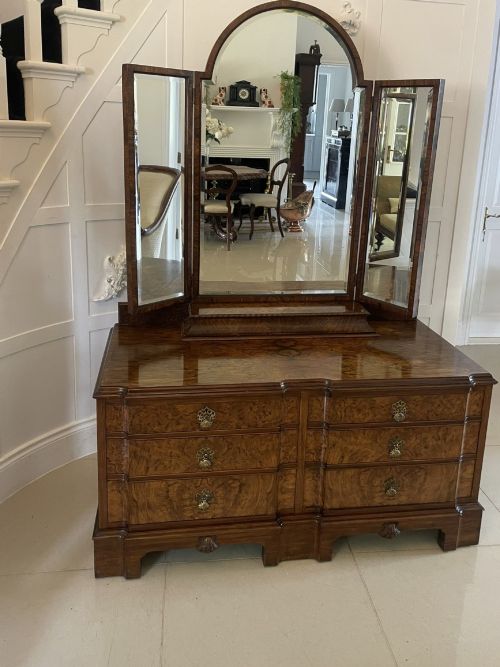
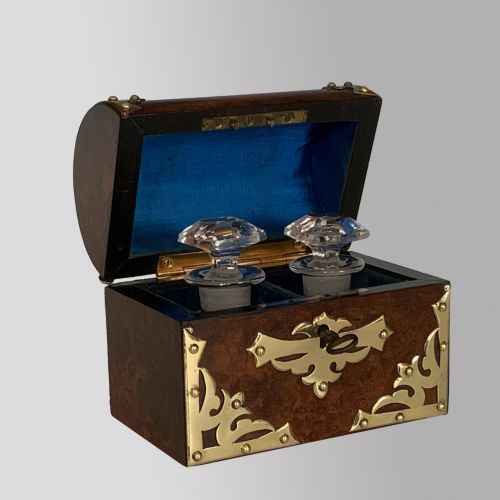
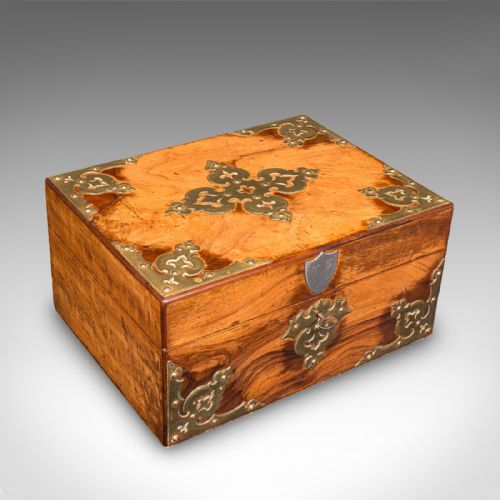
The version most commonly met on this page is the dressing table or dressing chest featuring burr walnut veneers, swing mirrors, and fitted drawers. Alongside these, buyers find related forms such as jewellery boxes, writing desks, and lowboys made from the same timber.
How they were made
Cabinet makers utilised solid walnut and figured burr walnut veneers applied to secondary woods to create rich grain patterns across large surfaces. These pieces often incorporate brass hardware, glass mirrors, marble tops, and velvet linings to finish the interior compartments.
Construction techniques range from traditional dovetail joints in drawer construction to specialised inlay work, marquetry, and ormolu mounts. Makers also employed painted finishes and carved details depending on whether the piece followed Victorian, Gothic Revival, or Art Deco aesthetics.
Listings feature walnut vanity chests spanning the Georgian period, the Victorian era, the Edwardian years, and 1930s Art Deco.
What varies in quality
The choice of timber creates a distinct difference, with highly figured burr walnut and book-matched veneers marking out superior examples from plain walnut surfaces. The depth of the grain and the crispness of any carving or inlay dictate the visual success of the piece.
Internal fitting and hardware also distinguish the grade of a vanity chest, such as silver-fitted dressing cases, original bevelled mirror glass, and substantial brass handles. The precision of the drawer construction and the integrity of the original polish reveal the skill of the original workshop.
Frank Taylor & Co.·Maurice Adams·Parkins & Grotto·Parkins and Gotto
The Walnut Vanity Chest Glossary
- Burr walnut
- A veneer taken from the gnarled growth of a walnut tree, prized for its swirling, highly decorative grain patterns.
- Lowboy
- A small low table with drawers, often functioning as a dressing table or writing desk in 18th-century furniture.
- Duchess dressing table
- A large Victorian dressing table featuring a large central mirror flanked by smaller pivoting mirrors and multiple small drawers.
- Ormolu
- Gilded bronze or brass mounts applied as decorative ornaments to furniture and caskets.
- Marquetry
- The art of applying pieces of veneer to a structure to form decorative patterns and pictures.
Walnut Vanity Chest: Frequently Asked Questions
What is the difference between a dressing chest and a dressing table?
A dressing chest typically combines the storage capacity of a chest of drawers with a mirror fixed to the upper section. These pieces are built to hold clothing alongside grooming items.
A dressing table often stands on legs with a lighter frame, prioritising legroom and desk space beneath the mirror. Both forms utilise walnut and burr walnut veneers across various periods.
How do I identify an Art Deco walnut vanity chest?
Art Deco walnut pieces from the 1930s feature geometric lines, symmetrical figured veneers, and waterfall edges or pedestal forms. They often omit heavy carving in favour of clean, streamlined shapes.
Designers of this era utilised the natural grain of burr walnut to create striking visual patterns on curved drawer fronts and matching bedroom suites.
How do I care for a walnut surface?
Walnut furniture requires a stable environment away from direct sunlight and excessive heat to prevent the wood and veneers from drying out. Regular dusting with a soft, dry cloth preserves the finish.
Application of appropriate furniture wax periodically helps maintain the lustre of the polished wood without building up heavy residues.