


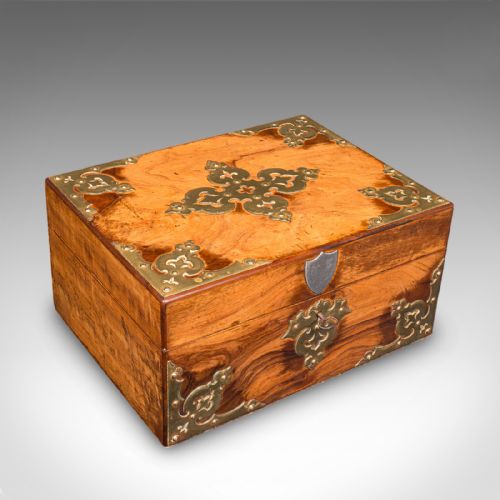


Walnut Vanity Casket
A walnut vanity casket is a compact timber box for personal treasures, prized for rich grain and brass work.
Walnut Vanity Casket
A walnut vanity casket brings together domestic storage and decorative timber work from the nineteenth century. These pieces appear in forms such as jewellery boxes, sewing boxes, and dressing cases designed for intimate personal items.
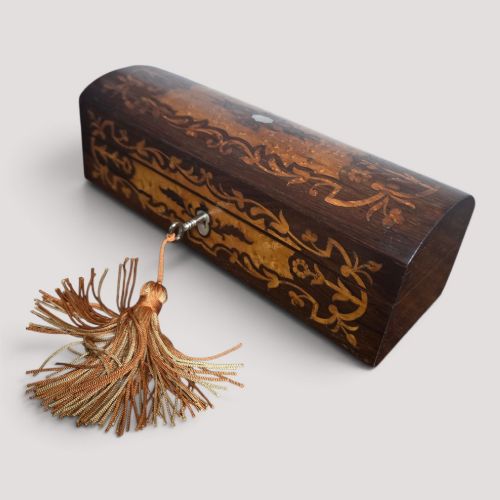
Victorian examples dominate the selection, frequently utilising burr walnut, figured walnut, and standard walnut timber. Makers also produced gothic revival pieces, arts and crafts boxes, and tunbridge ware variants.
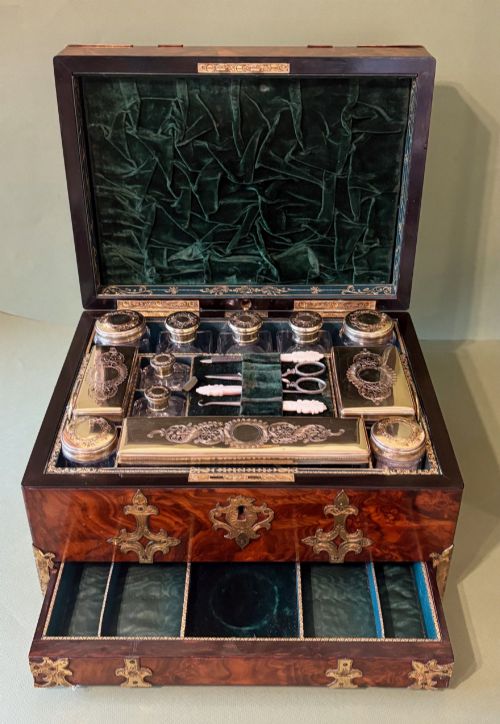
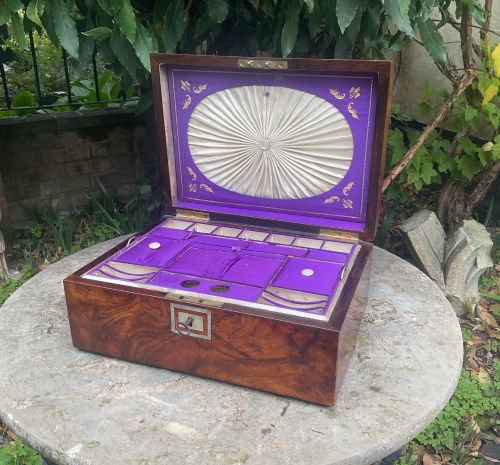
Buyers encounter fitted interiors lined with silk, velvet, and mirrors alongside compartments for rings, gloves, and keepsakes. Brass mounts, pearl inlay, and parquetry ornamentation distinguish the external appearance of these boxes.
How they were made
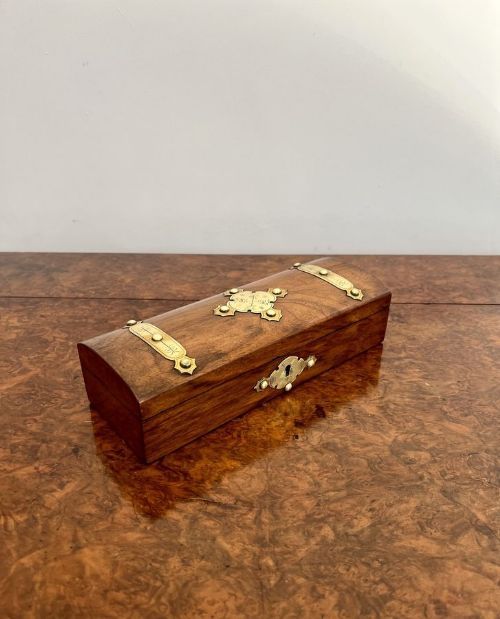
Cabinet makers built these caskets using solid walnut or applied burr and figured walnut veneers over secondary timbers. They shaped the lids into domed or flat profiles and incorporated dovetailed joints for structural stability.
Workshops embellished the exteriors with brass banding, corner mounts, and mother-of-pearl inlay set flush into the timber surface. Interiors received tailored linings of silk and velvet, often fitted with removable trays, mirrors, and glass containers.
Walnut Vanity Casket Retail Price Guide 2026
Typical asking prices for walnut vanity casket among the pieces listed under this phrase on Sellingantiques today, from the lower quarter to the upper quarter. They describe what is for sale here now, not the wider market.
Listings feature Victorian and Georgian periods alongside materials including brass, mother-of-pearl, silk, and burr walnut.
What varies in quality
The choice of timber grain dictates visual appeal, with richly figured burr walnut commanding attention over plain surfaces. Complex veneers, precise parquetry patterns, and heavy brass mounts elevate the execution of a piece.
Internal arrangement and upholstery condition define the standard of survival. Intact silk linings, functioning locks with original keys, and well-preserved fitted trays separate standard utility boxes from exceptional examples.
The Walnut Vanity Casket Glossary
- Burr walnut
- A prized timber harvested from tree growths that produces swirling, highly decorative grain patterns. Makers sliced this wood into veneers for the exterior lids and panels of fine boxes.
- Parquetry
- A geometric mosaic of wood pieces arranged to form decorative patterns on a surface. Craftsmen applied this technique to create contrasting timber designs on box lids.
- Dressing case
- A fitted box containing compartments for cosmetics, brushes, and personal accessories, frequently featuring a built-in mirror. These pieces served travellers and ladies at their dressing tables.
- Tunbridge ware
- Small wooden objects decorated with intricate mosaic patterns made from thousands of tiny tinted wood blocks. This specific craft originated in Kent during the nineteenth century.
- Workbox
- A container specifically organised for sewing and needlework implements, housing threads, needles, and tools. They often include lift-out trays and pin cushions.
Walnut Vanity Casket: Frequently Asked Questions
What is a walnut vanity casket used for?
These caskets were designed to hold jewellery, sewing equipment, and personal dressing items. Owners kept them on tables or dressing chests to secure small valuables.
Today they function as decorative storage for modern trinkets and keepsakes while displaying nineteenth century craftsmanship in domestic spaces.
How do I date a walnut vanity casket?
Dating relies on stylistic clues, construction methods, and materials recorded in nineteenth century production. Victorian pieces frequently incorporate brass mounts and fitted silk interiors.
Later nineteenth century examples show influences from the Arts and Crafts movement or incorporate specific regional styles like Scottish gothic revival.
What is burr walnut?
Burr walnut comes from a growth on the walnut tree that creates dense, swirling patterns in the grain. This wood was sliced into thin veneers for decorative surfaces.
Cabinet makers used burr walnut on the exterior panels of quality boxes to catch the light and showcase natural patterns.
How should I clean the interior lining?
Original silk and velvet linings require gentle care using dry brushes to remove dust without damaging fragile textiles. Moisture can rot old fabrics and stain surrounding timber.
Preserving the existing fabric maintains the historical integrity of the fitted interior and mirror.