
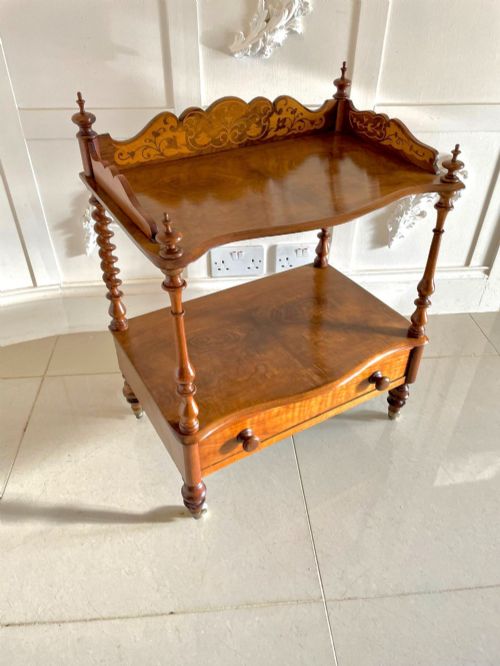
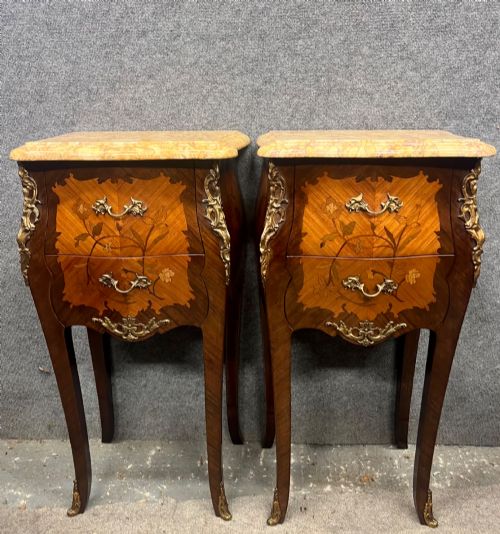


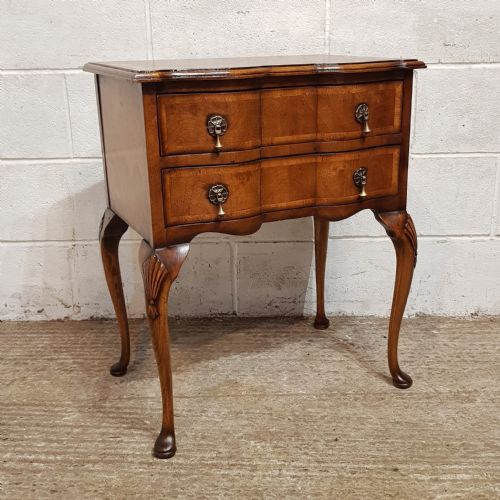


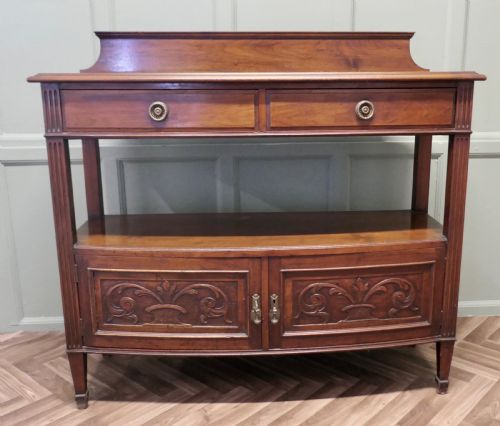


Walnut Two Drawer Table
A walnut two drawer table brings warmth and utility to any room, offering rich grain and practical storage.
Walnut Two Drawer Table
A walnut two drawer table is a versatile form appearing across the nineteenth and early twentieth centuries in various styles. Buyers search for these pieces to add period character and useful surface space to a bedroom, hall or sitting room.
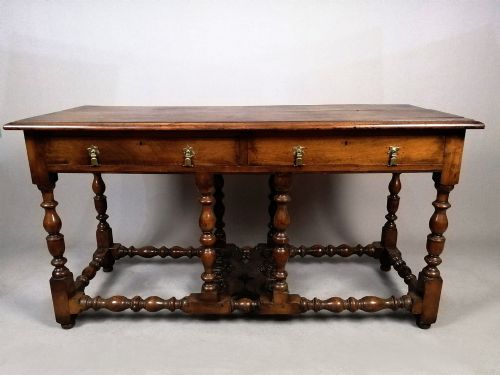
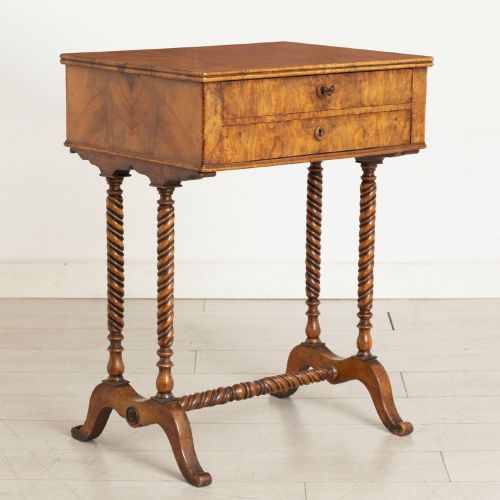
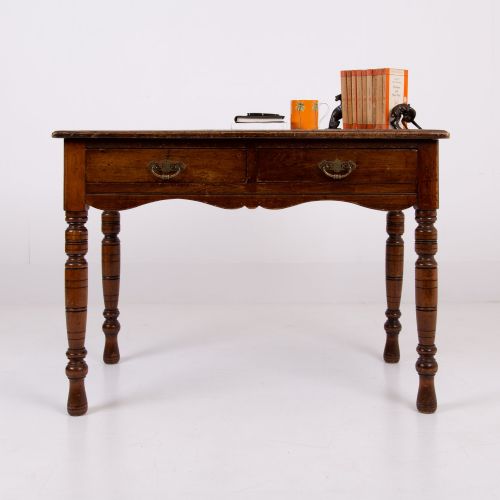
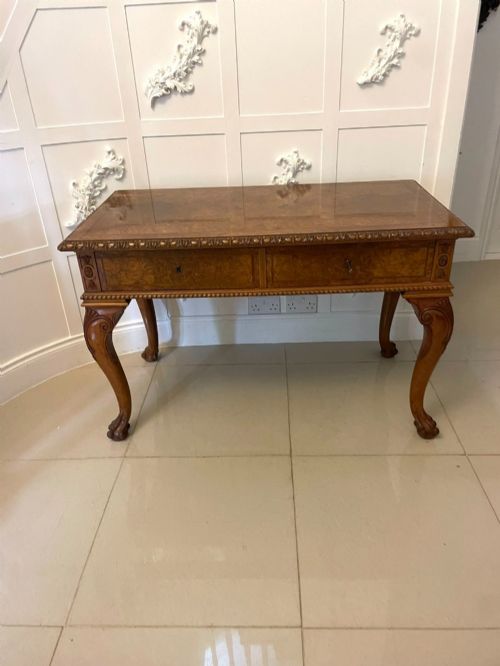
The versions most commonly met on this page include side tables, writing desks and bedside chests dating from the Victorian and Edwardian eras up to the Art Deco period. These examples span simple utilitarian forms and decorative pieces featuring burr walnut veneers or marquetry inlay.
Makers and manufacturers adapted the basic two-drawer format to suit changing domestic needs over the decades, producing everything from compact lamp tables to longer serving side tables. The overarching design prioritises accessible drawer storage beneath a timber top.
How they were made
Cabinet makers utilised solid timber and decorative veneers, applying burr walnut to tabletops and drawer fronts to highlight complex grain patterns. Brass handles, ormolu mounts and leather inserts frequently complement the woodwork on refined writing desks and console tables.
Construction techniques evolved from nineteenth-century hand joinery to incorporate twentieth-century production methods while maintaining sturdy timber frames. Marquetry inlay and carved details appear on specific Revival and Art Nouveau pieces, showing considerable craftsmanship in the surface decoration.
Some nineteenth-century writers confessed they hid old love letters in the secret recesses behind small side table drawers.
What varies in quality
The distinction between ordinary and superior examples rests on the choice of timber and the precision of the veneer work. Selected burr walnut grain patterns matched symmetrically across drawer fronts elevate the visual impact of a piece considerably.
Structural integrity and the quality of secondary woods used inside the drawers also dictate the standard of manufacture. Finer pieces demonstrate careful attention to detail in the joinery, drawer runners and overall proportions.
The Walnut Two Drawer Table Glossary
- Burr walnut
- Timber taken from a growth on the walnut tree, prized by cabinet makers for its swirling, highly figured grain patterns. It is frequently sliced into thin veneers for decorative tabletops.
- Marquetry
- The art of applying pieces of veneer to a structure to form decorative patterns and pictures. Craftsmen often employ contrasting woods to achieve detailed floral or geometric motifs.
- Ormolu
- Gilt bronze ornamentation applied to furniture, particularly popular in French-influenced design. It adds metallic contrast to the dark timber surfaces.
- Pembroke table
- A small occasional table featuring two hinged drop leaves that can be raised or lowered. Many examples include one or two drawers beneath the top.
Walnut Two Drawer Table: Frequently Asked Questions
Where should I put a walnut two drawer table?
These tables adapt easily to various domestic settings because of their modest footprint and useful storage. A bedside version suits a bedroom, while a side or console table fits a hallway or sitting room.
Position the piece against a wall or beside seating to make the most of the surface top and the twin drawers. Ensure the room humidity remains stable to protect the timber and veneer over time.
How do I date a walnut two drawer table?
Dating relies on examining the construction methods, hardware and stylistic details such as cabriole legs or straight tapered supports. Victorian and Edwardian examples often display distinct hardware and secondary woods that help pinpoint their era.
Comparing the drawer linings and overall proportions with documented pieces from the same period offers further clues. Stylistic revivals like Queen Anne or Art Deco also provide clear chronological markers.
How do I care for antique walnut furniture?
Protect walnut surfaces by keeping them away from direct sunlight and strong heat sources which can dry out the timber and veneer. Dust regularly with a soft, dry cloth and avoid harsh chemical polishes.
Occasional application of appropriate wax helps maintain the lustre of the wood without building up a heavy residue. Lift rather than drag the table when moving it to protect the joints and legs.
Are these tables suitable for everyday use?
Most of these tables were built for domestic utility and easily withstand normal daily activities such as writing or holding bedside lamps. The two drawers provide practical containment for small items.
Using coasters and mats helps prevent surface rings from cups or moisture on the polished timber top. With sensible care, a well-made period table serves reliably in a modern home.