




Walnut Trumpet Sewing Table
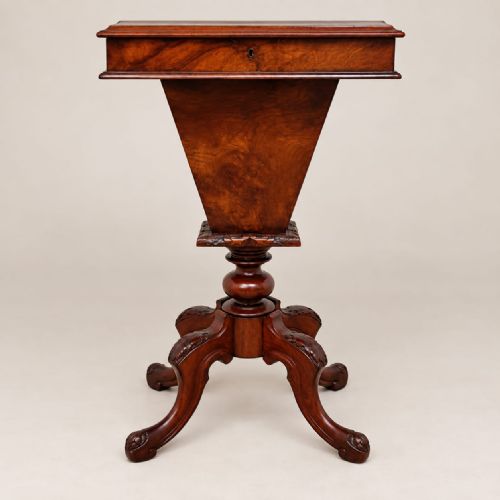
A walnut trumpet sewing table is an ingenious nineteenth-century piece designed for needlework, games and display.
Walnut Trumpet Sewing Table
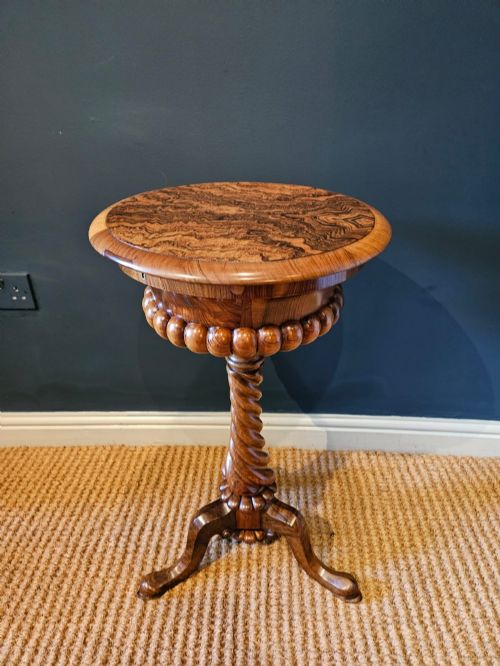
A walnut trumpet sewing table combines a trumpet or cone-shaped octagonal or round body with a tripod base, serving as both a practical sewing box and a graceful occasional table. These pieces emerge predominantly from the Victorian era, spanning the mid to late nineteenth century.
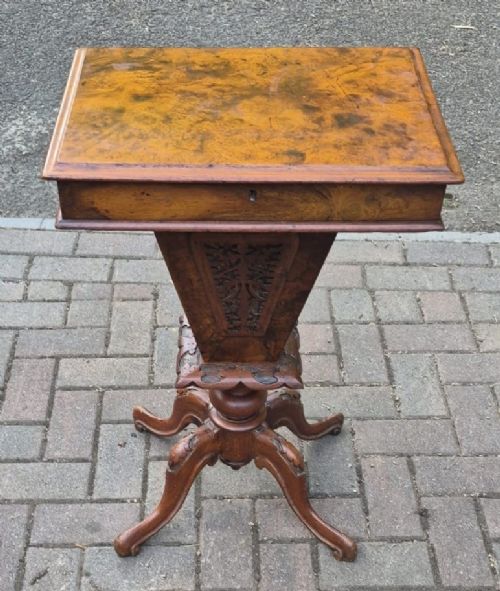
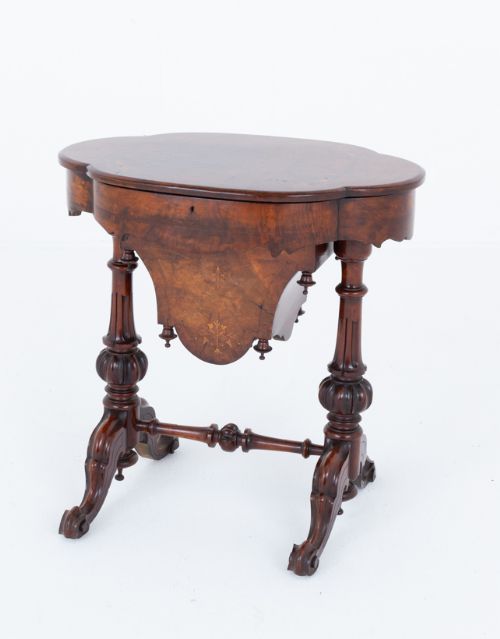
Most examples encountered here feature burr walnut veneers, intricate boxwood or marquetry inlay upon the hinged lid, and an interior fitted with compartments for cottons, needles and small tools. Beyond sewing, many double as games tables with chessboard tops or function simply as lamp and side tables in a drawing room.
Materials and construction
Cabinetmakers constructed these tables using solid wood frames layered with figured burr walnut veneers, which were carefully chosen to display swirling grain patterns across the tops and faceted sides. Marquetry, wood inlay and Tunbridge banding frequently ornament the hinged lids.
The distinctive trumpet or cone-shaped body typically conceals a fitted compartmentalised interior suspended above a slender pillar. This sits securely upon a carved tripod base, balancing lightness of form with structural stability.
Many a Victorian needlework table secretly doubled as a gaming arena, hiding a chessboard beneath the lid for an impromptu match.
Distinctions in quality
Quality rests upon the choice of burr walnut veneer and the precision of the marquetry and boxwood inlay adorning the top and body. Finer examples display meticulous attention to detail in the carved tripod base and the fitted interior compartments.
The integrity of the hinged mechanism and the retention of original fitted trays elevate an individual piece. Superior tables maintain crispness in their carved elements and rich depth within the polished wood grain.
The Walnut Trumpet Sewing Table Glossary
- Burr walnut
- A highly figured wood grain obtained from the excrescences or burls of walnut trees, prized for its complex swirling patterns.
- Trumpet table
- An occasional or work table featuring a distinctive flared, cone-shaped body resembling the bell of a musical instrument.
- Marquetry inlay
- Decorative patterns formed by fitting contrasting pieces of wood veneer into a prepared surface.
- Tripod base
- A three-legged support structure commonly utilised to provide stability for pedestal tables.
- Fitted interior
- The compartmentalised tray or layout beneath the lid designed to organise sewing implements and accessories.
Walnut Trumpet Sewing Table: Frequently Asked Questions
What is a walnut trumpet sewing table?
A walnut trumpet sewing table is a nineteenth-century Victorian piece featuring a flared, cone-shaped body, a hinged lid, and a tripod base designed to hold needlework and small items.
These versatile items often double as games tables with integrated chess boards or serve as decorative occasional tables in sitting rooms.
How were trumpet sewing tables used?
Victorian ladies utilised the fitted interior compartments to organise sewing threads, needles, thimbles and ongoing needlework projects.
The sturdy flat top also allowed the table to function as a surface for writing, playing chess, or displaying small lamps and ornaments.
What periods do these tables come from?
The pieces available date from the Victorian era, spanning the mid to late nineteenth century, specifically between eighteen fifty and eighteen ninety.
Stylistic shifts across these decades introduce variations in the complexity of the marquetry inlay and the carving of the tripod bases.
How do I identify burr walnut?
Burr walnut is recognisable by its dense, swirling grain patterns and mottled texture, created by growths on the walnut tree.
Cabinetmakers sliced this wood into thin veneers to display complex, decorative designs across the lids and bodies of superior tables.