
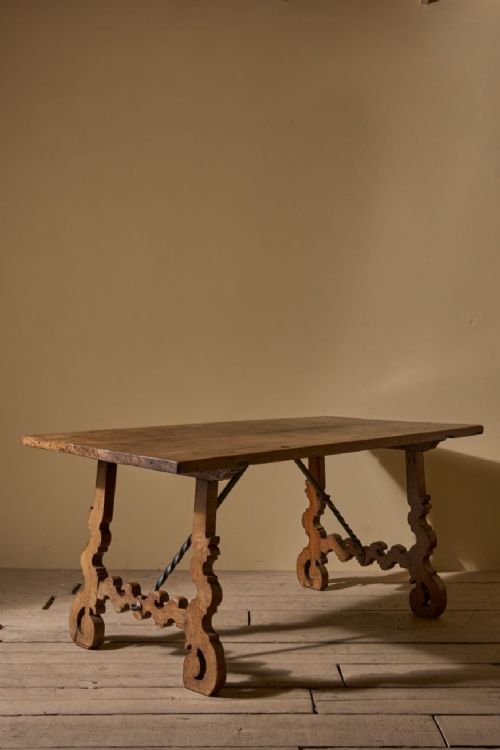
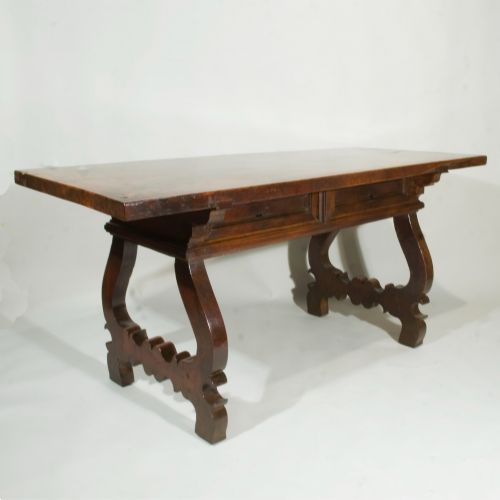
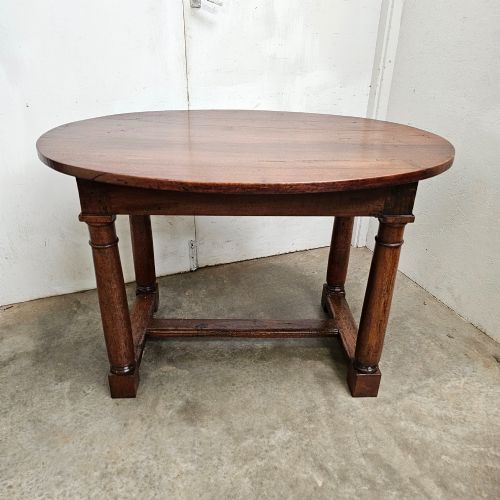
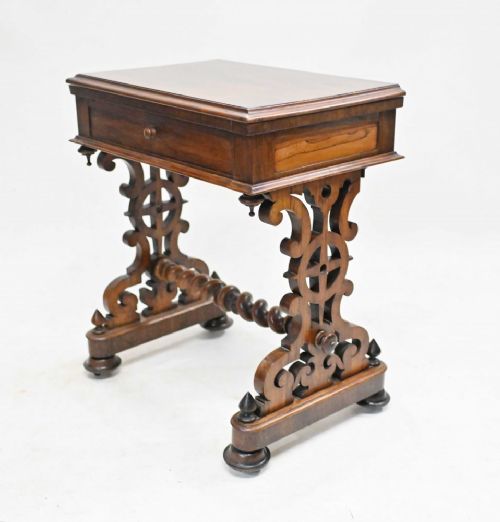



Walnut Trestle Side Table
These walnut trestle side table pieces bring together rich timber grains and traditional forms, offering a practical surface with enduring character for any interior.
Walnut Trestle Side Table
A walnut trestle side table brings together period craftsmanship and useful domestic surfaces, spanning centuries of woodworking traditions. When searching for a walnut trestle side table, buyers encounter examples originating primarily from continental European and British workshops across the seventeenth, eighteenth, and nineteenth centuries.
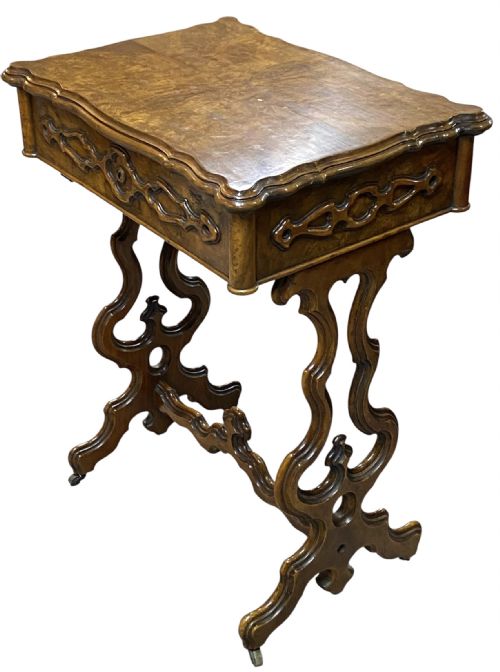
Victorian interpretations also appear frequently, often incorporating burr walnut veneers and turned spindle bases. These tables served various historical functions from serving and games to general parlour use.
How they were made
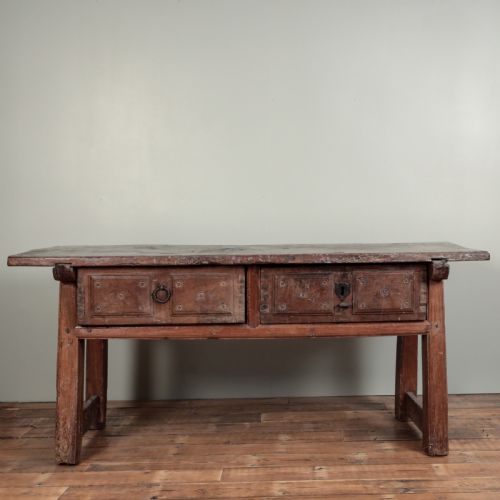
Carpenters utilised solid walnut and decorative burr walnut veneers applied over secondary timbers, often enriched with boxwood inlay. Structural integrity relied on traditional joinery methods, supplemented in earlier continental examples by wrought iron or brass stretchers and fittings.
Surface finishing involved hand-applied polishes that enhanced the natural figure and patina of the timber. Marble tops also feature on select continental and Victorian iterations, adding weight and contrasting texture to the wooden framework.
The furniture styles represented across current pieces include Spanish Baroque, French Provincial, Renaissance Revival, and Edwardian designs.
What varies in quality
The distinction between ordinary and exceptional pieces lies in the selection of timber figures and the crispness of carved details. Richly figured burr walnut and deep original patina elevate a piece, whereas flat or heavily reworked surfaces diminish its visual presence.
Proportion and structural harmony also dictate distinction, particularly in seventeenth-century Spanish forms and ornate Victorian card tables. Finer examples maintain balanced framing and precise marquetry inlay without appearing cluttered or disproportionate.
The Walnut Trestle Side Table Glossary
- Burr walnut
- A highly prized veneer sliced from the knot growths of walnut trees, yielding intricate, swirling grain patterns. It was frequently utilised on Victorian cabinet furniture for decorative impact.
- Patina
- The surface sheen and mellowing of colour acquired by timber through age and handling. Good original patina indicates minimal harsh restoration.
- Marquetry
- Decorative patterns formed by fitting contrasting veneer slices into a prepared wooden ground. This technique often ornaments Victorian card and games tables.
- Serpentine
- A gently undulating curved line shaping the edge of a table top or apron. This contour adds fluidity to nineteenth-century designs.
- Trestle
- A structural support consisting of a horizontal beam fixed to two splayed legs. It provides stable foundations for many historical table forms.
Walnut Trestle Side Table: Frequently Asked Questions
How do I date a walnut table?
Dating relies on examining construction methods, timber selection, and stylistic markers such as turned spindle bases or boxwood inlay. Seventeenth-century forms often display simpler, heavier framing while Victorian pieces incorporate elaborate veneering.
Hardware, joinery marks, and secondary woods further clarify the manufacturing period. Comparing these elements against known stylistic eras establishes the approximate age.
Where were these tables used historically?
These tables functioned primarily in reception rooms, halls, and parlours for serving, writing, or leisure activities like chess and card games. Console and centre tables occupied prominent positions against walls or in the middle of grand rooms.
Smaller occasional and lamp tables accommodated lighting and decorative objects as domestic interiors evolved during the Victorian and Edwardian periods.
How do I care for walnut furniture?
Maintenance requires keeping timber away from direct heat sources and strong sunlight to prevent veneer lifting and fading. Regular dusting with a soft, dry cloth preserves the polished surface.
Occasional application of appropriate wax polish maintains the moisture and natural lustre of the walnut grain without building up heavy residues.
What is the difference between solid and veneered walnut?
Solid walnut utilises timber cut straight from the tree throughout the construction of the piece, offering robust durability. Veneered walnut applies thin slices of decorative wood, such as burr walnut, over a stable secondary timber core.
Veneering allowed makers to display intricate, swirling grain patterns on flat surfaces like table tops that solid planks could not safely provide.