
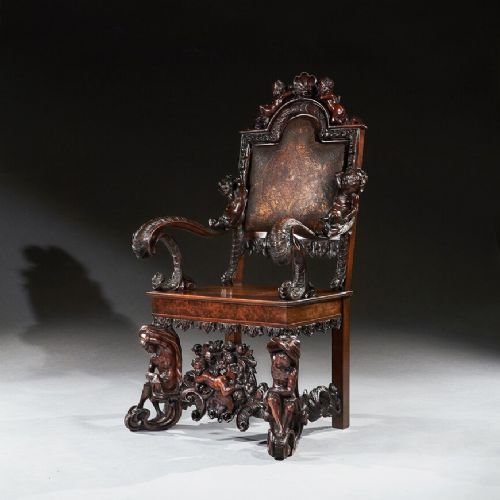
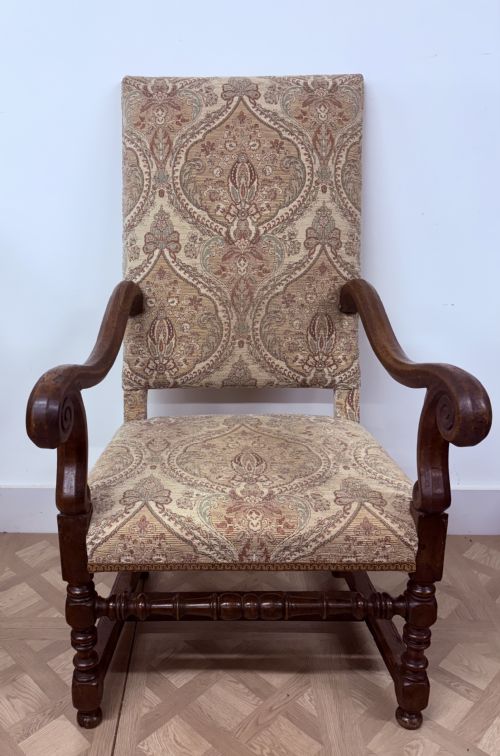
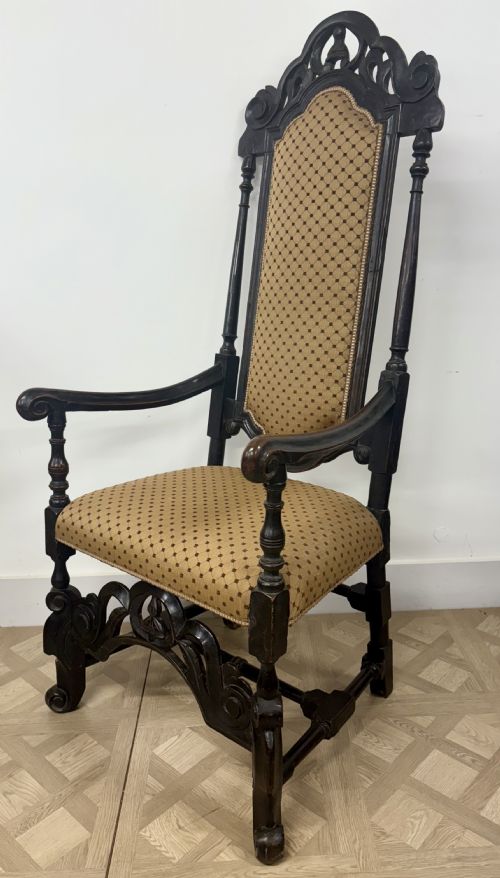
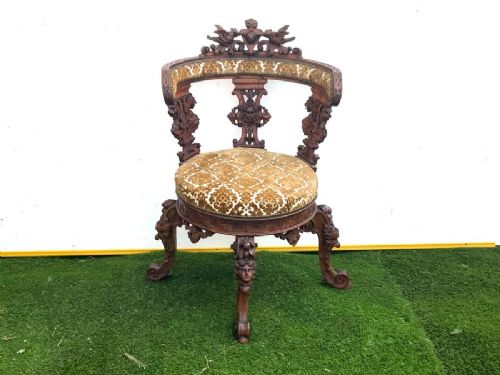


Walnut Throne Armchair
A walnut throne armchair carries deep carved presence and status, shaped by centuries of ambitious design from English and Continental workshops.
Walnut Throne Armchair
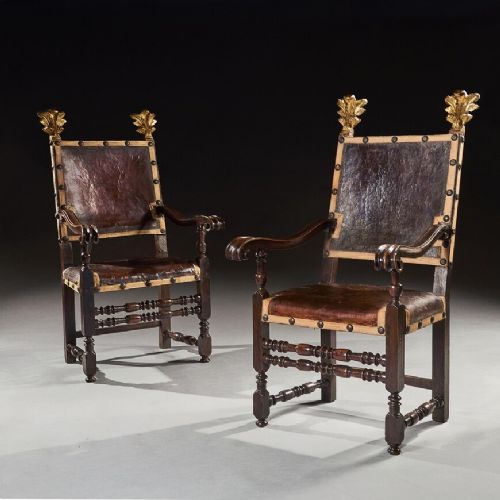
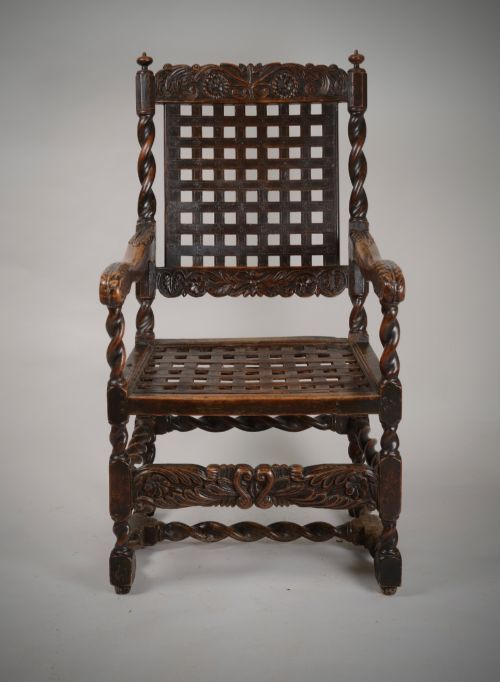
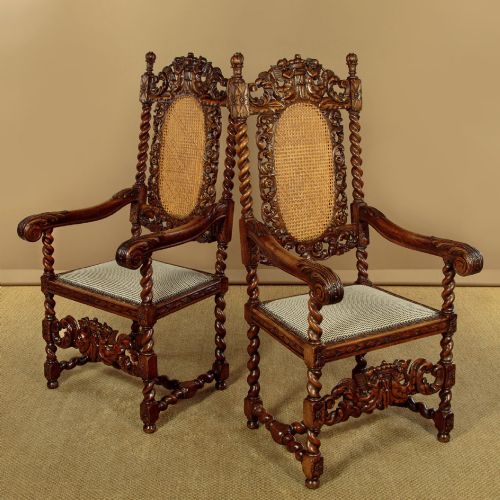
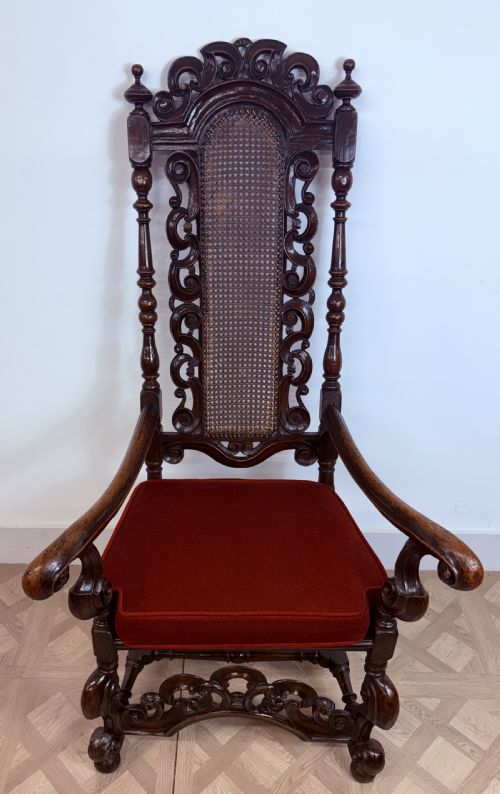
A walnut throne armchair is a commanding seating form designed to project authority, frequently surfacing in 17th-century and 19th-century interpretations. These grand chairs draw on Renaissance Revival, Carolean, Baroque, and Gothic traditions, presenting tall backs and substantial armrests.
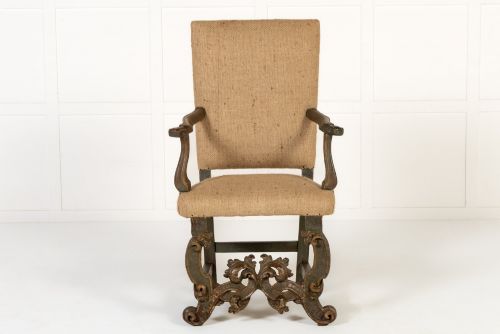
The varieties span Italian Baroque and French styles to English country house pieces, often featuring high wingbacks or parcel-gilt details. Buyers encounter everything from austere 17th-century frames to elaborate Victorian and later revival interpretations built for display.
Materials and construction
Solid walnut provides the dense, dark structural framework, chosen for its responsiveness to deep carving and scrollwork. Artisans built these imposing frames using traditional joinery to support heavy ornamentation and high backs.
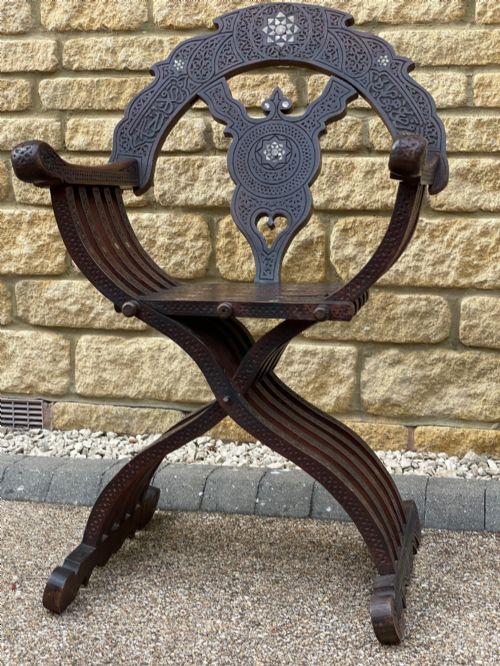
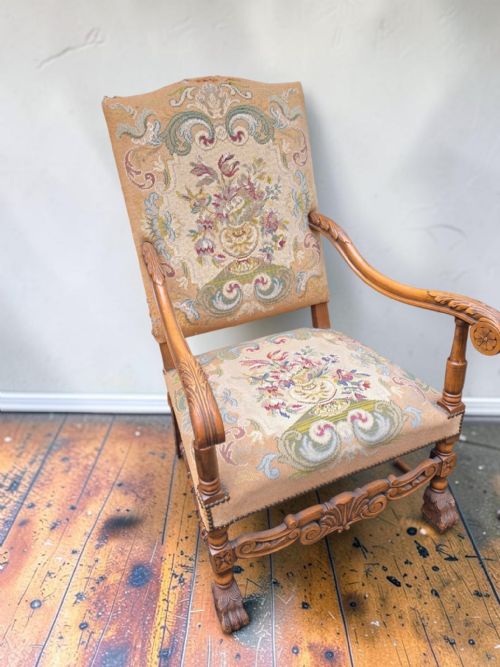
Surfaces are upholstered or accented with materials such as leather, velvet, tapestry, cane, and brass details. Some pieces incorporate mother of pearl inlay or parcel-gilt highlights alongside heavy textile coverings.
The listings span multiple centuries, uniting 17th-century originals with 19th-century revival interpretations in styles from Baroque to English country house.
Judging the work
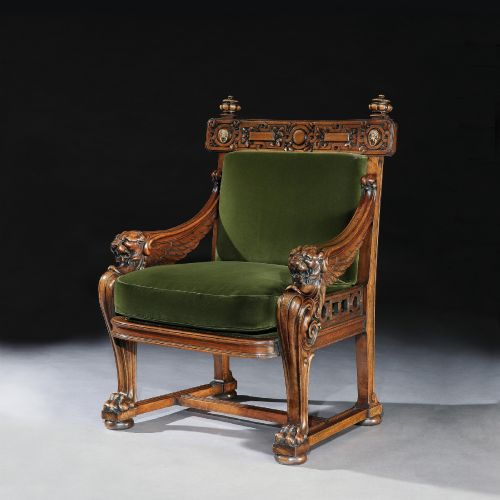
Quality rests in the crispness and depth of the carved walnut detail, distinguishing master handwork from later, shallower execution. The integration of sculptural elements, from lion monopodia to elaborate scroll arms, dictates the visual success of the piece.
The integrity of the structural timber and the authenticity of the period upholstery materials also separate ordinary examples from exhibition-grade works. Coherence between the walnut frame and its historical style period governs the standing of the chair.
Andrea Brustolon·Thomas Hope
The Walnut Throne Armchair Glossary
- Monopodia
- A furniture support carved as a single animal leg and foot. It appears frequently in classical revival designs.
- Caquetoire
- A light, high-backed armchair originating in the 16th century to allow women to converse freely. French examples appear in later revival forms.
- Parcel-gilt
- Partially gilded with gold leaf or powder. This technique highlights specific carved details on the walnut surface.
- Carolean
- Pertaining to the reign of Charles II of England, noted for lavish carving and cane work. It heavily influences later 19th-century revival armchairs.
- Fauteuil
- An open-armed upholstered chair with wooden arm supports. French versions emphasise stylistic grace.
Walnut Throne Armchair: Frequently Asked Questions
What defines a walnut throne armchair?
A walnut throne armchair is an imposing seat featuring a tall back, heavy proportions, and rich carving designed to command a room. These pieces reference historical idioms such as Baroque, Renaissance, and Carolean styles.
They utilise dense walnut framing paired with upholstery materials like leather, tapestry, or velvet. The form serves as both a functional seat and a sculptural statement.
How were these large armchairs used historically?
These grand chairs were positioned in reception rooms, halls, and galleries to denote status and authority. Important guests or heads of household sat in them during audiences.
Over time, their role shifted toward decorative display and comfortable seating in libraries and country houses. Their substantial presence suited them to perimeter placement against panelled walls.
How do I live with a throne chair?
A walnut throne armchair requires generous floor space and clearance to display its carved back and arms properly. It functions best as an anchor piece in a study, hallway, or spacious living area.
Keep the walnut timber conditioned and protect textiles from direct sunlight. Pairing the chair with simpler modern furnishings allows the historic carved details to stand out.
How do I tell 17th-century pieces from 19th-century revivals?
Seventeenth-century originals show period tool marks, timber shrinkage, and structural wear consistent with early joinery techniques. The patina on the walnut develops deep integration over centuries.
Nineteenth-century revival pieces, while often heavily carved and impressive, utilise 19th-century construction methods and saw marks. Stylistic exaggeration often points to Victorian or revival reinterpretations rather than primary era production.