




Walnut Three Seater Sofa
A walnut three seater sofa brings rich wood grain and generous seating to a room, offering both traditional grandeur and striking modernist curves.
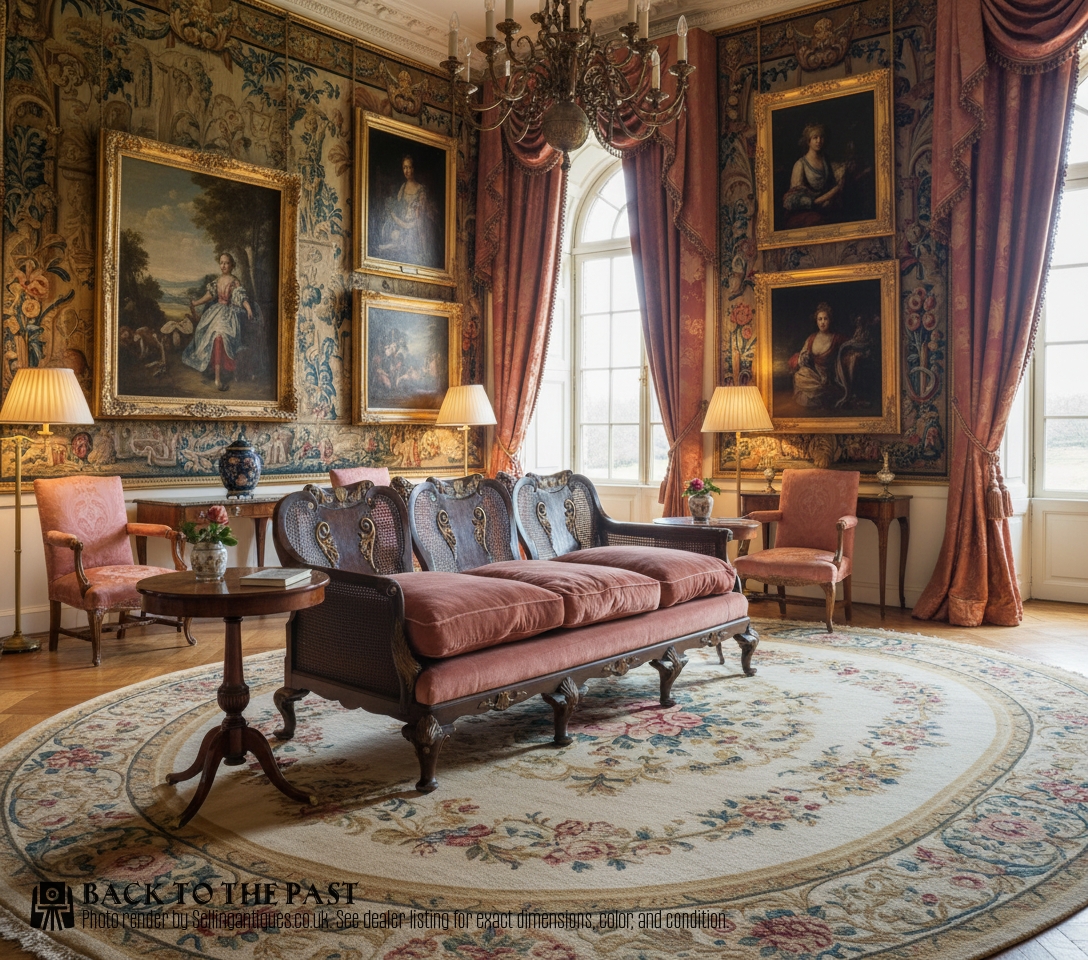
Walnut Three Seater Sofa
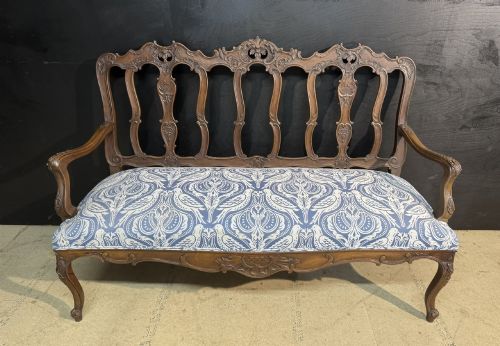
A walnut three seater sofa spans several distinct periods, most commonly appearing in nineteenth-century revivals and nineteen-thirties modernist forms. The selection includes substantial nineteen-century settees alongside distinctive nineteen-thirties Art Deco designs.
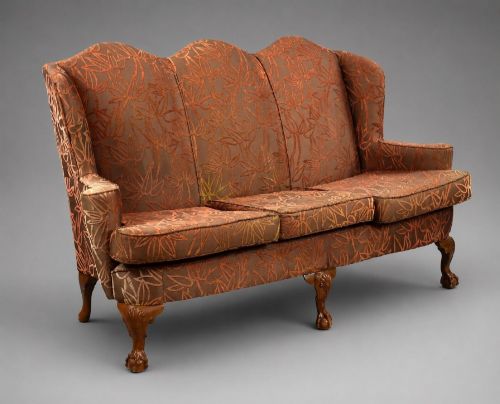
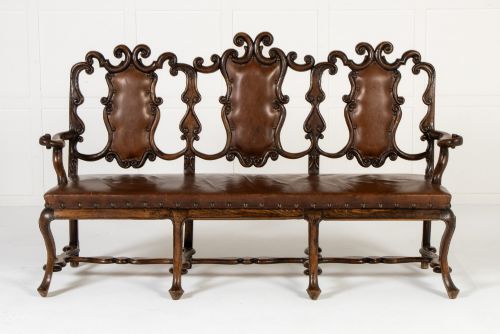
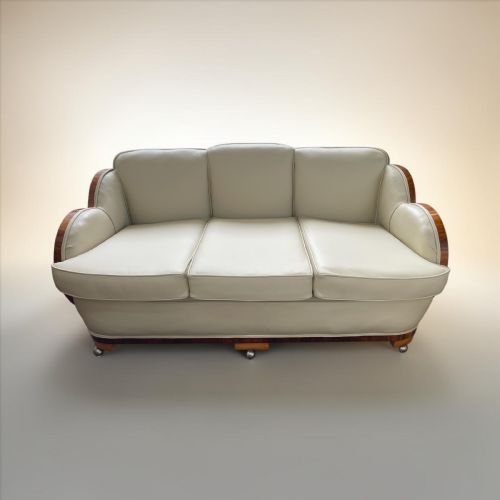
Buyers encounter heavy nineteenth-century frames finished in Queen Anne or Rococo revival styles alongside sleek Biedermeier and Epstein cloud shapes. These substantial settees provide seating for three while anchoring a room with dark wood tones.
The walnut three seater sofa category encompasses both traditional upholstered settees with exposed wooden arms and sweeping nineteen-thirty designs upholstered in leather or fabric. Each piece reflects the dominant decorative taste of its respective decade.
How they were made
Makers built these frames using solid walnut and walnut veneer applied over secondary timbers, often shaping the wood into elaborate cabriole legs or smooth curved rails. Brass details and traditional upholstery materials complete the construction.
Art Deco examples utilise sleek curved walnut veneers paired with leather or textile upholstery, while nineteenth-century pieces rely on carved wooden frames and sprung padding. Skilled craftspeople combined traditional joinery with luxurious covering materials.
Walnut Three Seater Sofa Retail Price Guide 2026
Typical asking prices for walnut three seater sofa among the pieces listed under this phrase on Sellingantiques today, from the lower quarter to the upper quarter. They describe what is for sale here now, not the wider market.
The listings span from nineteenth-century revivals to nineteen-thirties Art Deco designs, utilising walnut, leather, and fabric.
What varies in quality
Quality rests in the crispness of the wood carving and the depth of the walnut grain, distinguishing mass-produced items from master-built furniture. Superior frames exhibit careful timber selection and harmonious proportions.
The integration of the upholstery with the wooden framework separates standard examples from exceptional ones. Finer pieces maintain structural integrity and balanced lines whether dressed in leather, textile, or traditional fabric.
Harry and Lou Epstein·Howard and Sons
The Walnut Three Seater Sofa Glossary
- Walnut
- A dense, hard timber prized for its rich dark colour and striking grain patterns. Cabinet makers have used it for centuries to create fine seating and case furniture.
- Art Deco
- A design movement of the nineteen-thirties characterised by sleek lines, geometric shapes, and smooth surfaces. It produced iconic cloud-shaped seating.
- Queen Anne Style
- A traditional design aesthetic featuring curved cabriole legs, pad feet, and graceful, restrained lines. It experienced several revivals during the nineteenth and twentieth centuries.
- Biedermeier
- A central European style emphasising utilitarian comfort and clean lines without excessive ornamentation. Furniture from this tradition often highlights the natural beauty of wood veneers.
- Bergere
- An enclosed upholstered armchair or settee featuring exposed wooden framing and cane or upholstered sides. This French form provides a refined silhouette.
Walnut Three Seater Sofa: Frequently Asked Questions
What periods do these sofas cover?
The available pieces span the nineteenth century up to nineteen-thirty. This includes nineteenth-century revivals alongside nineteen-thirties modernist designs.
Buyers find nineteenth-century settees sitting alongside nineteen-thirty Art Deco creations. Each era brings distinct manufacturing techniques and aesthetic priorities to the walnut frame.
How do I identify Art Deco pieces?
Art Deco sofas from nineteen-thirty often feature smooth, cloud-like upholstery shapes and streamlined walnut veneers. These designs depart heavily from earlier revival styles.
Look for rounded silhouettes and minimal carved ornamentation. The emphasis rests on the smooth flow of the wood and the integrity of the upholstered curves.
What materials are used?
Construction relies primarily on walnut and walnut veneer supported by internal wood framing. Upholstery consists of leather, fabric, or textiles.
Some pieces incorporate brass details alongside traditional stuffing and springs. The combination of dark wood and varied soft coverings defines the visual appeal.
Are these settees comfortable?
These large pieces provide generous seating for three people with deep cushioning and supportive backs. Nineteenth-century and twentieth-century examples alike were built for daily use.
Internal spring systems and padded arms offer substantial support. The seating comfort matches the visual presence of the heavy wooden frames.