

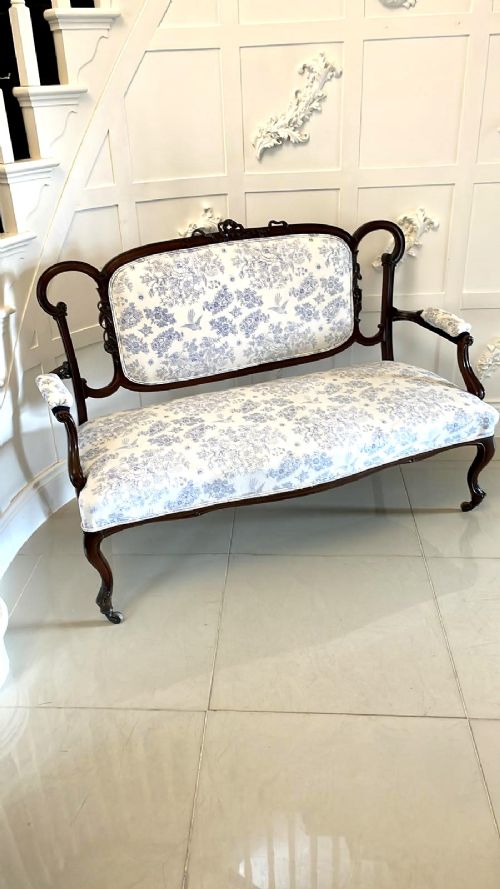
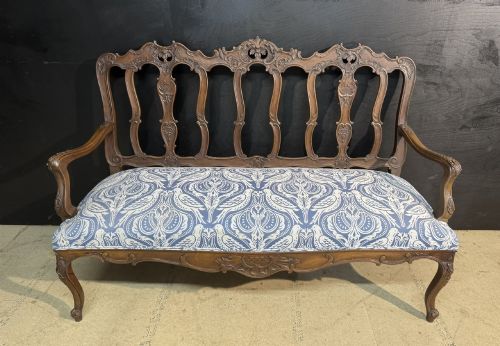
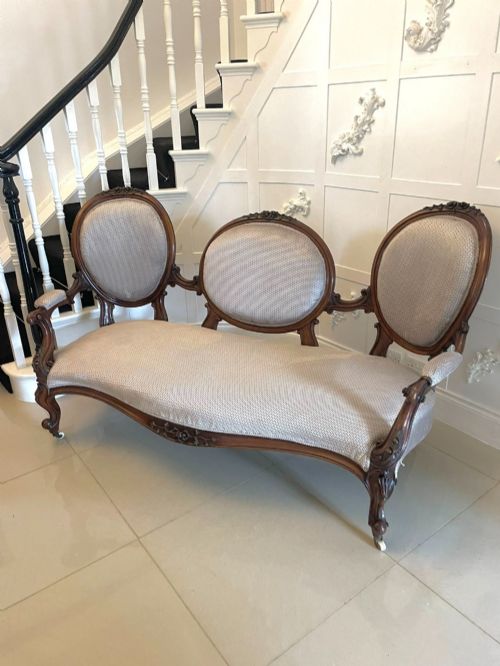

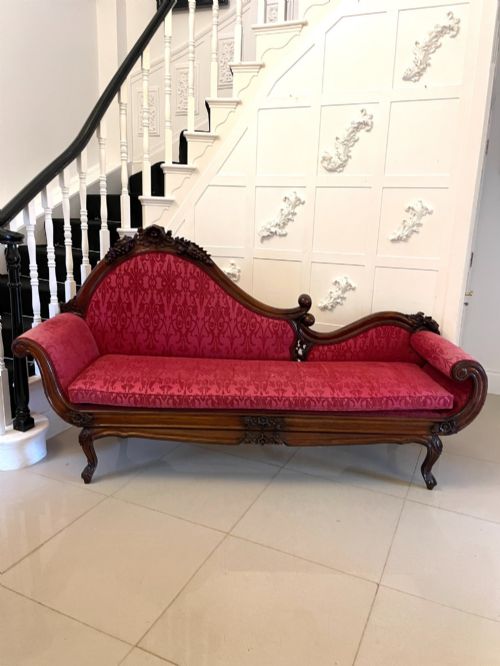
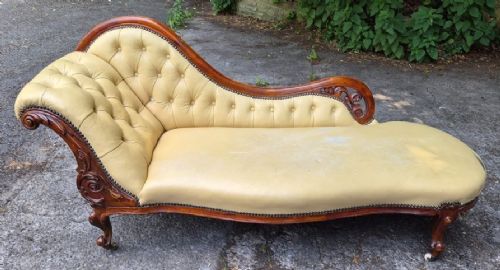


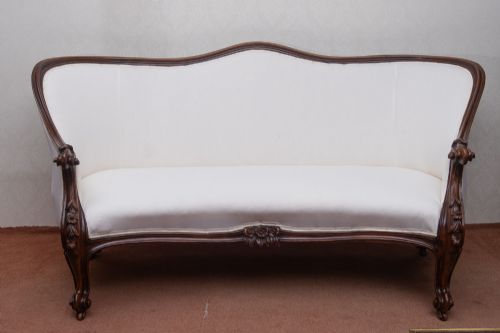


Victorian Rococo Couch
A victorian rococo couch brings sweeping, exuberant curves and rich timber frames to a period interior.
Victorian Rococo Couch
A victorian rococo couch takes the ornate, flowing lines of the mid-nineteenth century and applies them to seating forms like sofas, settees, and chaise longues. You encounter walnut, mahogany, and rosewood frames shaped with deep carvings, alongside giltwood examples reflecting earlier French influence.
The pieces on this page span the Victorian era, moving from mid-century productions through to later nineteenth-century interpretations. Forms range from double-end settees and cameo-back sofas to large country house seating.
Makers working within this idiom utilised heavy timber framing combined with upholstered textiles, velvet, and fabric to create decorative seating suitable for formal reception rooms.
Materials and construction
Timbers such as walnut, mahogany, and rosewood form the structural chassis of these couches, allowing craftsmen to execute deep, curvilinear carvings along the crest rails and cabriole legs. Giltwood appears on grander pieces, providing a gilded surface over the carved wooden base.
Upholstery techniques rely on traditional springing and stuffing, finished with textile coverings, velvet, and button-upholstered panels secured with brass detailing. Frames are constructed with joinery suited to heavy showwood designs, where the timber structure remains visible around the upholstered elements.
Victorian Rococo Couch Retail Price Guide 2026
Typical asking prices for victorian rococo couch among the pieces listed under this phrase on Sellingantiques today, from the lower quarter to the upper quarter. They describe what is for sale here now, not the wider market.
Listings feature nineteenth-century seating constructed primarily from walnut, mahogany, and rosewood, incorporating button upholstery and giltwood finishes.
Evaluating craftsmanship and design
Quality rests in the crispness and depth of the timber carving, distinguishing masterwork showwood frames from simpler, mechanised production. The selection of timber grain, particularly in walnut and rosewood, dictates the visual weight of the frame.
Proportion and scale separate standard domestic seating from ambitious salon pieces. The integration of the upholstery with the carved wooden framework determines the structural integrity and aesthetic balance of the couch.
Morison And Co Edinburgh
The Victorian Rococo Couch Glossary
- Showwood
- Timber framing left exposed around the upholstered portions of a sofa or settee. This allows the carved details of the wood to remain visible as a primary decorative element.
- Chaise Longue
- An elongated seat designed for reclining, combining the backrest of a sofa with the extended seat of a daybed. These pieces often feature a single scroll end.
- Cabriole Leg
- A furniture leg that curves outward and then tapers inward, typically ending in a scroll or carved foot. This form is characteristic of rococo revival design.
- Giltwood
- Wood that has been coated with a thin layer of gold leaf or gilt powder. It appears on formal nineteenth-century seating influenced by French decorative arts.
- Cameo Back
- A chair or sofa back featuring a central upholstered oval panel surrounded by a carved wooden border. The shape resembles a cameo brooch.
Victorian Rococo Couch: Frequently Asked Questions
How do I identify a rococo revival frame?
Look for asymmetrical C-scrolls, floral motifs, and flowing, naturalistic curves carved directly into the exposed timber frame. These elements distinguish the style from stricter classical or geometric periods.
The wood is typically walnut or mahogany, shaped into undulating crest rails and cabriole legs that mimic eighteenth-century French designs.
Where should I place a settee in a modern room?
A settee or small sofa works well as a focal point in a drawing room, bedroom, or large hallway where its carved timber back can be appreciated. Because many Victorian designs feature finished backs or double-end configurations, they can sit away from walls.
Pair the piece with neutral surroundings to let the rich wood tones and textured upholstery stand out without crowding the space.
What is the difference between a sofa and a chaise longue?
A sofa provides a symmetrical seating arrangement designed for multiple people to sit upright or semi-reclined against a structured backrest. A chaise longue is an asymmetrical daybed intended for single-person reclining, featuring one raised headrest end.
Both forms utilise similar carved timber frames and upholstered construction during the Victorian period.
How do I care for nineteenth-century wood and upholstery?
Maintain the timber frame with microcrystalline wax applied sparingly to nourish the wood without building up residue. Avoid placing the couch in direct sunlight to protect sensitive fabrics and prevent timber drying.
Vacuum upholstered velvet and textile surfaces gently with a soft brush attachment to remove dust without crushing the pile.