



French Style Walnut Couch
These French style walnut couch selections offer graceful seating shaped by historic craft traditions, bringing distinctive period character into modern sitting rooms.
French Style Walnut Couch
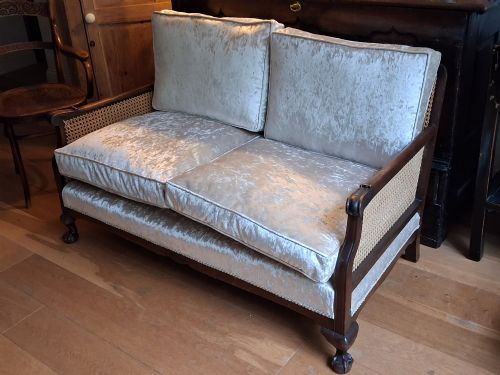
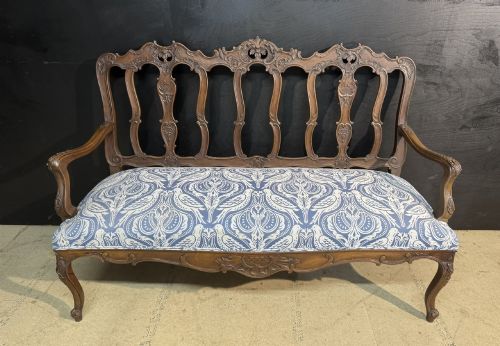
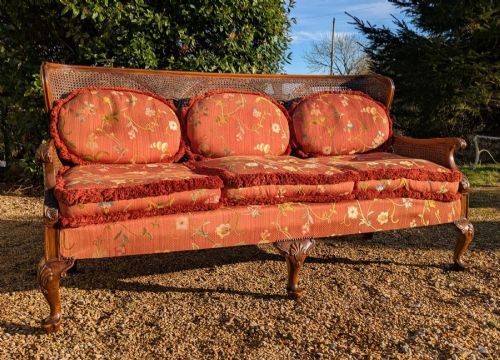
A french style walnut couch brings together ornate woodwork and generous upholstery, with pieces appearing across nineteenth-century and early twentieth-century periods. Buyers searching for a french style walnut couch encounter varied seating forms including settees, large three-seater sofas, double-end settees, and chaise longues.
The prevalent stylistic influences span Rococo Revival, Georgian Revival, and specific French Louis XV adaptations. Makers shaped these walnut frames with decorative carvings, often pairing the exposed timber with cane panels or plush textile coverings.
Examples range from compact two-seater settees to expansive salon couches designed for formal entertaining. The structural varieties show both traditional cane work and fully upholstered frames suited to distinct interior schemes.
Materials and construction methods
The structural framework relies upon solid walnut timber, chosen for its strength and rich grain patterns which artisans carved into undulating scrollwork and floral motifs. Workshops utilised this dense wood to support deep-set frames without compromising the delicate curvature of cabriole legs.
Upholstery techniques combined traditional webbing and springs with feather cushions, linen, velvet, and various decorative textiles. Where cane panels appear, craftsmen hand-wove natural materials into structured open patterns along the backrests and sides.
French Style Walnut Couch Retail Price Guide 2026
Typical asking prices for french style walnut couch among the pieces listed under this phrase on Sellingantiques today, from the lower quarter to the upper quarter. They describe what is for sale here now, not the wider market.
Some nineteenth-century settees were built with asymmetric ends so ladies could recline without crushing their voluminous skirts.
Factors of quality and finish
The distinction between standard production and exceptional examples lies in the depth and crispness of the hand-carved woodwork along the crest rails and aprons. Superior pieces display fluid lines where every scroll and floral detail integrates seamlessly into the walnut frame.
Upholstery specification and internal padding also determine the grade of a piece, separating basic commercial seating from sophisticated salon furniture finished with high-grade velvet, silk, or carefully tensioned cane.
The French Style Walnut Couch Glossary
- Canapé
- An upholstered sofa or settee featuring an exposed wooden frame, typically ornamented with carved details characteristic of French revival designs. These pieces served as principal seating in formal nineteenth-century reception rooms.
- Bergere
- An enclosed upholstered armchair or sofa featuring wooden sides filled with cane or upholstery work. This seating style provides a solid yet visually light appearance.
- Chaise Longue
- An elongated seating unit designed for reclining, combining the backrest of a sofa with the extended seat of a daybed. Nineteenth-century examples often incorporate double-end configurations with scroll arms.
- Rococo Revival
- A nineteenth-century design movement characterised by asymmetrical motifs, C-scrolls, floral carving, and curving lines inspired by earlier French royal aesthetics.
French Style Walnut Couch: Frequently Asked Questions
How do I care for cane panels?
Cane requires gentle dusting with a soft brush and occasional light moisture to prevent the natural fibres from becoming brittle over time. Avoid placing these pieces in direct sunlight or near strong heat sources.
Maintaining a stable indoor humidity level helps preserve the tensile strength of the woven material across antique chair backs and sofa frames.
Where should I place a settee?
These seating pieces suit formal living rooms, large hallways, or spacious bedrooms where the carved walnut frame remains visible from multiple angles. Positioning them away from walls highlights the detailed woodwork along the back.
Ensure adequate clearance around curved chaise longues or three-seater sofas to maintain balance within the room layout.
Are feather cushions original?
Many nineteenth-century and early twentieth-century couches utilised natural feather or down fillings to achieve a soft, comfortable seating experience. Over generations, original fillings often required replacement with comparable natural materials.
Checking the internal support structure helps determine whether the upholstery retains its period construction methods or has undergone modern restoration.
How do I distinguish Louis XV style?
Louis XV style pieces are defined by asymmetrical ornamentation, cabriole legs, and sweeping scrollwork free of straight architectural lines. The decorative carving focuses on natural motifs such as leaves and floral sprays.
Walnut frames from this tradition emphasise curved silhouettes and light, organic forms designed for intimate nineteenth-century salon settings.