

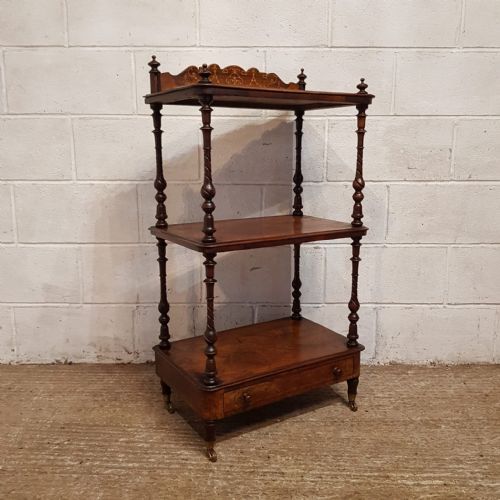
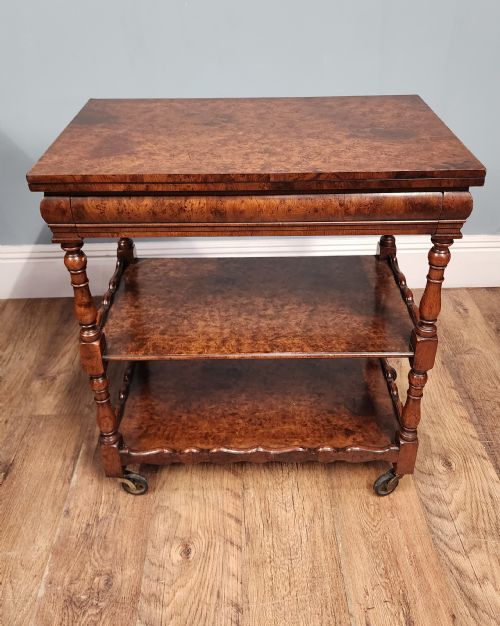
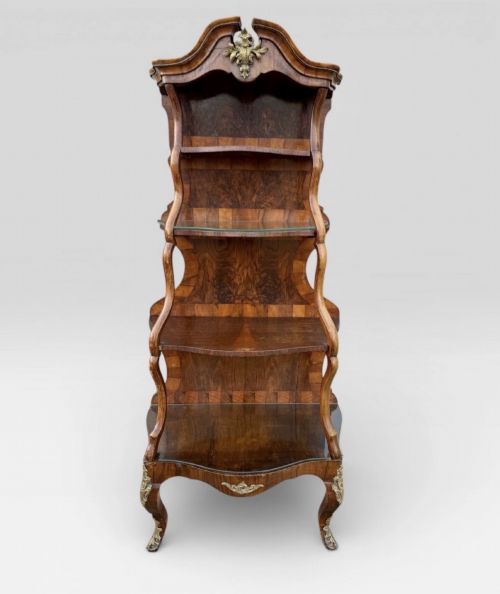


Walnut Standing Whatnot
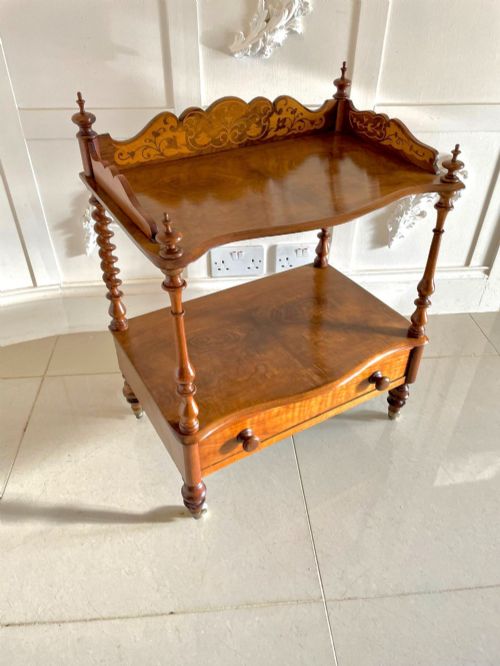
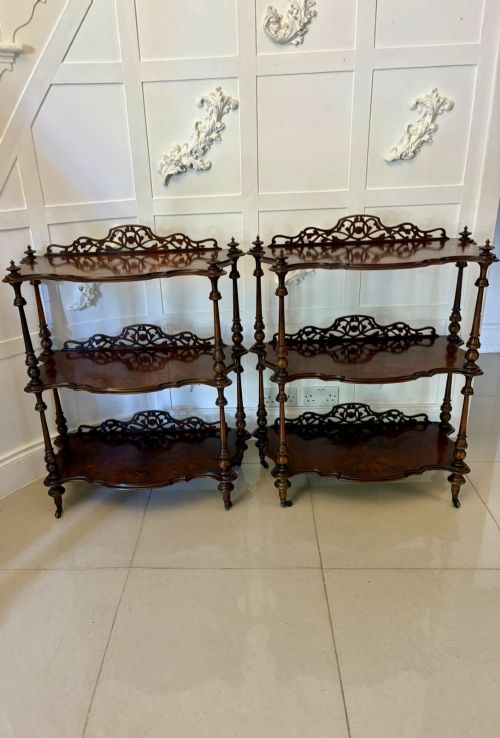
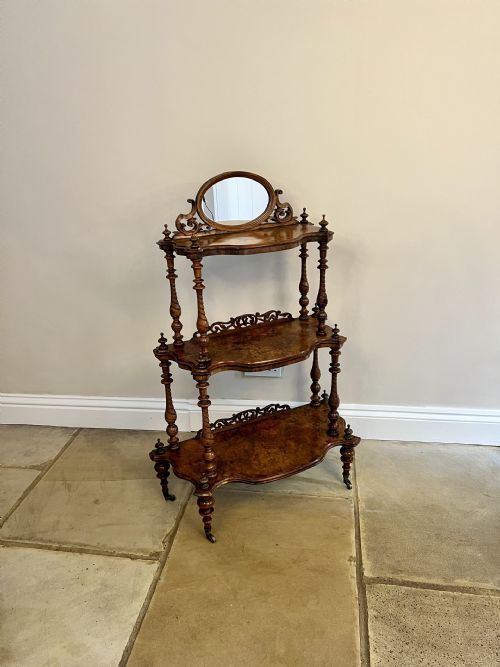
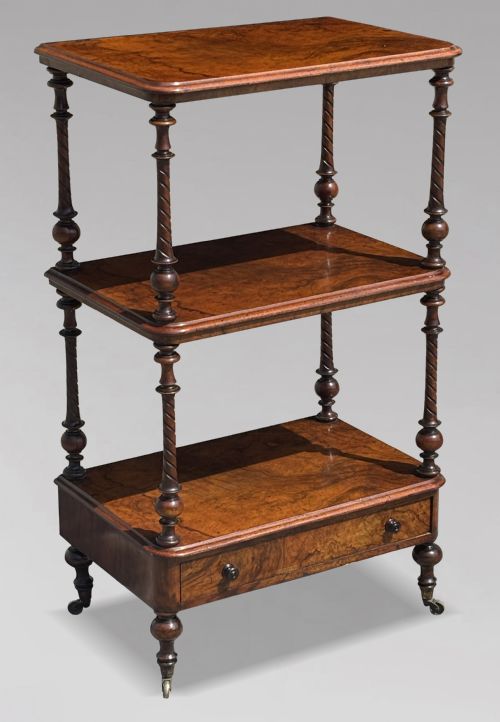
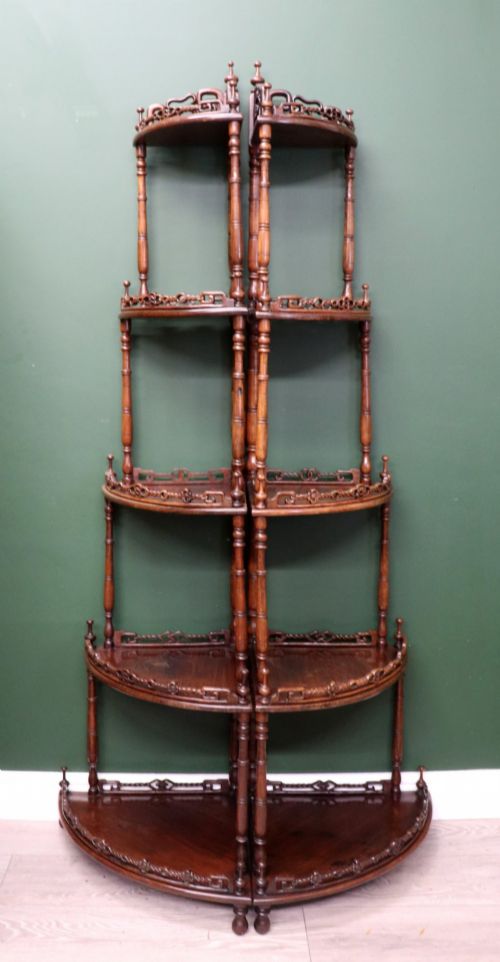
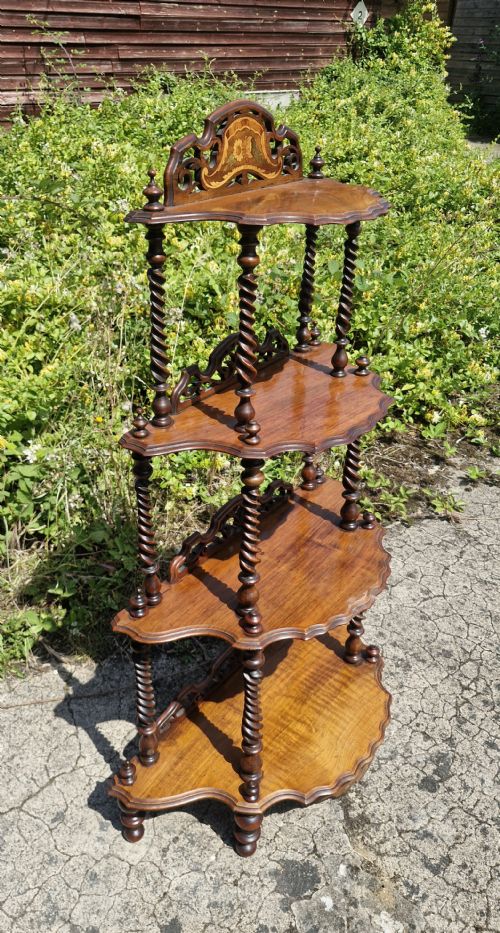
These walnut standing whatnot pieces are multi-tiered display stands designed to hold books and ornaments, offering vertical storage with distinct period character.
Walnut Standing Whatnot
A walnut standing whatnot is a multi-tiered open shelving unit designed to display books, ceramics, and ornaments in nineteenth-century drawing rooms and reception rooms.
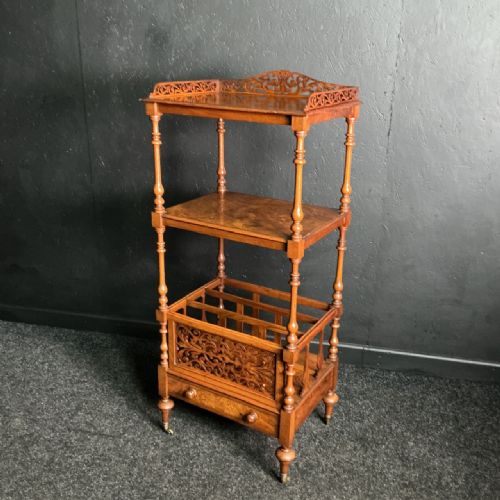
Most examples encountered here date from the Victorian and Edwardian periods, appearing in freestanding rectangular formats, corner configurations, and combined forms with lower compartments for sheet music or books.
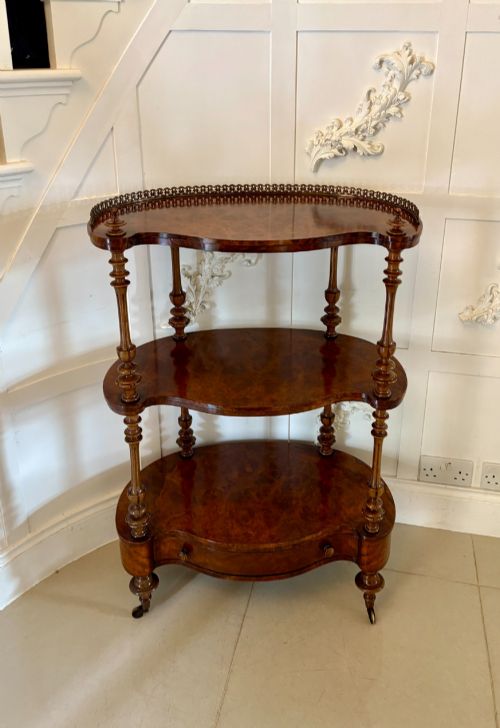
These pieces utilise vertical space effectively, often featuring three or four graduated tiers supported by turned columns, carved pillars, or brass supports.
Materials and Construction
Cabinet makers utilised solid walnut and decorative burr walnut veneers applied to secondary timbers, creating rich grain patterns across the shelves and panels.
Many items incorporate marquetry inlay, brass mounts, gilt metal accents, and ceramic or glass elements to elevate the decorative surface of the tiers.
Structural joinery includes turned vertical supports and finely fitted shelves, occasionally supplemented by ormolu mounts and ebonised wood details.
Some nineteenth-century examples cleverly combine music storage and ornament display, proving that Victorians truly hated an empty corner.
Quality Variations
The choice of timber creates a primary distinction, where highly figured burr walnut and intricate marquetry inlay separate standard productions from exhibition pieces.
Construction refinement shows in the turning of the supports, the precision of the shelf joints, and the integration of secondary functions such as integrated drawers or canterbury partitions.
Proportion and silhouette dictate visual success, ranging from simple three-tier open shelves to elaborate serpentine-shaped corner stands and carved freestanding units.
Gillows
The Walnut Standing Whatnot Glossary
- Whatnot
- An open multi-tiered piece of furniture designed for displaying ornaments and small objects. It originated in the eighteenth century and remained popular throughout the Victorian era.
- Burr Walnut
- A specialised wood veneer taken from the warted growths on walnut trees. It yields complex, swirling grain patterns highly prized for cabinet fronts and table tops.
- Etagere
- A French term for a display piece consisting of a set of open shelves for knick-knacks. These often mirror the form of the standing whatnot.
- Canterbury
- A low stand featuring slatted partitions, originally built to hold sheet music or folios. When combined with a whatnot, it provides dual storage and display capability.
- Marquetry Inlay
- The art of applying small pieces of veneer to a structure to form decorative patterns or pictures. It frequently decorates the top tiers of finer walnut examples.
- Ormolu
- Gilded bronze ornamentation applied to furniture mounts and details. It appears on French-influenced pieces from the nineteenth century.
Walnut Standing Whatnot: Frequently Asked Questions
What is a walnut standing whatnot used for?
These units serve primarily to display decorative objects, porcelain, and books within a main living space or drawing room.
Their open tiers allow collections to be viewed from multiple angles while taking up minimal floor space.
How do I date a walnut standing whatnot?
Dating relies on identifying period characteristics such as Victorian burr walnut veneers, Edwardian styling, or mid-nineteenth-century turning details.
Construction methods and secondary timbers also help narrow the manufacturing window between the mid-nineteenth and early twentieth centuries.
Are these pieces stable enough for heavy books?
Most tiers are designed for ornaments, ceramics, and moderate reading material rather than heavy library volumes.
Freestanding and corner formats offer sound stability when placed on level flooring away from heavy traffic areas.
What is the difference between a whatnot and an etagere?
The terms often overlap in nineteenth-century records, though etagere leans toward French-inspired decorative open shelving.
Both descriptions refer to multi-level display furniture intended for the exhibition of small household treasures.