

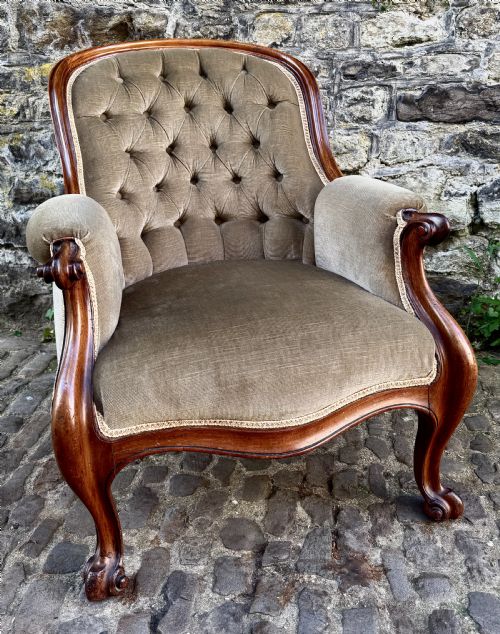


Walnut Spoon Back
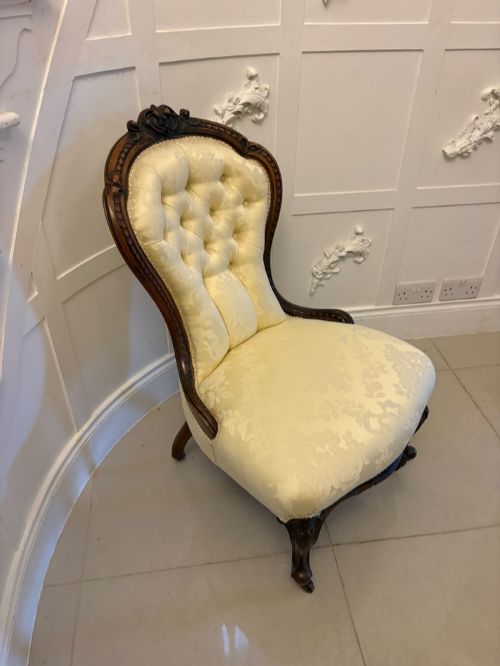
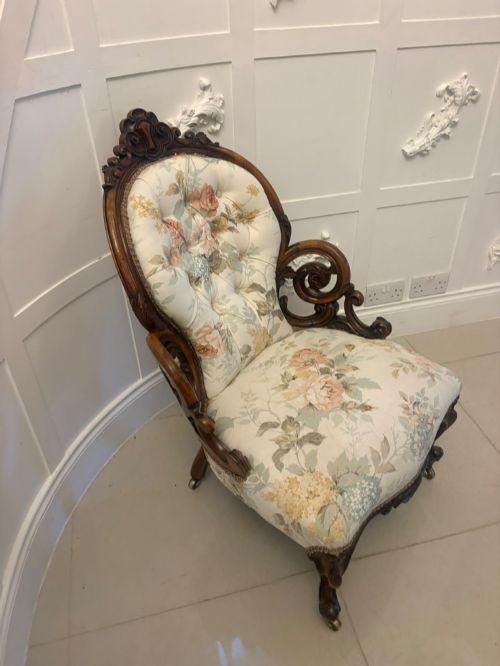
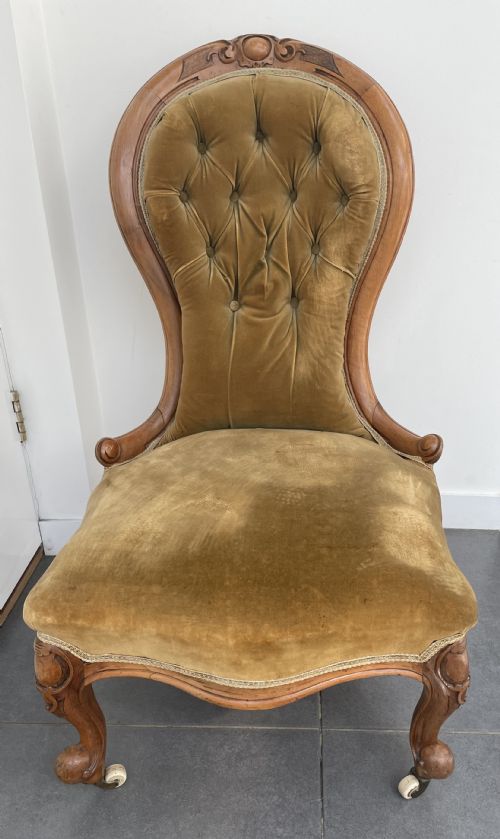
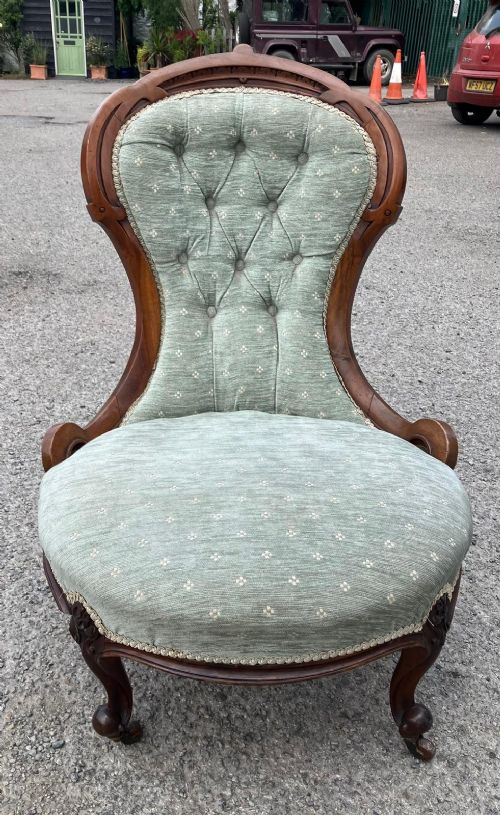
These walnut spoon back chairs are nineteenth-century upholstered seating featuring distinctive curved timber frames designed to support the sitter.
Walnut Spoon Back
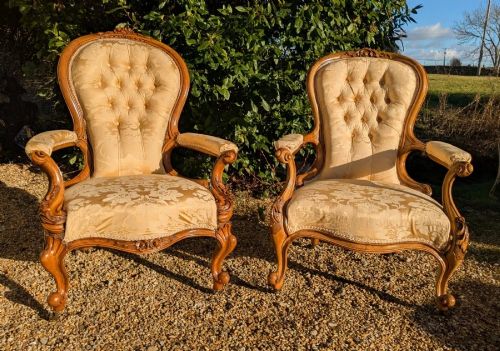
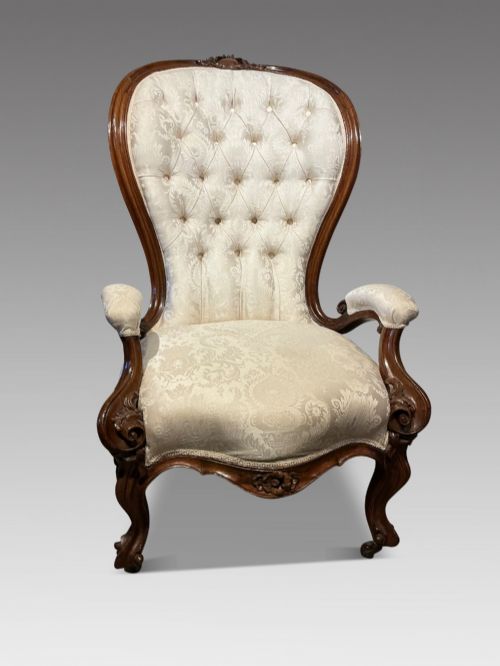
When you search for walnut spoon back, you encounter nineteenth-century seating dominated by Victorian forms such as nursing chairs, ladies chairs, and open armchairs. These pieces emerged primarily during the mid-Victorian era, driven by the Victorian Rococo Revival style that favoured organic, flowing contours.
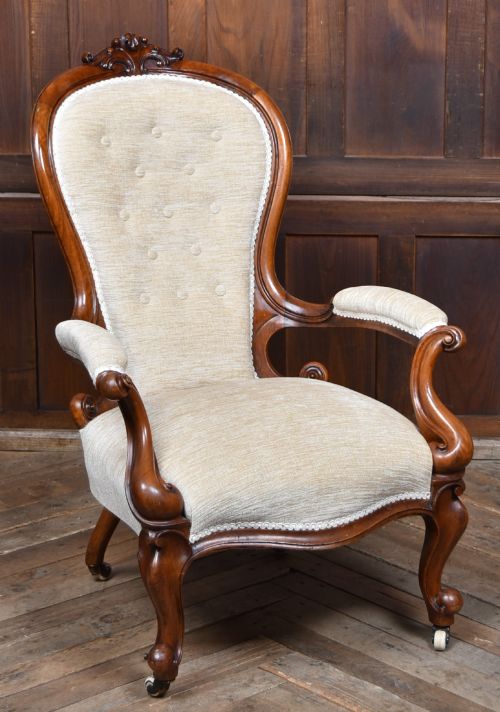
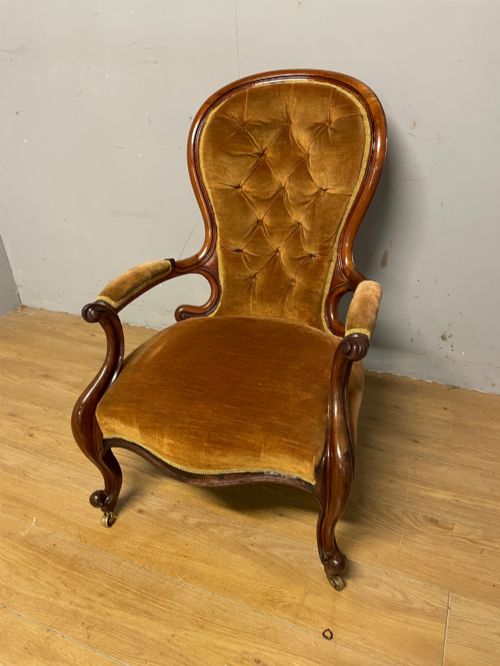
The most common form on this page is the nursing chair or ladies chair, typically featuring a lower seat and a tall, padded back. Open armchairs and fireside chairs also appear frequently, constructed with exposed wooden frames that showcase the grain.
How they were made
Cabinet makers built the structural frames from walnut, utilising its strength and rich grain to carve elaborate show wood borders. The timber was steam-bent and hand-carved with floral or scroll motifs typical of the Victorian period.
Upholstery techniques involved traditional stuffing secured within frames using textile coverings such as velvet, damask, fabric, or leather, often finished with button-backed detailing. Brass tacks and ceramic castors frequently completed the assembly.
Walnut Spoon Back Retail Price Guide 2026
Typical asking prices for walnut spoon back among the pieces listed under this phrase on Sellingantiques today, from the lower quarter to the upper quarter. They describe what is for sale here now, not the wider market.
What varies in quality
The depth and crispness of the hand-carved show wood ornamentation separate standard examples from superior pieces. Workshops that invested time in intricate floral crestings and refined cabriole legs achieved a more cohesive silhouette.
Timber selection also dictates the hierarchy, with dense walnut exhibiting lively grain patterns commanding greater visual presence than plainer stock. The structural integrity of the curved back frame remains paramount, reflecting the original joiner's precision.
The Walnut Spoon Back Glossary
- Spoon back
- A chair back shaped in a concave oval that resembles the bowl of a spoon. This ergonomic contour was popular in mid-nineteenth-century seating.
- Show wood
- The exposed, polished wooden framework of an upholstered chair that remains visible around the padded sections. Walnut is frequently utilised for this purpose.
- Nursing chair
- A low-seated Victorian chair originally designed for comfort in bedrooms or nurseries. They often feature sprung seats and tall, padded backs.
- Cabriole leg
- A furniture leg that curves outward in a convex arc and tapers inward in a concave arc, terminating in a scroll or plain foot. It is a common feature on Victorian revival seating.
- Button back
- An upholstery technique where deep buttons are pulled tight into the padding to create a uniform pattern of dimples. This method provides firm support and decorative texture.
Walnut Spoon Back: Frequently Asked Questions
What is a walnut spoon back chair?
A walnut spoon back chair is a nineteenth-century Victorian seat defined by an oval, concave wooden frame that cradles the sitter. These chairs were built for formal parlours and intimate rooms.
They combine exposed carved walnut woodwork with upholstered padding, often featuring button details and cabriole legs.
How were these chairs used originally?
Victorians used these chairs across various domestic spaces, placing nursing chairs in bedrooms and open armchairs in drawing rooms. They provided comfortable seating for social gatherings and private repose.
Different heights and arm configurations dictated whether a chair served for reading, conversation, or tending to hearths.
How do I live with one today?
These chairs integrate well into traditional and modern interiors as accent or occasional seating. Their modest scale allows them to fit comfortably in living rooms and studies.
Care involves regular dusting of the walnut frame and gentle maintenance of the fabric or leather upholstery to preserve the vintage textiles.
How can I tell the periods apart?
Early Victorian examples from the 1840s often display restrained lines influenced by earlier Regency tastes. Mid-century pieces embrace full Victorian Rococo Revival carving.
Later nineteenth-century iterations from the 1870s and 1880s frequently feature more robust proportions and heavier show wood frames.