
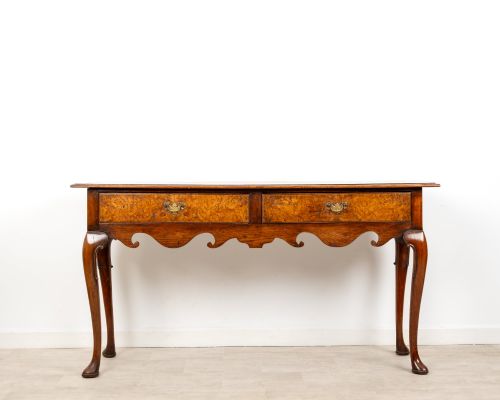
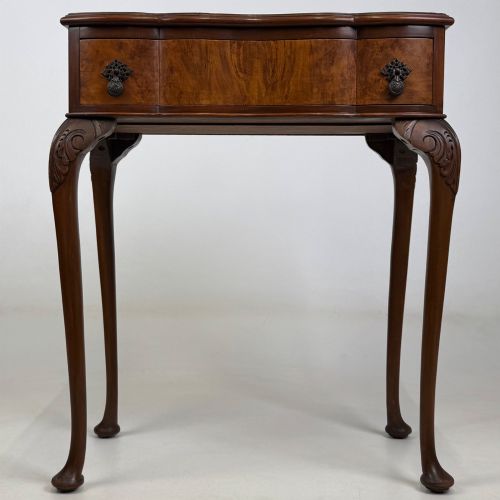


Walnut Sofa Side Table
When you search for a walnut sofa side table, you are looking at versatile timbers shaped into practical surfaces across Victorian and Art Deco eras.
Walnut Sofa Side Table
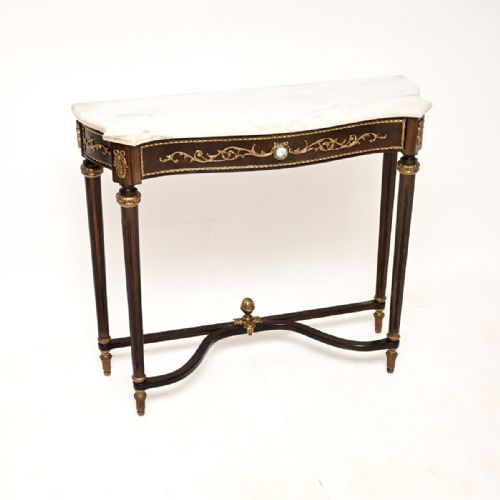
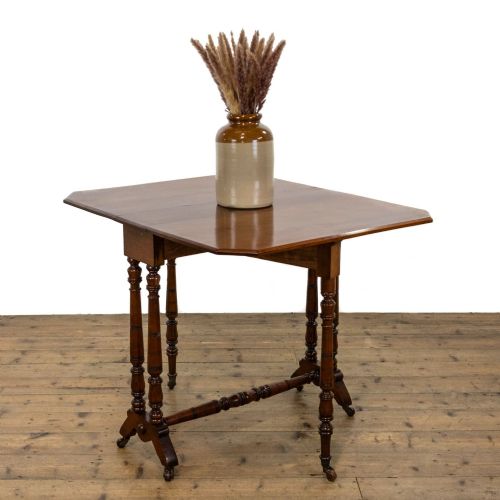
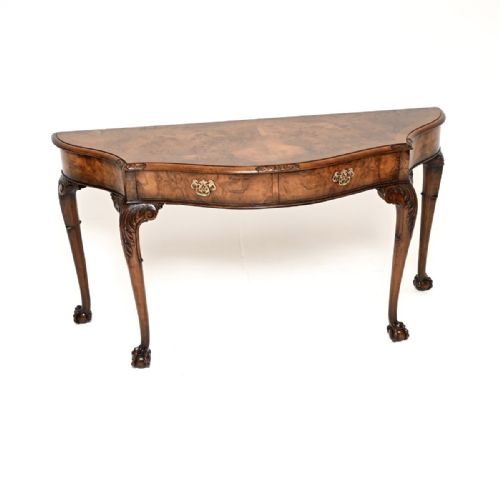
A walnut sofa side table brings warm timber tones and practical surface area to a living space. These pieces range from compact drop-leaf designs and Sutherland tables to console and occasional forms.
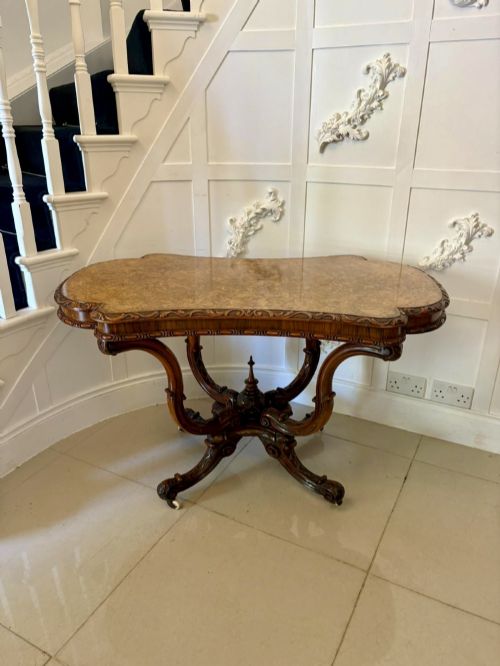
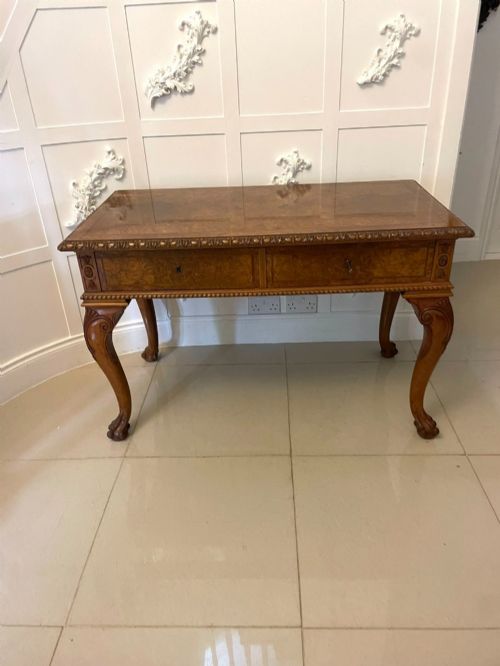
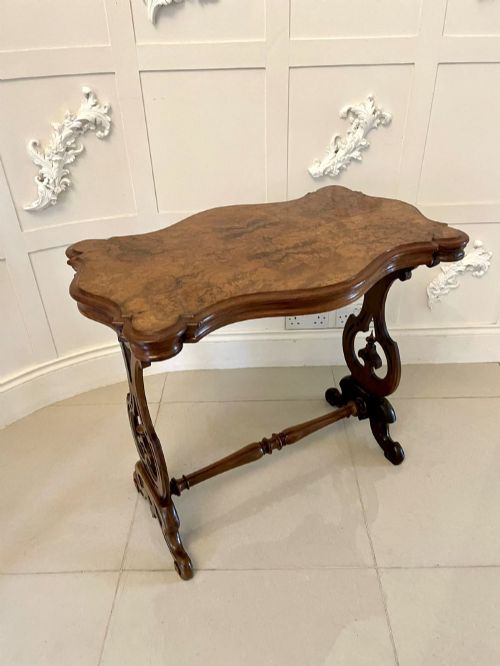
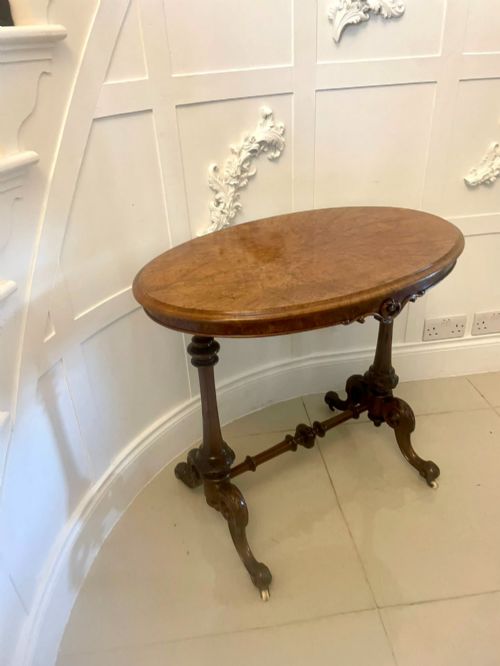
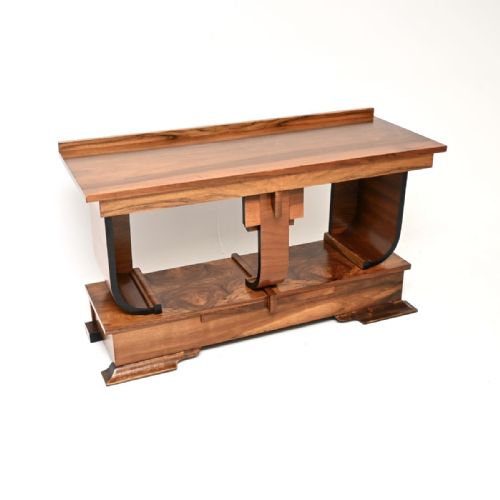
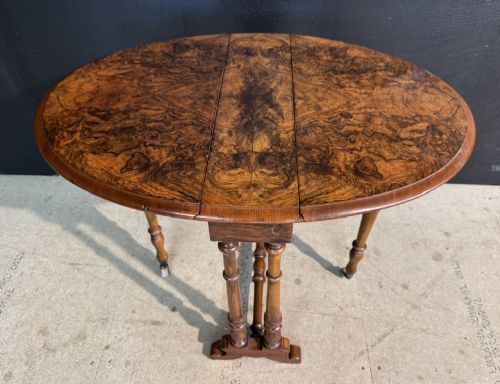
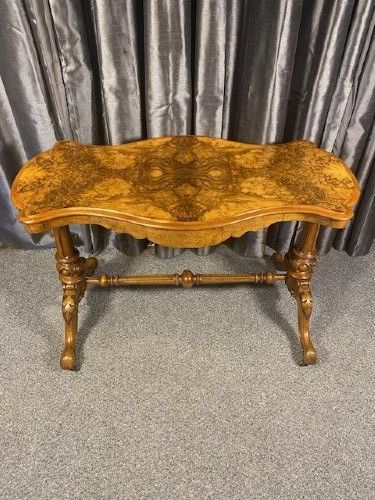
Victorian examples in burr walnut sit alongside later Edwardian and Art Deco interpretations. The selection frequently includes pieces intended to slide near seating or rest against a hallway wall.
How they were made
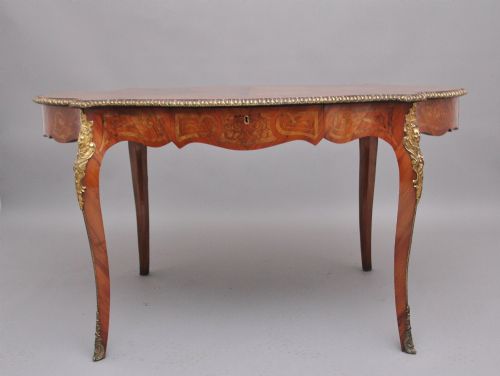
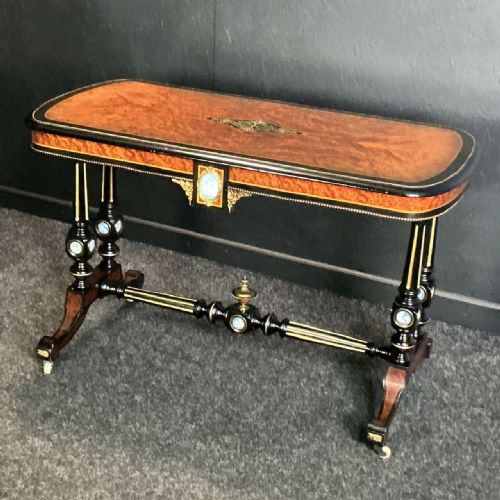
Cabinet makers utilised solid walnut and decorative veneers such as burr walnut and amboyna over secondary timbers. Surfaces often display intricate marquetry inlay, brass mounts, or ceramic elements.
Construction methods vary from traditional turned spindle bases and bobbin gate legs to clean geometric lines found in later twentieth-century designs.
Miniature Sutherland tables offer all the charm of a full-size drop-leaf table on a tiny scale.
What varies in quality
The choice of veneer grain and the precision of the timber matching dictate the visual depth of the surface. Highly figured burr walnut and crisp marquetry indicate a higher grade of manufacture.
The integrity of the structural joinery and the finesse of turned or carved details separate standard production items from finer workshop pieces.
Edward’s And Robert’s·Gilbert Rohde·Hille·Gillows
The Walnut Sofa Side Table Glossary
- Burr walnut
- A prized timber harvested from tree growths that produces swirling, highly decorative grain patterns. It is frequently applied as a veneer across table tops.
- Sutherland table
- A narrow drop-leaf table with hinged flaps that fold almost vertically. This form was designed to occupy minimal space when closed.
- Marquetry
- The art of applying pieces of veneer to a structure to form decorative patterns or pictures. It often incorporates lighter woods against dark walnut.
- Console table
- A table designed to stand against a wall, sometimes supported by brackets or legs. Many versions function well in narrower hallway settings.
Walnut Sofa Side Table: Frequently Asked Questions
Where should I place a walnut sofa side table?
These tables find a natural home beside a sofa or armchair to hold lamps and books. Their modest proportions also suit placement in hallways or corners.
Drop-leaf and Sutherland versions allow you to expand the surface area when guests visit and fold them away afterward.
How do I identify Victorian pieces?
Victorian examples often feature rich burr walnut veneers, turned spindle bases, or intricate marquetry inlay. You will commonly find dates ranging from the mid to late nineteenth century.
Earlier Victorian models frequently display carved elements and heavier proportions compared to lighter Edwardian or Art Deco variants.
What is the difference between a side table and a console table?
Side tables are generally freestanding pieces designed to be accessed from multiple sides within a room. Console tables are traditionally meant to stand flat against a wall.
Many listings blur these definitions depending on the proportions and whether the back of the piece is finished for display.
How do I care for walnut veneer?
Keep walnut furniture away from direct sunlight and strong heat sources to prevent the timber and veneer from drying out. Dust regularly with a soft, dry cloth.
Avoid using silicone-based polishes and instead apply a traditional wax occasionally to maintain the natural lustre of the wood.