






Walnut Slope Top Desk
A walnut slope top desk offers a sloping writing surface above fitted drawers, combining rich timber grain with practical workspace.
Walnut Slope Top Desk
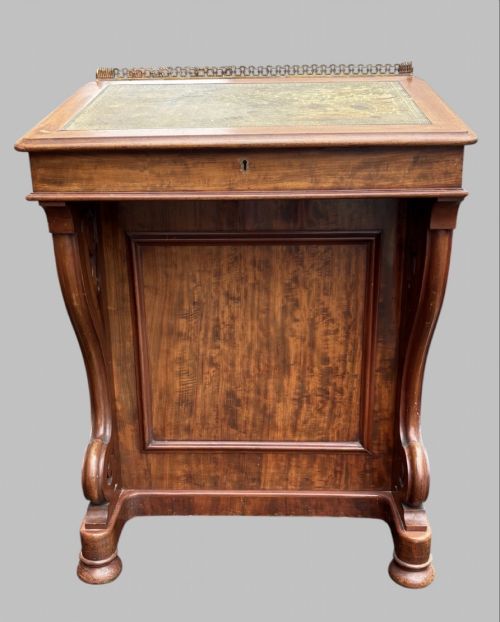
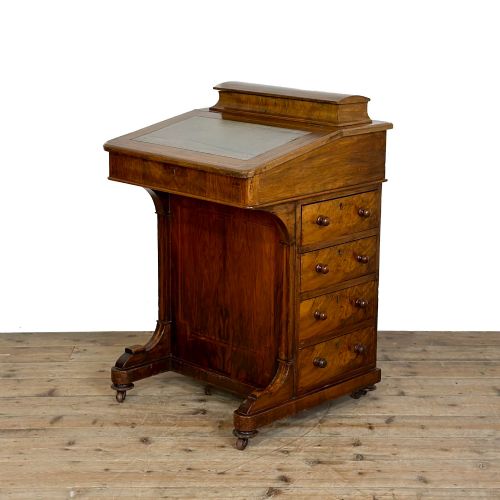
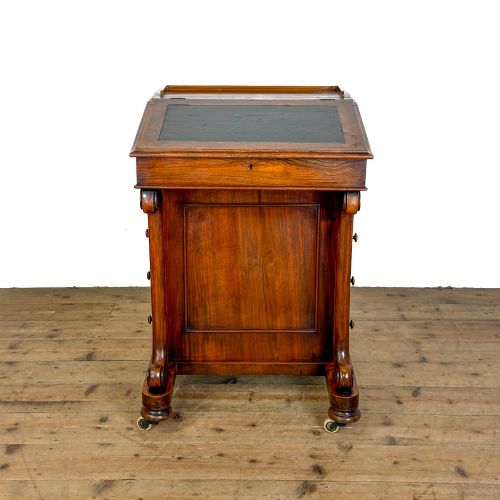
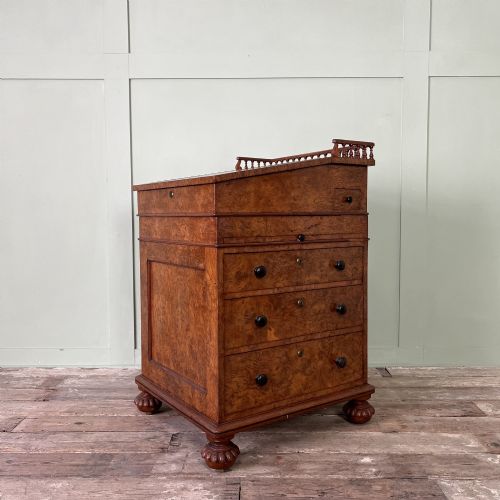
A walnut slope top desk encompasses several distinct forms designed for correspondence and storage, ranging from compact stationery boxes to substantial pedestal tables. The selections available here are dominated by Victorian Davenport desks and larger bureau forms spanning the eighteenth through to the early twentieth centuries.
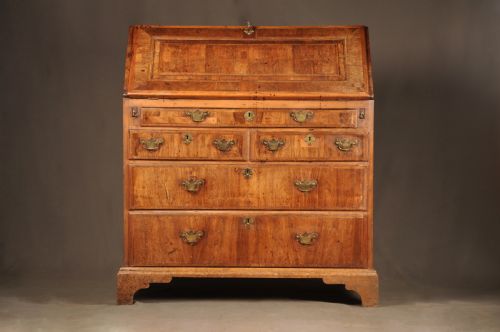
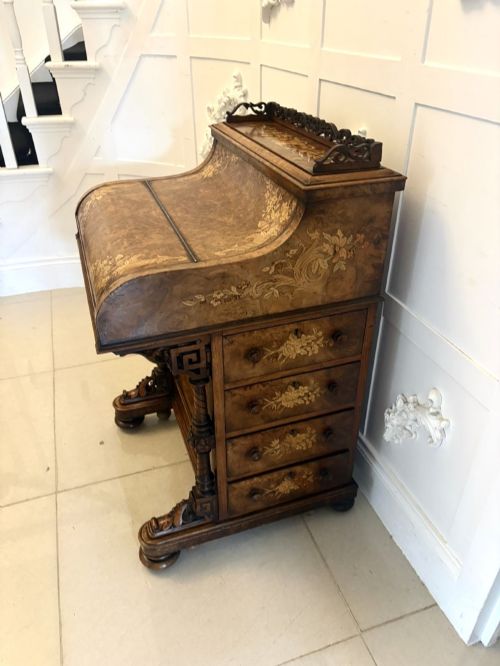
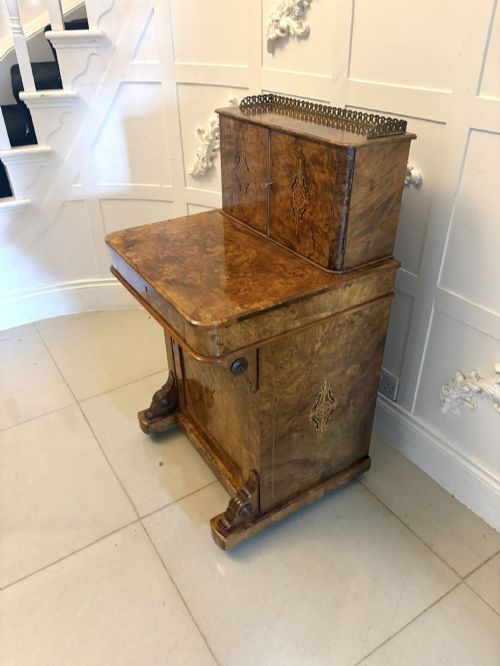
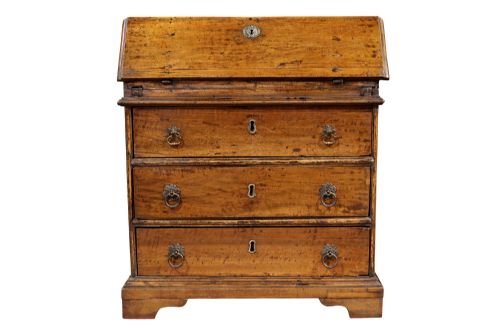
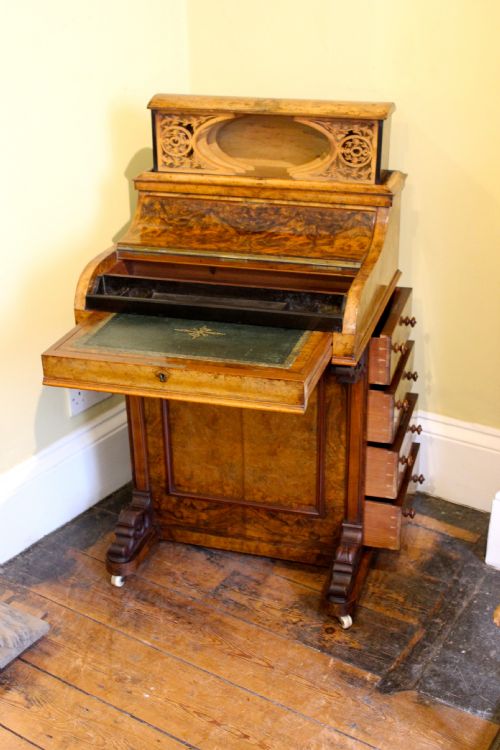
Early eighteenth-century examples present straightforward cabinetry with original ironwork, whereas Victorian iterations frequently incorporate burr walnut veneers, inlaid boxwood, and clever pop-up compartments. Later nineteenth-century pieces also include expansive Dickens style writing desks with multiple drawers and gallery backs.
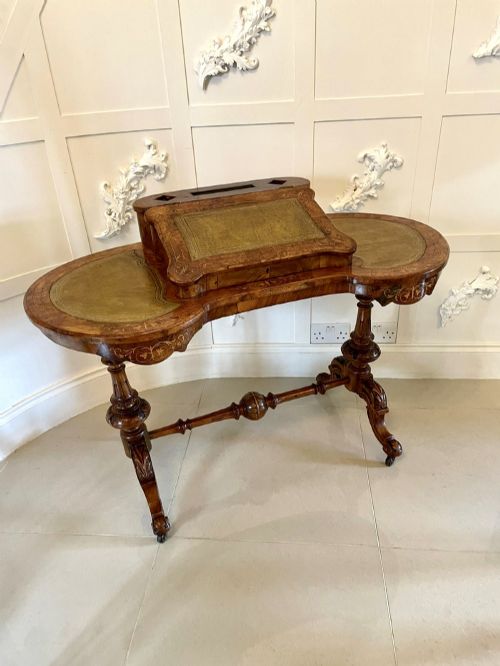
Forms extend from traditional sloping boxes intended for tabletop use to freestanding desks incorporating side drawers and leather-lined writing surfaces. While Queen Anne and George I revival styles appear alongside Georgian originals, the typical piece encountered is a mid to late nineteenth-century Victorian creation.
Materials and construction
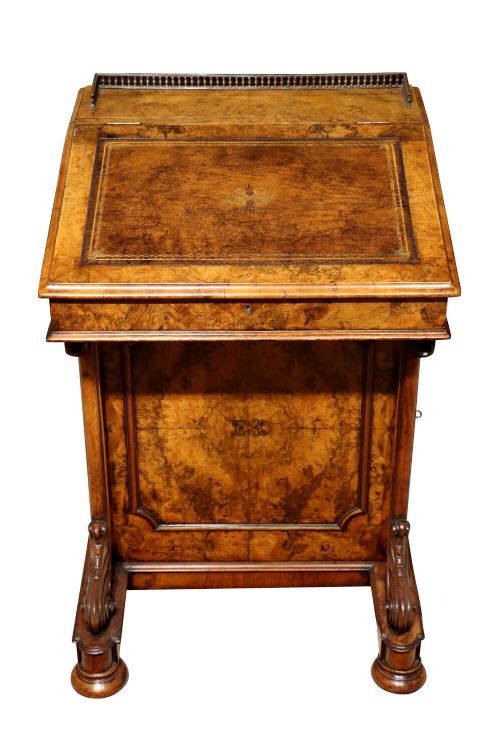
Cabinet makers utilised solid walnut and decorative burr walnut veneers over secondary timbers, often accentuating the rich figuring with boxwood inlay and contrasting satinwood interiors. Brass hardware, leather inserts, and forged ironwork provided both structural reinforcement and functional detail.
Construction techniques evolved from early eighteenth-century solid timber joinery to the sophisticated veneering methods seen on Victorian Davenport and Dickens desks. Crossbanding and parquetry further demonstrated the precision of nineteenth-century workshops.
Walnut Slope Top Desk Retail Price Guide 2026
Typical asking prices for walnut slope top desk among the pieces listed under this phrase on Sellingantiques today, from the lower quarter to the upper quarter. They describe what is for sale here now, not the wider market.
Listings feature walnut slope top desks spanning the eighteenth century through to the Edwardian period, alongside oak, elm, and brass components.
Standards of craftsmanship
Quality rests in the selection of timber veneers, where intensely figured burr walnut creates a striking visual depth across the sloping lid and drawer fronts. The crispness of boxwood inlay and the integration of secondary woods like oak and elm signal superior cabinet work.
Mechanical ingenuity distinguishes finer pieces, particularly in Davenport desks featuring pop-up stationery compartments and smoothly operating interior drawers. Original brass fittings, well-preserved leather writing surfaces, and intact ironwork elevate an example above standard production.
Gillow & Co·Maple & Co
The Walnut Slope Top Desk Glossary
- Davenport desk
- A compact Victorian writing desk featuring a sloping top and drawers opening to the side. It typically includes a stationery compartment on top.
- Burr walnut
- A prized timber cut from walnut tree growths, displaying complex, swirling grain patterns. It was widely used for decorative veneer on nineteenth-century furniture.
- Bureau
- A writing cabinet with a sloping lid that folds down to form a desk. Early forms often sit on a frame or chest of drawers.
- Dickens desk
- A large partner's or pedestal desk with a tiered bank of small drawers above the main writing surface. They often feature a leather inset top and a gallery back.
- Crossbanding
- A strip of veneer applied around the border of a panel, arranged so the grain runs at right angles to the central wood. This technique frames the primary surface.
Walnut Slope Top Desk: Frequently Asked Questions
How do I use a Davenport desk?
The sloping top opens or lifts to reveal a small interior compartment for stationery, whilst drawers typically pull out from the side rather than the front. This compact layout allowed nineteenth-century writers to sit comfortably without needing a large freestanding table.
Many examples include a hinged writing slope lined with leather. Side drawers often lock when the top lid is closed, securing the contents.
How do I date a walnut Davenport desk?
Most Davenport desks date from the Victorian era, typically between eighteen fifty and eighteen ninety. Early examples display simpler lines, whilst later pieces often incorporate elaborate boxwood inlay and pop-up mechanisms.
Hardware styles and secondary timbers inside the drawers also help determine the period. Burr walnut veneers became especially popular during the mid-nineteenth century.
Where should I place a freestanding desk?
Freestanding desks finished in burr walnut look best positioned away from walls where all sides can be admired. Ensuring the desk is kept out of direct sunlight preserves the rich colour of the timber and prevents the leather writing surface from drying out.
Consider room lighting to highlight the grain patterns on the sloping lid. Allowing adequate clearance around side drawers ensures proper daily use.