



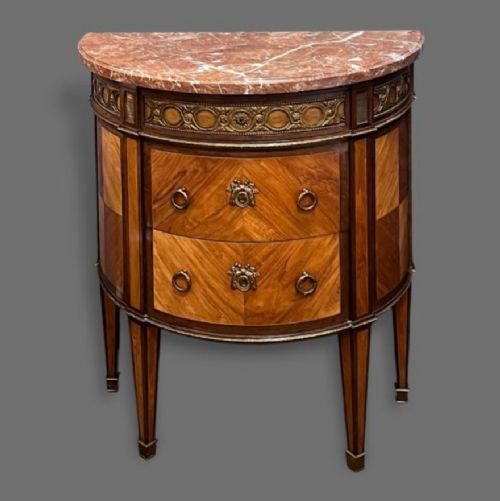
Walnut Side Chest
When searching for a walnut side chest, a buyer encounters compact storage pieces ranging from Victorian bedside tables to French marble-topped commodes.
Walnut Side Chest
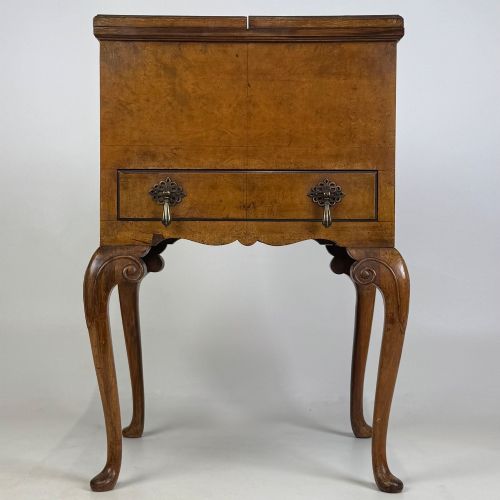
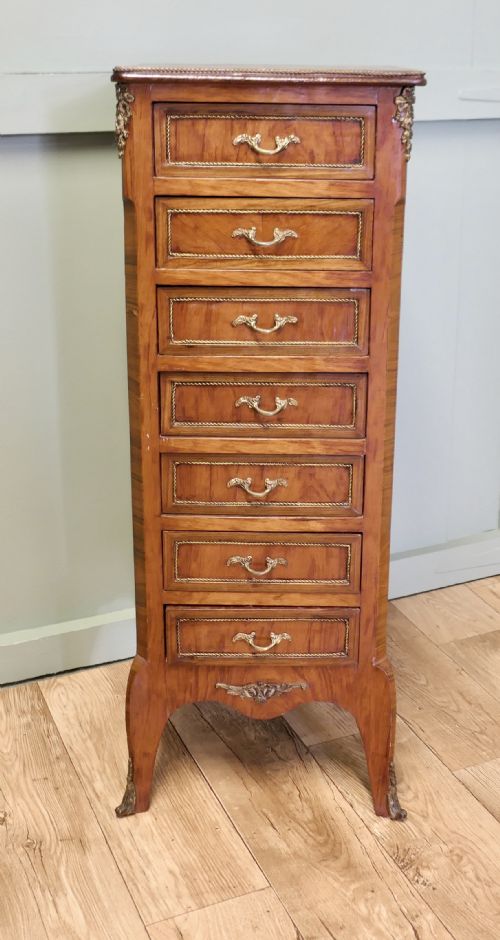
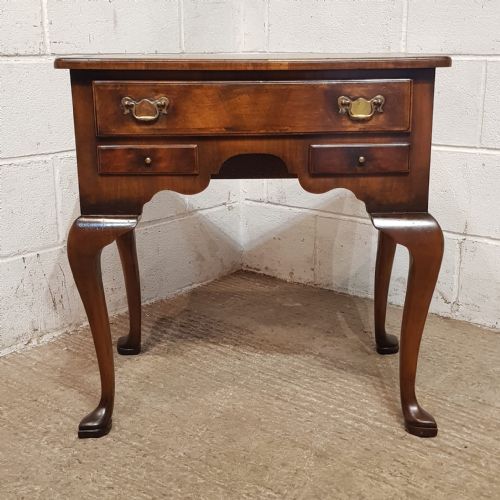
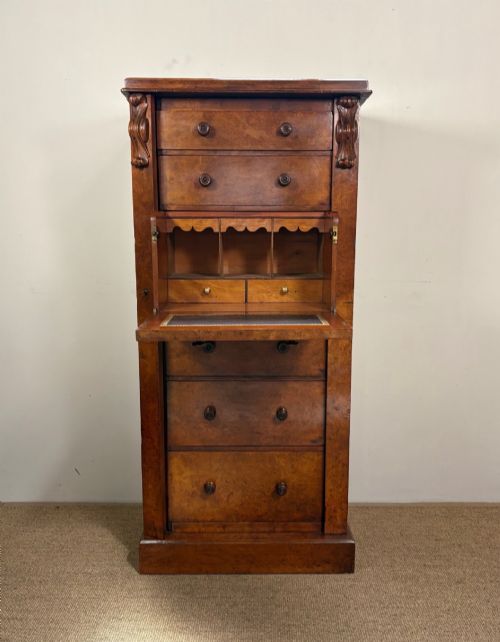
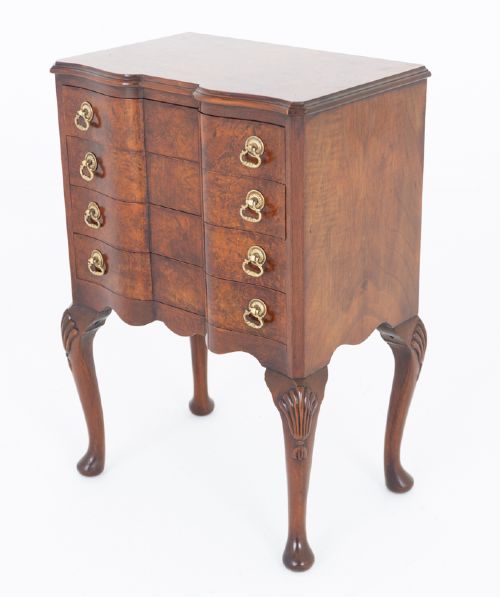
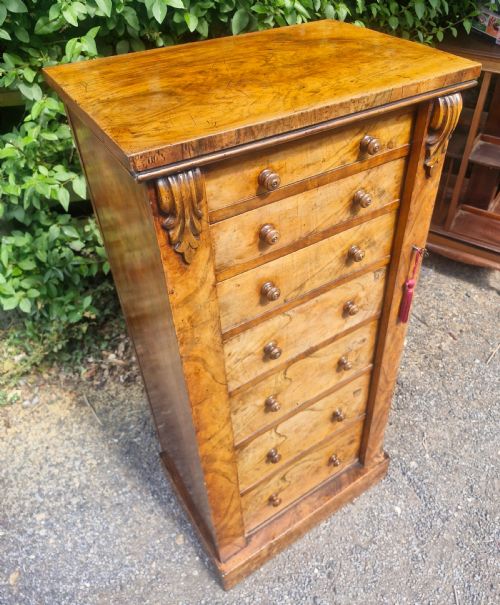
A walnut side chest serves as a compact storage unit, typically positioned beside a bed or alongside a reception room wall. The walnut side chest category spans several centuries, taking the form of lowboys, bedside cabinets, and tall Wellington chests.
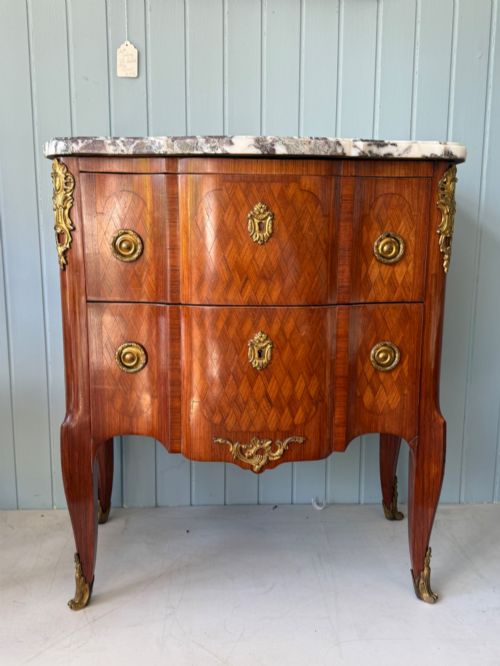
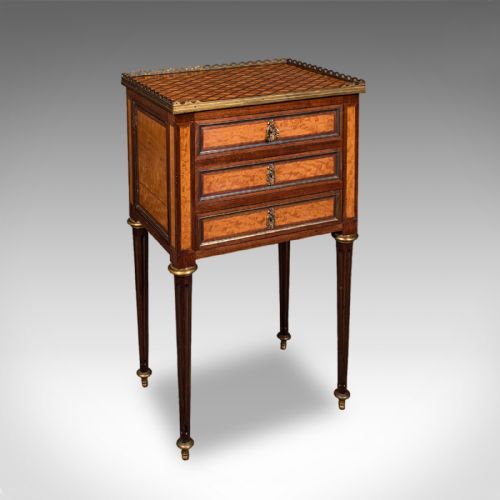
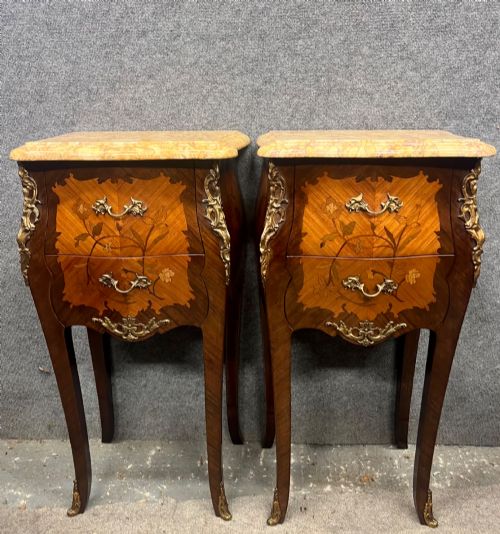
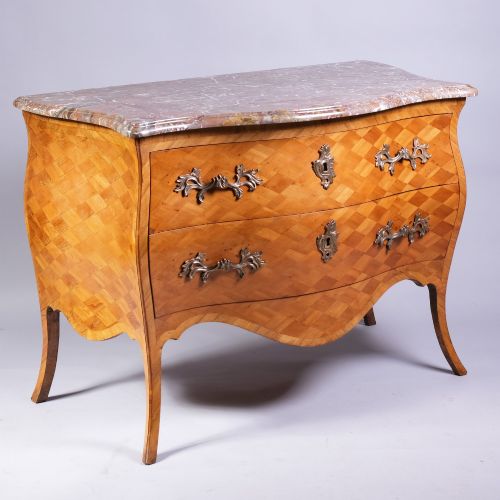
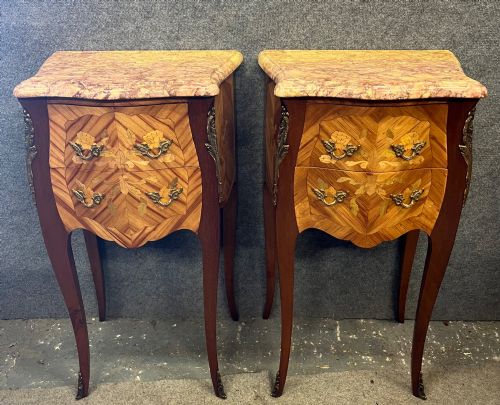
Victorian and Edwardian examples dominate the available selection, often appearing in matched pairs intended for bedroom use. Makers also produced French Louis XV and Art Deco variations, bringing serpentine fronts and parquetry into the domestic interior.
Proportions remain neat throughout the range, prioritising surface utility and drawer storage without dominating the floor plan. Buyers select these pieces for their adaptability in modern spaces while retaining period character.
How They Were Made
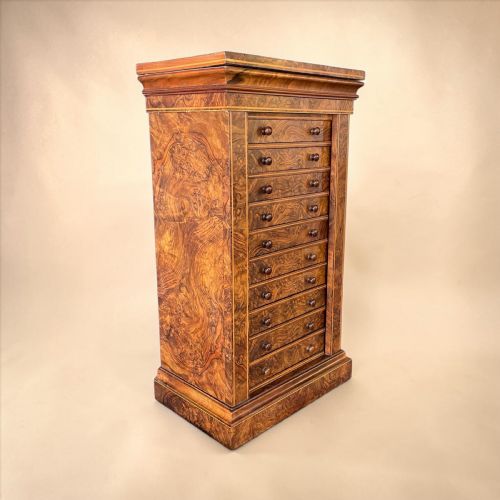
Cabinet makers utilised straight-grained walnut alongside highly figured burr walnut veneers to achieve rich surface patterns across drawer fronts and tops. Artisans frequently applied marquetry and parquetry inlay, combining contrasting timbers and brass hardware to define the exterior style.
Heavy grey marble slabs frequently surmount French commodes and bedside cabinets, providing a durable and cool contrasting surface. Structural carcases rely on secondary timbers, while dovetailed drawer construction ensures longevity through regular use.
Materials appearing across the inventory include solid walnut, burr walnut veneer, grey marble, brass, and ormolu mounts.
What Varies in Quality
The choice of veneer dictates the visual impact, with tightly swirled burr walnut commanding greater attention than plain timber. Crispness in carved details, such as those found on Queen Anne revival legs or Louis XV mounts, separates standard workshop production from finer studio output.
Construction integrity depends on the precision of the drawer fit and the preservation of original brass handles and locks. Original marble tops free from unrecorded cracks or restorations maintain the historical integrity of the piece.
Shoolbred and Co·Gill and Reigate·Incorporall
The Walnut Side Chest Glossary
- Burr walnut
- A prized timber harvested from growth excrescences on walnut trees, yielding intricate swirling grain patterns. Cabinet makers prized this veneer for principal display surfaces.
- Wellington chest
- A tall, narrow locking chest of drawers secured by a hinged vertical side pilaster. Victorian workshops favoured this form for storing documents and linens securely.
- Lowboy
- A small table with one or more tiers of drawers, originating in the late seventeenth century. These pieces function as compact side tables or dressing surfaces.
- Marquetry
- The art of forming decorative patterns using thin veneers of different woods, metals, or shells. Artisans applied these designs meticulously onto cabinet doors and drawer fronts.
- Ormolu
- Gilded bronze mounts applied to furniture edges, feet, and key escutcheons, particularly on French commodes. This decorative bronze work defines Louis XV and later revival pieces.
Walnut Side Chest: Frequently Asked Questions
Where should I place a side chest?
These compact pieces fit naturally beside a bed as a functional nightstand with storage drawers. They also serve as occasional lamp tables in hallways and reception rooms.
Their shallow depth allows them to occupy narrow wall spaces where standard furniture proves too bulky. The flat top surface accommodates lighting or decorative objects while keeping everyday items concealed below.
How do I identify a Victorian piece?
Victorian examples often feature rich burr walnut veneers, Wellington locking mechanisms, or robust proportions suited to nineteenth-century domestic interiors. Examining the secondary timbers inside the drawers helps confirm the period.
Cabinet makers of this era also utilised marble tops on French-influenced commodes and bedside cabinets. Style markers such as heavy paneling and traditional dovetailing point directly to the Victorian period.
Are bedside chests usually sold in pairs?
Many listings offer matched pairs, which workshops originally constructed to flank a twin or double bed. Finding a surviving pair remains common among Victorian and Art Deco examples.
Single pieces appear frequently as well, functioning independently as lamp tables or hall chests. Buyers seeking symmetry should verify whether a pair shares identical dimensions and veneer patterns.
How do I care for walnut veneer?
Walnut benefits from minimal moisture and protection from direct sunlight to prevent the veneer from fading or lifting. Applying a quality beeswax occasionally maintains the natural lustre of the timber.
Avoid placing damp items directly onto antique wood or marble surfaces without protective coasters. Gentle dusting with a soft cloth preserves both the finish and the underlying veneer.