




Walnut Salon Furniture Set
A walnut salon furniture set brings the formal elegance of the nineteenth and early twentieth centuries into a modern interior.
Walnut Salon Furniture Set
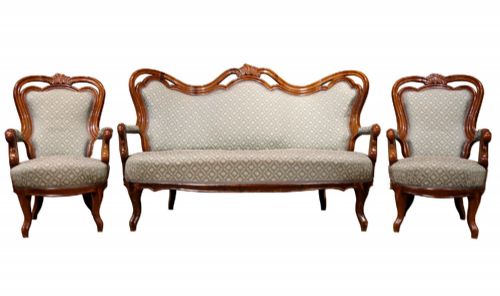
A walnut salon furniture set comprises matched groupings of seating designed for the formal reception rooms of the nineteenth and early twentieth centuries. These suites typically include settees, small sofas, and matching armchairs or side chairs built for drawing rooms and parlours.
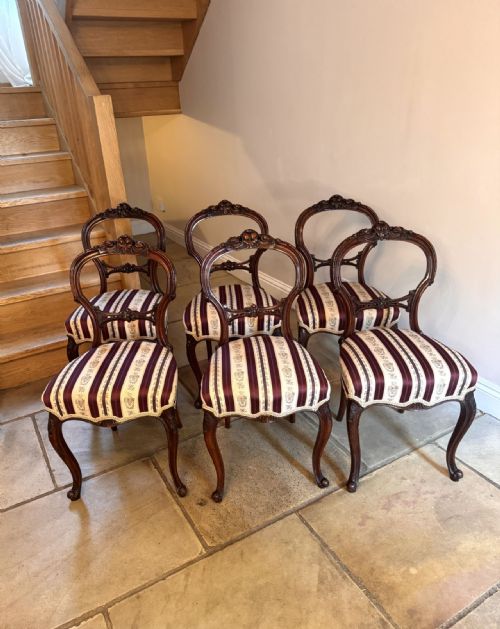
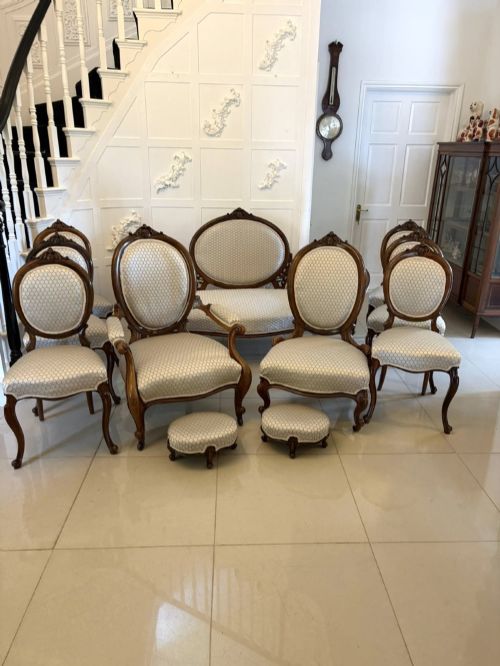
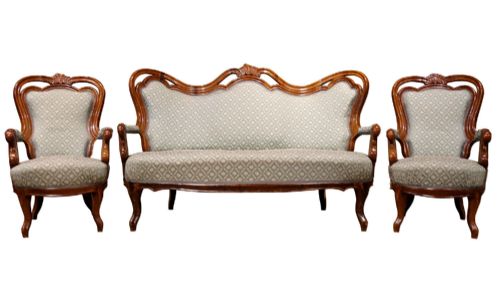
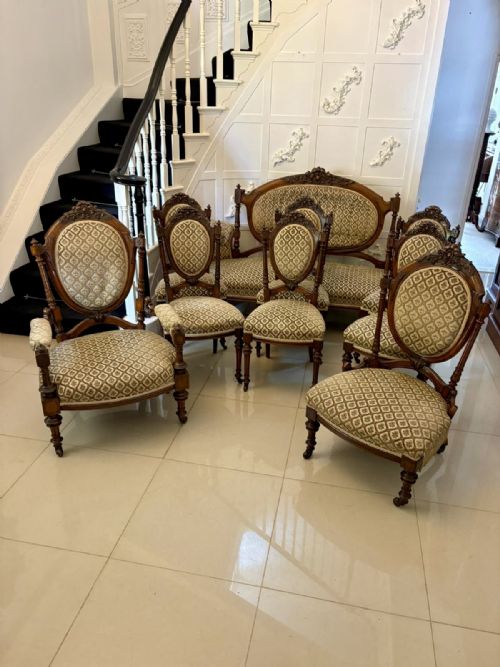
Buyers searching for a walnut salon furniture set most frequently encounter Victorian multi-piece suites featuring carved frames and upholstered backs. These configurations range from intimate three-piece groupings to large eleven-piece arrangements complete with footstools.
The aesthetic draws heavily on continental revival styles, including Rococo Revival, Louis XV, and Empire Revival influences. These designs reflect the changing tastes of nineteenth-century households towards ornate woodwork and comfortable upholstered seating.
Materials and construction
The primary structural timber across these pieces is walnut, selected for its rich grain and suitability for intricate carving. Workshops shaped this wood into elaborate curves and frames that define the Victorian and revival aesthetics.
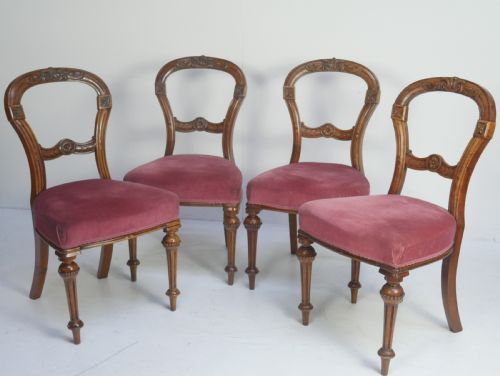
Upholstery forms a vital component of each suite, utilising fabrics such as velvet, damask, and traditional textiles. These coverings were secured over padded frames to provide comfort in formal reception spaces.
Walnut Salon Furniture Set Retail Price Guide 2026
Typical asking prices for walnut salon furniture set among the pieces listed under this phrase on Sellingantiques today, from the lower quarter to the upper quarter. They describe what is for sale here now, not the wider market.
Some nineteenth-century makers evidently believed that no drawing room was complete without eleven matching places to sit.
Distinctions in craftsmanship
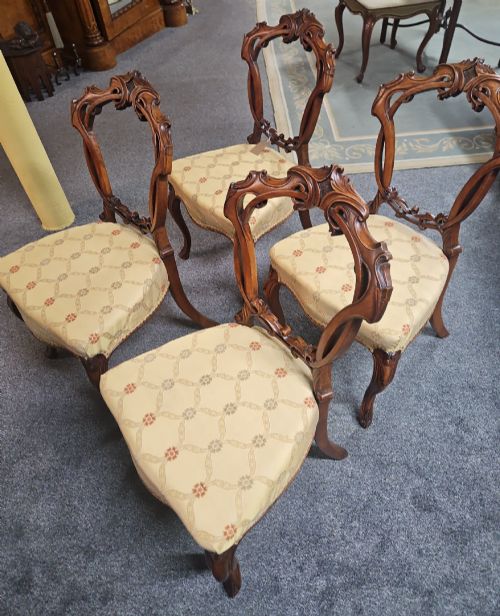
The depth and crispness of the carved woodwork separate standard production from superior pieces. Skilled cabinetmakers achieved intricate relief work on the walnut frames that retains sharp detail across complex curves.
The scale and completeness of the original suite influence its standing. Cohesive multi-piece configurations retain a stronger relationship between individual chairs and settees than assembled groupings.
Blyth & Sons·Morison & Co of Edinburgh
The Walnut Salon Furniture Set Glossary
- Salon suite
- A matching group of seating furniture intended for formal entertaining. These sets coordinate in timber, upholstery style, and carved ornament.
- Rococo Revival
- A nineteenth-century design movement mimicking the curved lines, asymmetrical scrolls, and natural motifs of the eighteenth-century French Rococo period. It dominates much of the carved walnut seating from this era.
- Cameo back
- An upholstered chair back shaped like a traditional oval cameo portrait, often framed in carved walnut. This profile is characteristic of mid-nineteenth-century drawing room seating.
- Damask
- A reversible figured fabric traditionally woven on a jacquard loom, frequently utilised for the upholstery of formal nineteenth-century suites. Its patterned surface catches the light through contrasting matte and glossy threads.
Walnut Salon Furniture Set: Frequently Asked Questions
What pieces come in a salon suite?
A standard suite typically includes a settee or small sofa paired with matching armchairs and side chairs. Larger arrangements may incorporate additional seating or footstools.
These configurations allowed nineteenth-century hosts to seat multiple guests in a unified interior scheme.
How do I date a walnut suite?
Dating relies on stylistic clues, construction methods, and the specific revival movement reflected in the carving. Victorian pieces often display heavy scrollwork, while later revival pieces show different proportions.
Cabinetmaking signatures or stamps, where present, provide further chronological context.
Where were these suites used?
These groupings belonged in the principal reception rooms of nineteenth-century homes, such as drawing rooms, parlours, and salons. They served as the primary setting for receiving guests and social calls.
The formal arrangement of the furniture reflected the social etiquette of the period.
Are these sets still comfortable?
While historic upholstery uses traditional stuffing methods and firm support structures, many pieces offer a comfortable sit for modern use. The ergonomic design reflects nineteenth-century standards of upright formality.
Buyers often assess the internal springing and padding to determine the current feel of the seat.