

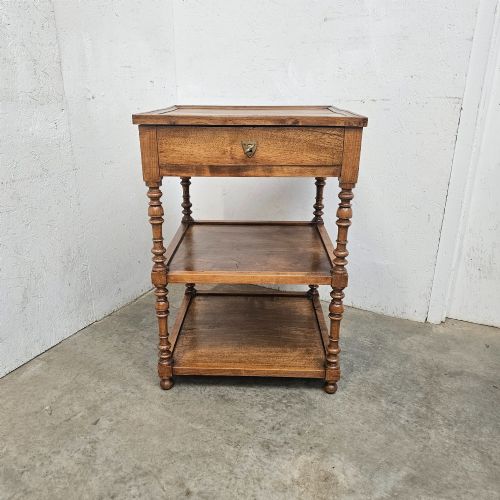
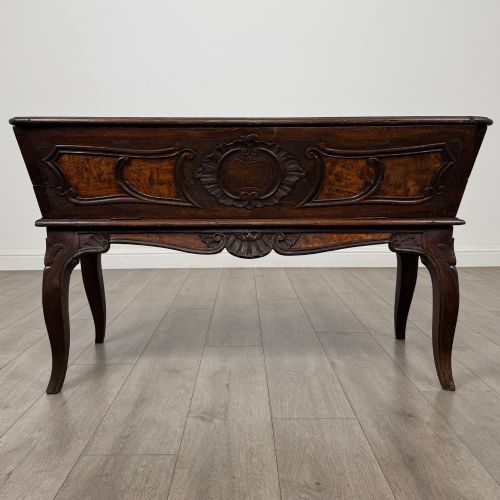
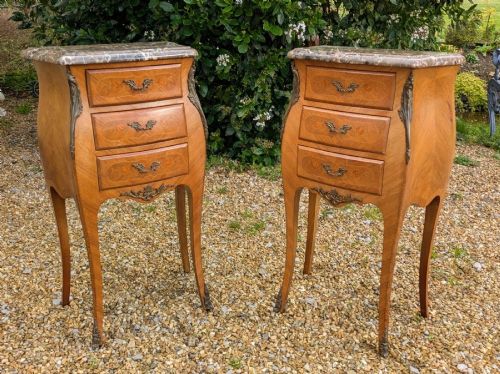
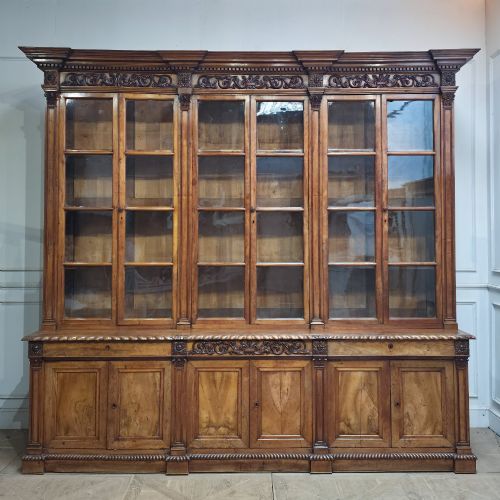
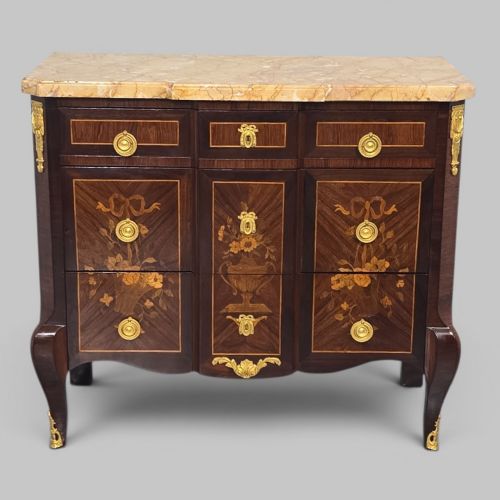
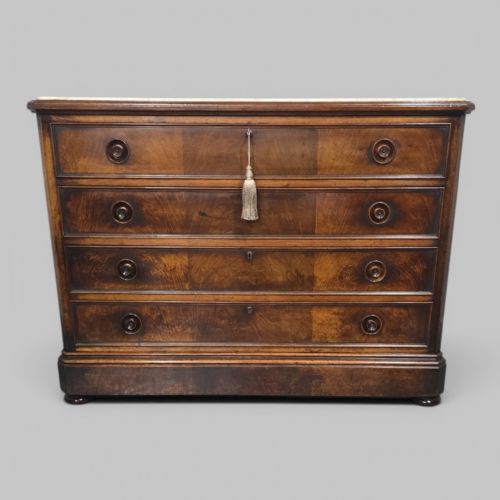
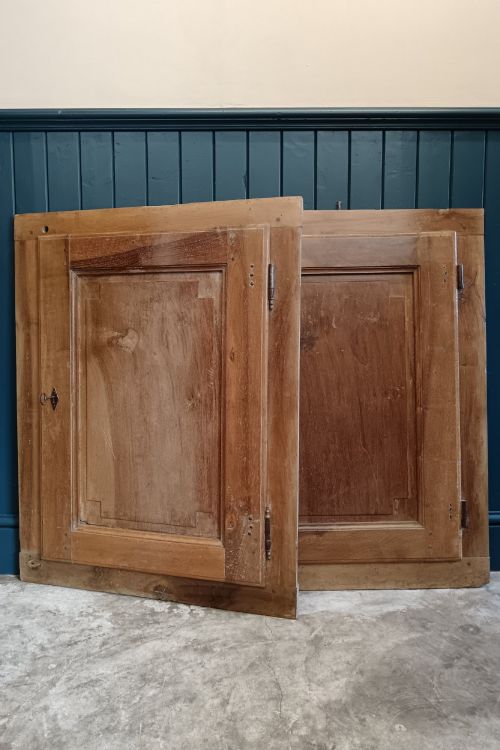
Walnut Provincial Cabinet
A walnut provincial cabinet brings robust regional character into a room, offering warm timber tones and practical storage.
Walnut Provincial Cabinet
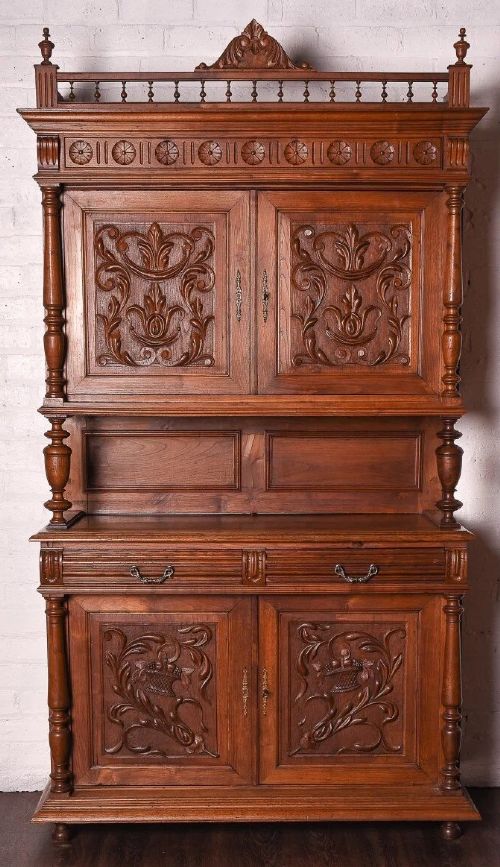
A walnut provincial cabinet represents regional craftsmanship from periods spanning the seventeenth through to the twentieth century. These pieces encompass utilitarian forms such as bedside tables, side cabinets, dough bins, and dressers shaped outside metropolitan centres.
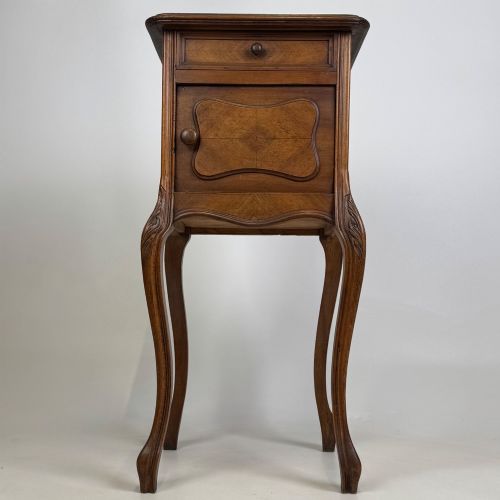
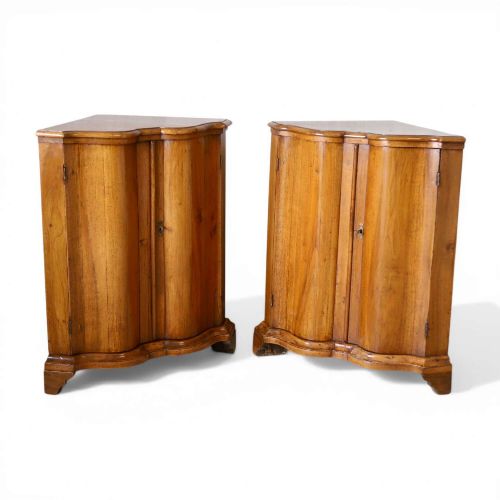
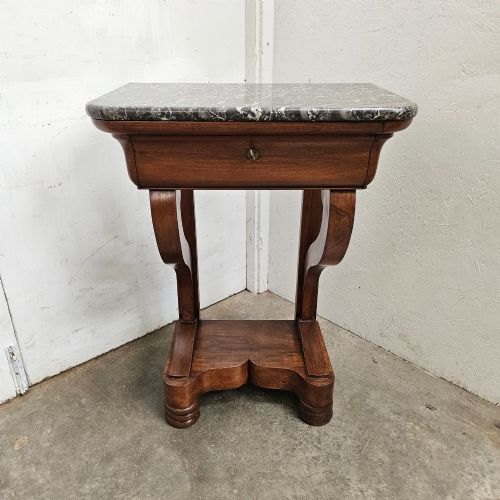
French provincial and Italian designs dominate this selection, frequently demonstrating regional interpretations of Louis XV and Renaissance styles. Buyers commonly encounter bedside cabinets topped with marble or compact side storage units in walnut timber.
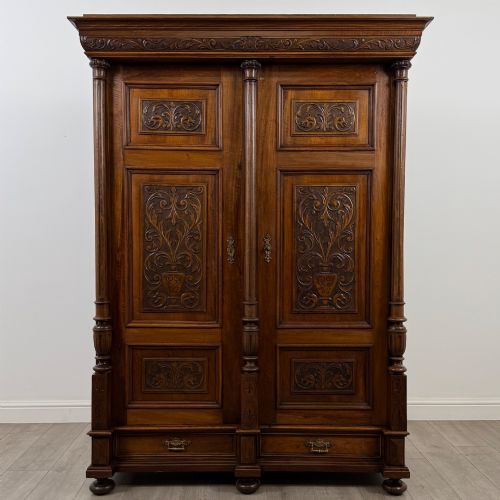
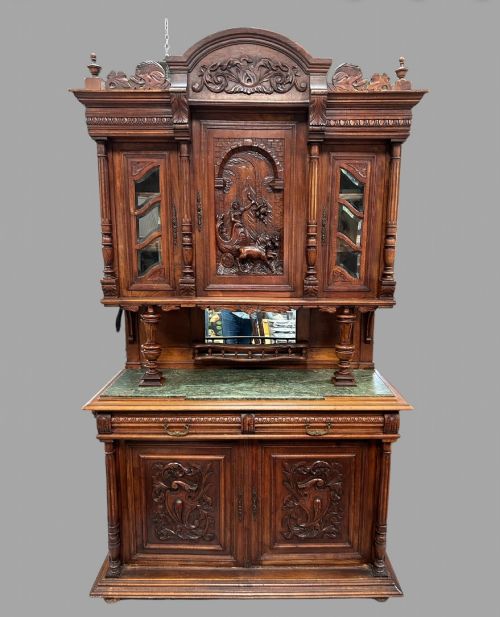
The objects serve everyday domestic functions while displaying traditional regional joinery and carving. Their scale ranges from intimate bedside tables to imposing kitchen dressers and wardrobes.
How they were made
Makers utilised solid walnut and walnut veneer over secondary timbers, often pairing the timber with brass mounts, iron hardware, and marble tops. These materials provided both structural durability and decorative contrast.
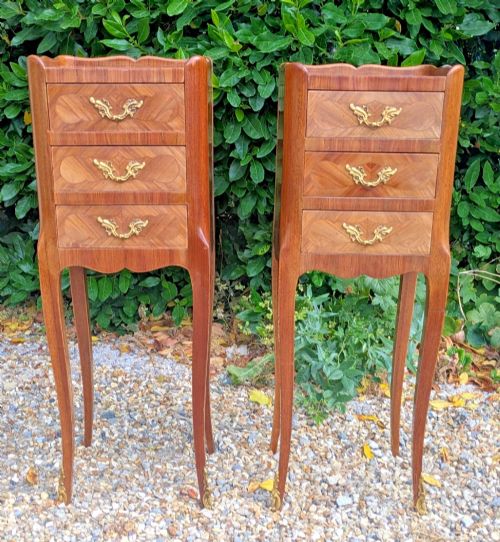
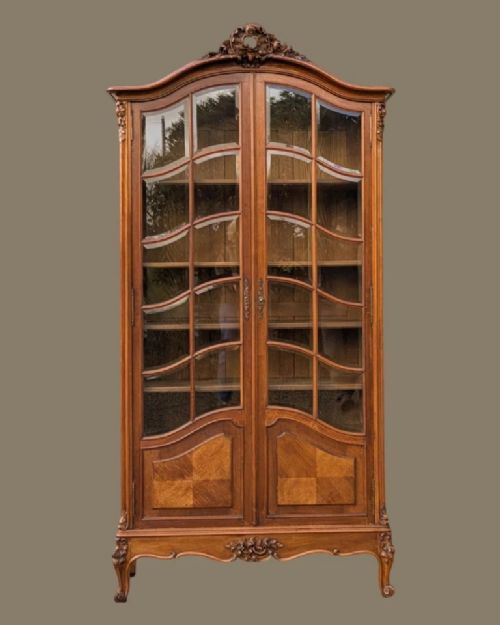
Surface decoration relies on marquetry, parquetry, and detailed carving rather than excessive gilding. Joinery techniques reflect traditional workshop practices appropriate to provincial production centres.
Listings feature walnut furniture spanning from the seventeenth century through to the 1930s, incorporating marble, brass, and marquetry.
What varies in quality
The refinement of the carving and the precision of the marquetry distinguish standard provincial items from finer examples. Superior pieces display crisp execution in turnery and balanced proportions across doors and drawers.
Original material integrity, such as matching marble tops and period brass hardware, elevates a piece. The depth of the timber grain and the preservation of original surface finishes also influence the standing of an item.
The Walnut Provincial Cabinet Glossary
- Marquetry
- Decorative veneer work arranged in pictorial or geometric patterns. Craftsmen cut different coloured woods to fit precisely into a design matrix.
- Parquetry
- Geometric wood inlay forming patterns such as cubes or chevrons. This technique decorates flat surfaces like tabletop panels and cabinet doors.
- Dough bin
- A traditional household container with a hinged lid used for kneading and rising bread dough. Later examples often integrate cupboard storage below the main trough.
- Serpentine
- A gently curved furniture front shaped with a convex centre flanked by concave curves. This contour requires skilled timber shaping.
- Demi-lune
- A half-moon shape applied to console tables and small cabinets. The curved profile suits placement against flat walls.
Walnut Provincial Cabinet: Frequently Asked Questions
What is a provincial cabinet?
A provincial cabinet is a regional piece of furniture made outside a capital city, often displaying local decorative traditions and robust construction.
These items range from bedside cupboards to large dressers, built primarily in solid timber like walnut for daily domestic utility.
How do I style a bedside cabinet?
Bedside cabinets in walnut offer compact storage that pairs well with neutral walls and traditional or eclectic interiors. Their marble tops provide a durable surface for lamps and personal items.
Matching pairs create symmetry in a bedroom, while single tables add character to guest rooms or smaller spaces.
How do I identify Louis XV style?
Louis XV style furniture is characterised by asymmetrical curves, cabriole legs, and naturalistic floral carvings. The aesthetic avoids straight lines in favour of flowing contours.
Provincial interpretations of this style soften metropolitan ornamentation into simpler, sturdier local forms.
Are marble tops original?
Marble tops on nineteenth and twentieth century cabinets were commonly specified to provide a hygienic, heat-resistant surface for washing and bedside use. Sourcing appropriate marble types like Sainte-Anne ensures period consistency.
Examining the rebate and fit of the stone helps determine if the top belongs to the original construction.