




Walnut Piano Chair
A walnut piano chair brings timber character and mechanical height adjustment to your music room or dressing table.
Walnut Piano Chair
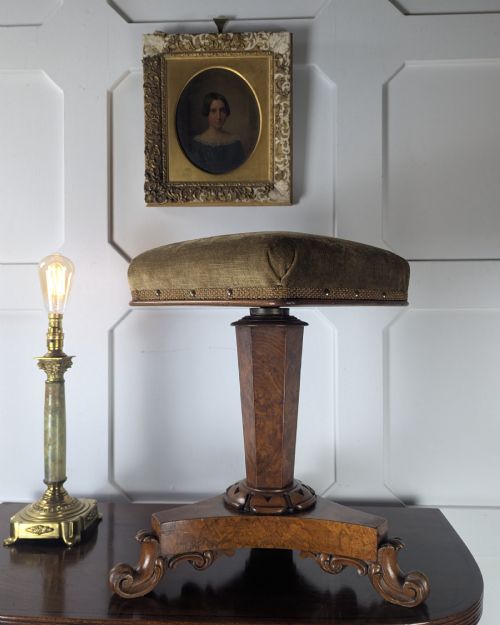
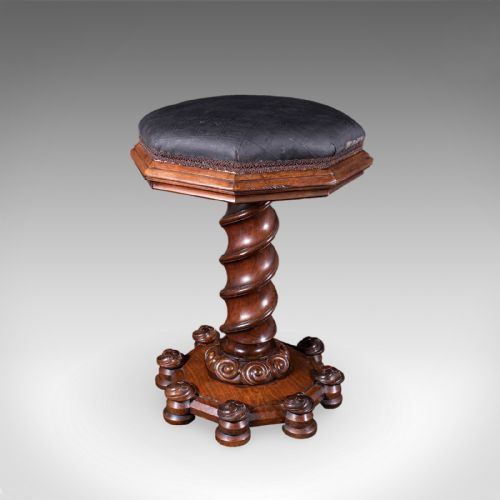
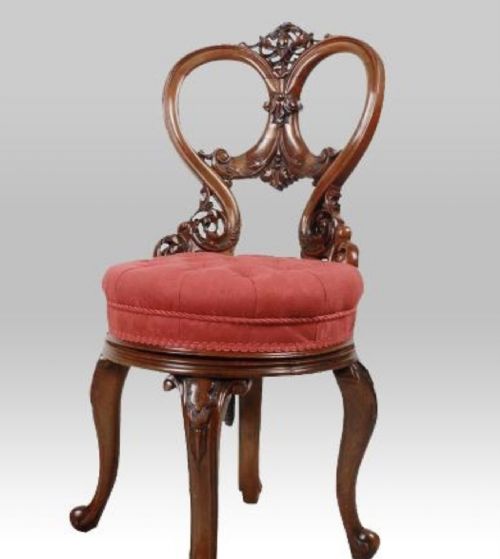
A walnut piano chair is a seat designed for musicians at keyboards, featuring swivel, rise and fall, or adjustable mechanisms housed within sturdy timber frames. When you search for this phrase, you encounter forms ranging from pedestal bases to cabriole-legged stools.
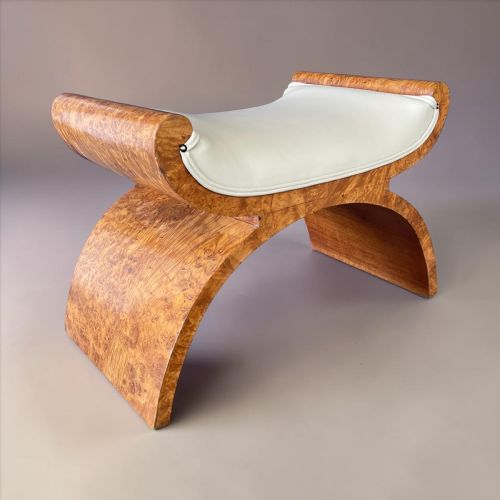
The pieces on this page span several periods, including Regency, William IV, Victorian, and Art Deco, with most examples originating from the nineteenth and early twentieth centuries. You find both revolving music chairs with backs and simpler adjustable stools without backrests.
Makers and origins vary from Scottish workshops to English makers such as Harry and Lou Epstein, showing regional differences in carving and upholstery. Objects listed include piano stools, music chairs, and dressing table stools that share the same mechanical height adjustments.
Materials and construction
Makers utilised solid walnut and burr walnut veneers for the frames, building structural integrity into pedestals, tripods, and cabriole legs. These wooden components often display carved details and turnings that reflect the prevailing style of the period.
Upholstery materials include leather, velvet, needlepoint, and various fabric textiles, often secured over padding on swivel or fixed seats. Brass components frequently appear within the screw mechanisms and rise-and-fall assemblies that allow height adjustment.
Musicians found that a revolving music chair prevented embarrassing garment snags during energetic nineteenth-century piano recitals.
Judging quality in walnut seating
The precision of the mechanical adjustment mechanism dictates the working quality of the seat, distinguishing smoothly operating screw threads from stiff or loose fittings. Heavier pedestal bases and substantial tripod legs provide better stability during height changes.
Carving depth and timber selection separate standard production from superior pieces, with figured walnut and burr surfaces offering richer visual depth. The original upholstery materials and the neatness of the execution also influence the overall standard of the piece.
Harry and Lou Epstein
The Walnut Piano Chair Glossary
- Rise and fall
- A mechanical system that raises or lowers the seat height when turned. This mechanism uses a threaded screw pillar concealed beneath the upholstery.
- Revolving
- A seat function allowing the top to spin freely in a full circle. This rotation assists musicians in shifting position comfortably.
- Cabriole leg
- A furniture leg that curves outward at the knee and tapers inward to a foot. This design appears frequently on Victorian examples.
- Burr walnut
- Timber cut from a tree growth that produces swirling, highly decorative grain patterns. Makers utilised this veneer on prominent surfaces.
- Needlepoint
- A type of stitched canvas work used traditionally for seat upholstery. It provides a textured, decorative surface for the top of the stool.
Walnut Piano Chair: Frequently Asked Questions
How do I adjust the height?
Many of these seats use a central screw mechanism that raises or lowers the wooden platform as you rotate the top.
Other examples rely on a rise-and-fall lever system or a simple swivel action depending on the specific period and design.
Can I use it at a dressing table?
Yes, many music seats share dimensions and adjustable heights that suit dressing tables equally well.
Historical listings often categorize identical forms as both dressing table stools and piano chairs interchangeably.
Are these chairs comfortable for long sits?
Most feature padded upholstered tops covered in leather, velvet, or fabric to provide a moderate cushion while playing.
Because the primary focus is often mechanical adjustment and timber appearance, support varies according to the original padding thickness.
How do I date a Victorian walnut piano chair?
Examine the leg style, carving depth, and the complexity of the underseat mechanism to determine the likely decade.
Victorian pieces often feature cabriole legs, tripod bases, or pedestal supports combined with nineteenth-century turnings and joinery.