




Walnut Music Chair
These walnut music chairs are purpose-built adjustable seats designed for musicians, and you want one for their clever mechanical height adjustments and rich timber figures.
Walnut Music Chair
When you search for walnut music chair, you are looking at practical seating designed primarily for keyboard players, harpists, and organists from the Georgian, Regency, and Victorian periods.
The versions you will most commonly meet on this page span the nineteenth century, including William IV examples, revolving piano stools, and music risers upholstered in velvet, leather, or fabric.
Makers produced these forms in varied regional styles, from Scottish chapel organs to Swiss marquetry inlaid musical chairs and French chateau pieces.
How they were made
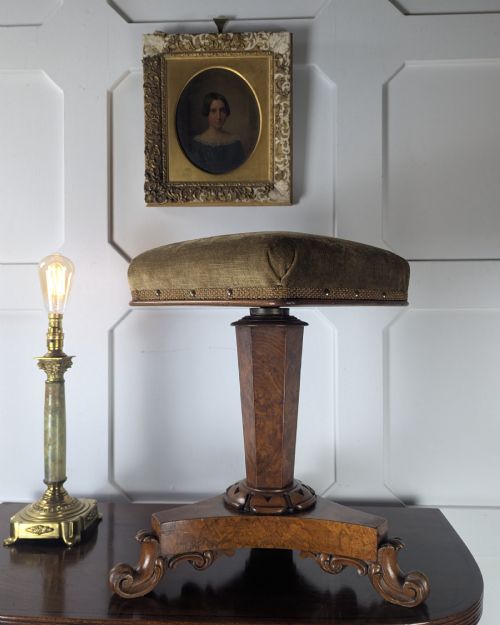
Carpenters utilised figured walnut and hardwood timber, often incorporating carved details, pedestal bases, and tripod frames to support the weight of the musician.
Makers integrated metal and brass mechanisms to allow rise and fall adjustments or revolving swivel seats for the player.
Listings span the nineteenth century, featuring walnut, hardwood, velvet, leather, brass, and iron across Victorian, William IV, and Art Deco styles.
What varies in quality
The standard of carving and the complexity of the internal adjustable mechanism separate standard workshop output from exceptional examples.
The choice of secondary materials, such as inlaid marquetry or heavy brass fittings, dictates the decorative ambition of the individual piece.
The Walnut Music Chair Glossary
- Revolving music chair
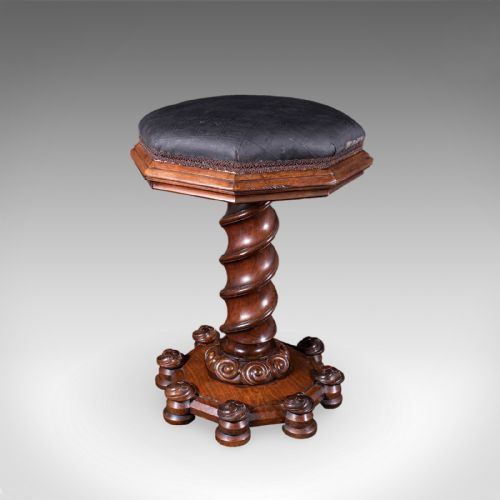
- A seat featuring a mechanism that allows the top to spin fully around for the convenience of the player. These often incorporate a screw thread hidden beneath the seat.
- Rise and fall
- An adjustable height mechanism operated by turning the seat itself or using a side lever. This allowed musicians to set their exact playing height.
- Marquetry
- Decorative woodwork where small pieces of veneer are fitted into a background panel to form pictorial patterns. Swiss examples frequently display this technique.
- Tripod piano stool
- A seat supported by three legs radiating from a central pillar. This configuration ensured stability on uneven floors.
- Figured walnut
- Timber cut in specific ways to reveal intricate grain patterns within the wood. Cabinet makers prized this for visible surfaces.
Walnut Music Chair: Frequently Asked Questions
What is a walnut music chair?
A walnut music chair is an adjustable seat designed for musicians playing the piano, harp, cello, or organ.
These pieces date primarily from the nineteenth century and feature specialised mechanisms to alter the seat height.
How do adjustable piano stools work?
Adjustable piano stools use a central wooden or metal screw mechanism hidden beneath the upholstery.
Turning the seat clockwise or anticlockwise raises or lowers the player to the correct position for their instrument.
Were these chairs only used for pianos?
While piano stools form a large category, makers also designed specific chairs for harpists, cellists, and chapel organists.
Some harp and cello chairs included specialised back rails or revolving seats to accommodate the musician's posture.
How do I identify a Victorian music chair?
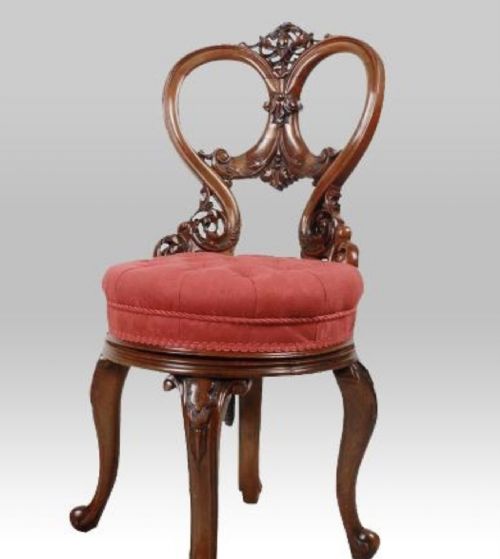
Victorian music chairs often feature carved walnut frames, tripod or pedestal bases, and revolving or rise-and-fall mechanisms.
Upholstery usually consists of period fabrics like velvet, leather, or patterned textiles.