



Walnut Parquetry Nightstands
Walnut parquetry nightstands bring French continental elegance and practical bedside storage to a room through geometric wood patterns and marble surfaces.
Walnut Parquetry Nightstands
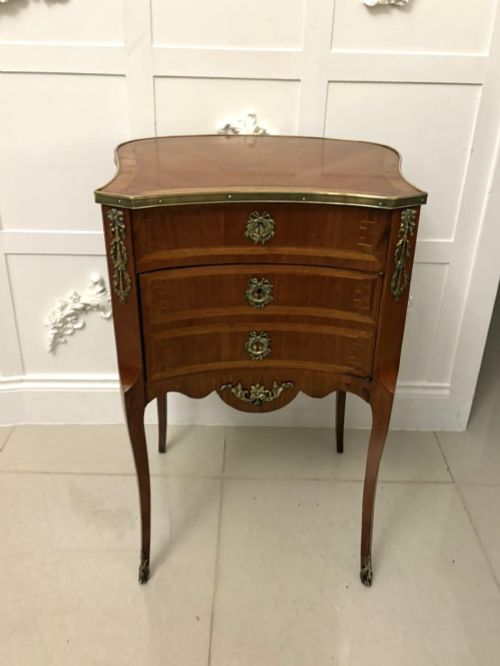
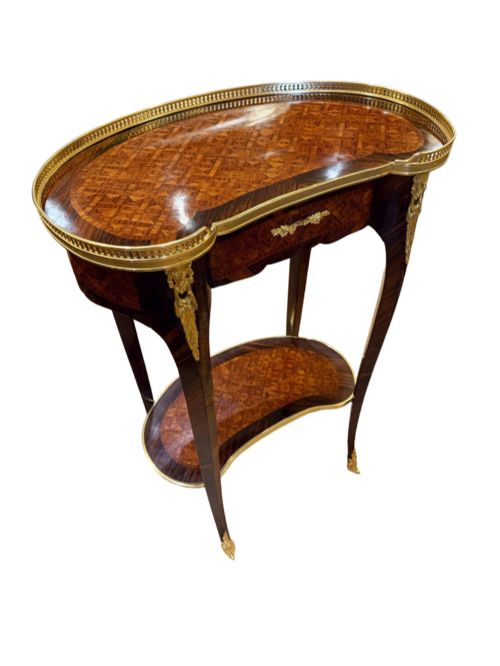
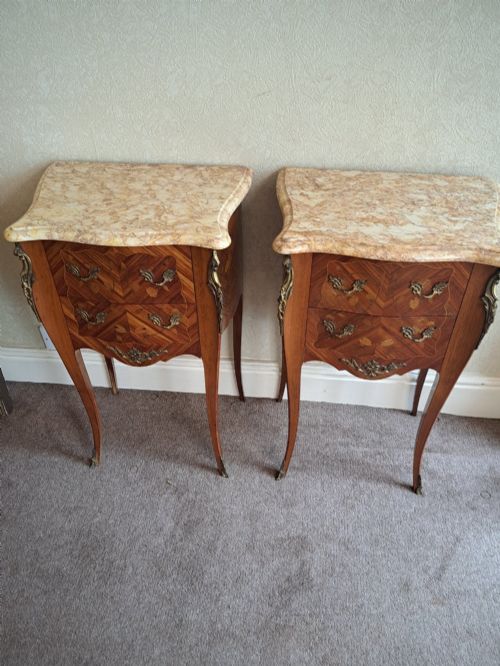
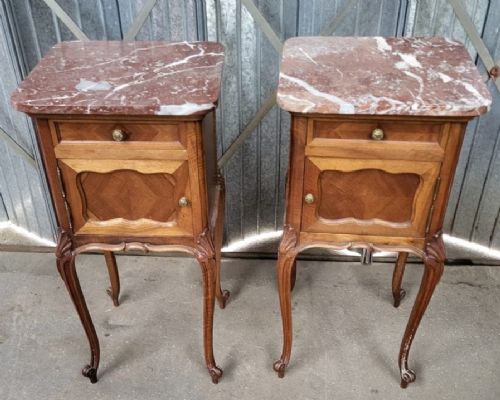
Walnut parquetry nightstands appear in forms such as bedside cabinets, cupboards, chests of drawers, and kidney-shaped side tables. These pieces emerge predominantly from French stylistic traditions spanning the nineteenth and early twentieth centuries, including Louis XV revival and Art Deco designs.
Buyers encounter examples featuring marble tops, ormolu mounts, and brass details alongside enclosed storage spaces and secret compartments. The selection ranges from neat proportions suited to compact spaces to taller bombe commode chests designed for grander chambers.
Construction and Materials
Cabinet makers constructed these tables using walnut and walnut veneer applied over secondary timbers, arranging grain patterns into geometric parquetry and floral marquetry designs. Kingwood frequently supplements the walnut scheme to provide contrast within the decorative veneer work.
The upper surfaces often incorporate fitted slabs of polished marble, supported by brass trims and cast ormolu mounts. Interior compartments utilise solid wood shelving and cabinetry construction suited to daily use as bedside cupboards.
Secret compartments hidden within select tables offer a clever spot to tuck away midnight secrets.
Evaluating the Pieces
Quality rests upon the precision of the parquetry geometry and the crispness of the veneer matching across curved surfaces like bombe profiles and kidney shapes. Superior examples display seamless alignment where individual wood tiles meet along complex contours.
The integration of secondary materials dictates distinction, separating standard utility pieces from finer works adorned with heavy marble slabs and finely chased ormolu mounts. Structural harmony between the walnut body and auxiliary brass hardware defines the upper tier of production.
The Walnut Parquetry Nightstands Glossary
- Parquetry
- Geometric mosaic woodwork formed by small veneer tiles arranged in repeating patterns. This technique creates visual depth across tabletops and cabinet doors.
- Marquetry
- Decorative veneer work depicting pictorial or floral motifs rather than geometric grids. Craftsmen assemble diverse woods to form intricate pictures across the cabinet front.
- Bombe
- A swelling, outward-curved contour characteristic of continental case furniture. This undulating profile requires advanced woodworking skill to veneer successfully.
- Ormolu
- Gilt bronze mounts applied to furniture edges and corners for ornamentation. These cast metal additions accent the organic lines of French revival designs.
- Chevet
- A French term denoting a small bedside table or cabinet. These diminutive pieces provide enclosed storage beside a bed.
Walnut Parquetry Nightstands: Frequently Asked Questions
What periods do these nightstands date from?
The pieces span from the nineteenth century through the Edwardian era and into the Art Deco period of the nineteen-thirties. Many examples draw inspiration from earlier French reigns such as Louis XV.
Craftsmen continued to replicate these historical styles well into the twentieth century, producing varied interpretations of traditional bedside furniture.
How were these cabinets originally used?
These tables served primarily as bedside cupboards to hold chamber pots, personal items, and nighttime necessities. Their enclosed doors and drawers kept domestic items concealed within the bedroom.
Over time, their decorative parquetry and marble surfaces allowed them to transition into versatile lamp tables and side cabinets within various living spaces.
Are marble tops original to the tables?
Many nineteenth and early twentieth-century pieces incorporate fitted marble slabs designed to provide a durable, water-resistant surface for bedside use. These heavy stone inserts sit directly into recessed wooden frames atop the cabinet body.
Matching the marble type and edge profile to the specific period helps confirm the integrity of the piece.
How do I care for walnut veneer?
Walnut veneer requires protection from direct sunlight and excessive humidity to prevent the wood from fading or lifting at the edges. Regular dusting with a soft, dry cloth preserves the polished surface without damaging the historic finish.
Avoiding harsh chemical cleaners ensures the delicate parquetry and surrounding brass mounts remain intact for years to come.