


Walnut Parquetry Coffee Tables
These walnut parquetry coffee tables bring intricate geometric timber work and rich grain into a room, offering both practical surface space and distinct historic character.
Walnut Parquetry Coffee Tables
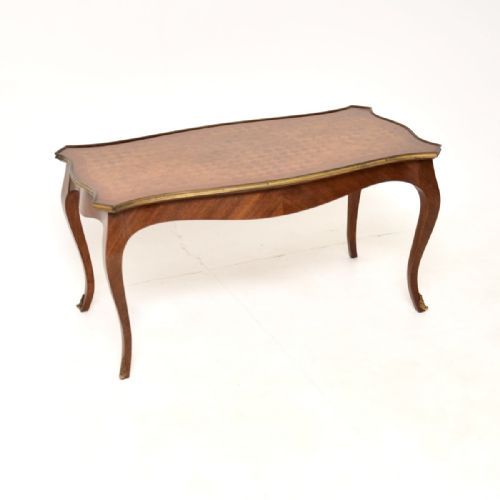
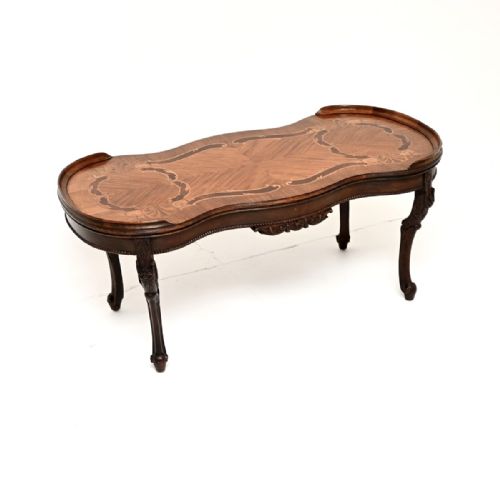
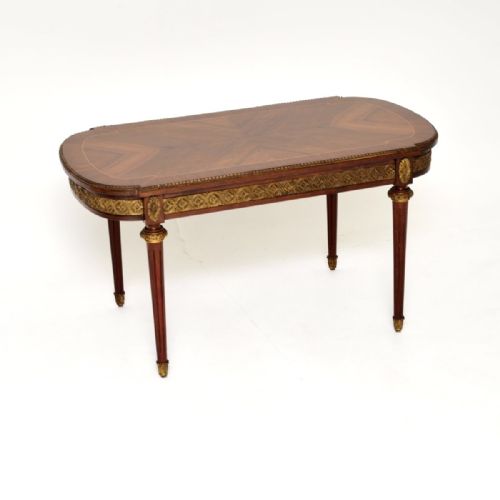
Walnut parquetry coffee tables are low tables whose tops display geometric patterns formed from fitted timber veneers. When buyers search for walnut parquetry coffee tables, they encounter pieces adapted from earlier forms such as centre tables, side tables, and nests of tables, as well as purpose-built low occasional tables.
The examples available range across multiple periods, including 17th Century Dutch work, Victorian pieces, and early 20th century French revival designs. Many items utilise French styles such as Louis XV and Louis XVI revival, alongside Moorish revival influences.
The selection frequently includes nests of tables and two-tier occasional tables alongside standard low coffee tables. These versatile forms suit various domestic settings while maintaining traditional parquetry decoration.
How they were made
Craftsmen built these tables using a sturdy foundational timber such as oak or walnut, onto which they applied decorative veneers. Geometric parquetry patterns were assembled from contrasting woods including fruitwood, kingwood, and boxwood, sometimes accented with mother-of-pearl.
Many French and revival pieces incorporate cast brass or ormolu mounts to edge the tops, frame the aprons, or finish the feet. Individual elements like floral marquetry inlay or brass galleries further enhance the decorative construction of the tables.
One exceptional nest of specimen wood tables carries the signature of Emile Gallé, proving that botanical enthusiasts sometimes let carpenters borrow their leaves.
What varies in quality
Quality in these pieces depends heavily on the precision of the veneer work and the complexity of the geometric layout. Tighter joints between individual parquetry tiles and sharper contrasts between timber species distinguish finer examples from simpler production.
The choice of secondary materials also influences the standard of the piece, particularly the weight and chasing of ormolu mounts and brass galleries. Coarser examples rely on painted details or basic timber selection, whereas superior tables integrate diverse woods like boxwood, kingwood, and mother-of-pearl.
Emile Galle
The Walnut Parquetry Coffee Tables Glossary
- Parquetry
- A geometric mosaic of wood pieces used for decorative floors and table tops. It relies on precise cutting of timber veneers to form repeating patterns.
- Marquetry
- The art of applying pieces of veneer to a structure to form decorative pictures or designs. Unlike parquetry's strict geometry, marquetry often depicts floral or figurative motifs.
- Ormolu
- Gilded bronze used for decorative mounts and furniture trimmings. It adds metallic contrast to the timber surfaces.
- Gallery
- A raised decorative border of pierced metal or wood around the edge of a table top. It prevents items from sliding off the surface.
- Nesting tables
- A set of several tables of graduated size that fit one beneath another. This form saves floor space when the smaller tables are not in use.
Walnut Parquetry Coffee Tables: Frequently Asked Questions
What is parquetry?
Parquetry is a technique where small geometric pieces of wood veneer are fitted together to create a decorative pattern on a surface, such as a table top.
This method differs from marquetry, which creates pictorial or floral designs rather than repeating geometric shapes.
Are these original coffee tables?
Many tables listed as coffee tables were originally produced as low occasional tables, side tables, centre tables, or nests of tables during earlier periods.
These versatile forms function well in modern settings as coffee tables while retaining their historic proportions and construction.
What woods are used in these tables?
The primary timber is usually walnut, frequently combined with contrasting lighter and darker woods for the parquetry patterns. Common accent woods include boxwood, fruitwood, and kingwood.
Additional materials like brass, ormolu, and mother-of-pearl sometimes appear as mounts or supplementary inlay.
How do I care for a parquetry top?
Protect the veneered and inlaid surface by avoiding direct sunlight and excessive moisture, which can damage the timber and lift the veneer. Use coasters and placemats to prevent marks.
Regularly dust with a soft, dry cloth to maintain the finish without applying heavy commercial polishes.