



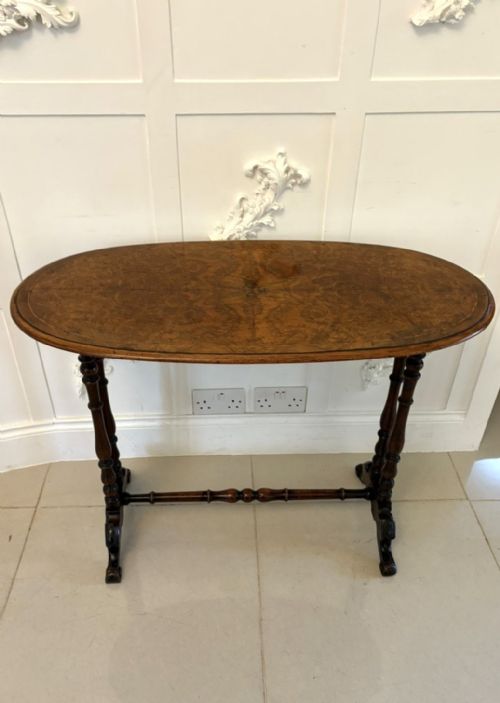


Walnut Oval Lamp Table
A walnut oval lamp table brings warmth and proportion to a room, offering a functional surface shaped with the soft curves characteristic of Victorian and Edwardian joinery.
Walnut Oval Lamp Table
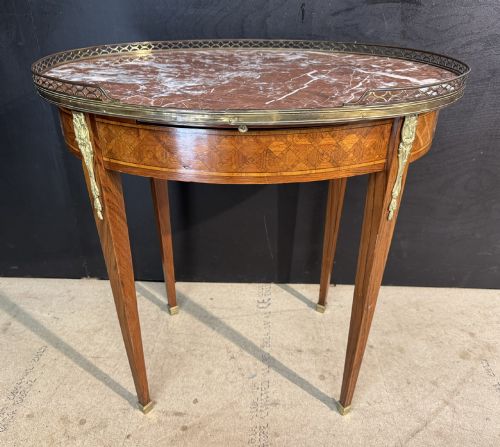
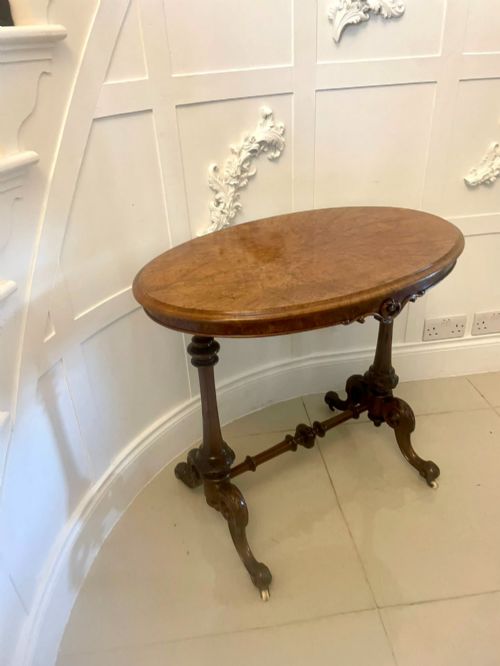
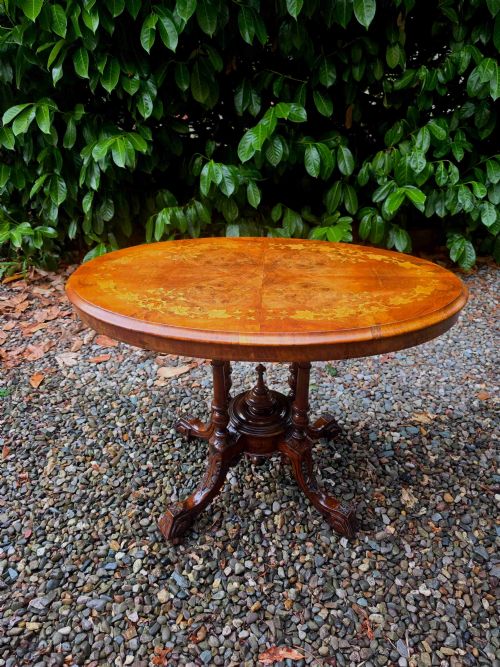
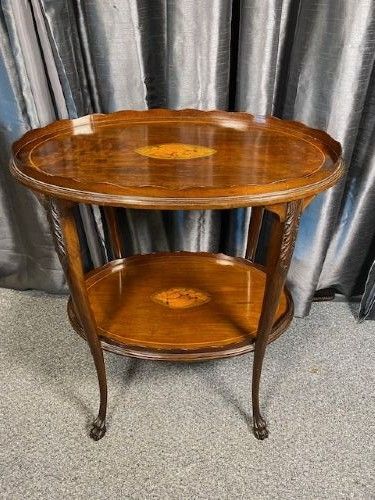
A walnut oval lamp table is typically encountered in Victorian and Edwardian forms, spanning periods from the mid-nineteenth century up to nineteen hundred. These pieces function variously as occasional tables, side tables, wine tables, or sewing tables alongside their primary role for lamps. The version met most frequently on this page is the Victorian burr walnut occasional or lamp table featuring marquetry and boxwood inlay.
Makers working during the Victorian and Edwardian eras utilised the distinctive grain of walnut to create compact surfaces suitable for drawing rooms and parlours. Such tables combine practical utility with decorative inlay, presenting oval tops supported by tripod bases or pillar columns. The presence of secondary forms like canterburys or nesting sets demonstrates the versatility of this particular shape throughout the nineteenth and early twentieth centuries.
Materials and construction
Cabinet makers constructed these pieces primarily using solid walnut and burr walnut veneer over secondary timbers, exploiting the rich, figured grain for the table tops. Marquetry inlay, satinwood, and boxwood stringing were frequently applied to create geometric or floral patterns across the oval surface. Brass elements and ceramic components occasionally feature as fittings or castors depending on the specific period of manufacture.
The technique relies on careful selection of veneer to highlight the natural swirling patterns inherent in burr walnut timber. Inlaid details demand precise hand-cut cavities within the primary surface to receive contrasting light woods such as satinwood and boxwood. This combination of figured veneer and delicate inlay defines the physical execution seen across these nineteenth-century and Edwardian examples.
Some nineteenth-century makers cleverly doubled up walnut lamp tables as magazine racks and sewing stations, proving our ancestors loved multitasking furniture just as much as we do.
Distinctions in quality
Quality rests upon the selection and matching of the burr walnut veneer across the oval top, where superior examples exhibit symmetrical, highly figured grain patterns. The intricacy and precision of the marquetry and boxwood inlay further separate standard production from finer cabinet work. Attention to detail in the turning of the support pillars and the stability of the base construction determine the overall grade of the piece.
The Walnut Oval Lamp Table Glossary
- Burr walnut
- A specialised timber cut from the wart-like growths on walnut trees, prized by cabinet makers for its dense, swirling grain patterns. It creates highly decorative surfaces on Victorian table tops.
- Marquetry inlay
- The art of applying pieces of veneer to a structure to form decorative patterns, often utilising contrasting woods like satinwood and boxwood. This technique decorates many nineteenth-century oval tops.
- Canterbury
- A low multi-section stand fitted with vertical partitions, occasionally combined with an oval lamp table design to hold magazines or music sheets. It represents a multifunctional Victorian furniture form.
- Tripod base
- A three-legged support system commonly found beneath pillar tables, allowing the oval top to remain stable on uneven floors. Many nineteenth-century occasional and wine tables utilise this configuration.
Walnut Oval Lamp Table: Frequently Asked Questions
What is a walnut oval lamp table?
A walnut oval lamp table is a small nineteenth or early twentieth-century domestic table designed to hold a lamp or decorative object. These pieces frequently incorporate burr walnut veneers and inlaid details.
They serve as versatile surface furniture in living spaces, appearing in forms ranging from tripod wine tables to Victorian occasional tables.
How do I date a walnut oval table?
Dating relies upon observing the style of the base, the choice of secondary timbers, and the presence of specific decorative elements like marquetry or boxwood inlay. Victorian examples from eighteen sixty often display rich burr walnut and intricate inlay.
Edwardian pieces from nineteen hundred can exhibit simpler solid walnut construction or lighter satin walnut finishes. Comparing the structural joints and edge profiles helps confirm the period.
Where should I place an oval table?
An oval table fits well beside seating areas where the curved edges help soften room geometry and maintain clear walking paths. They function effectively as lamp tables next to armchairs or sofas.
Their compact proportions also suit corners or smaller wall spaces in hallways and drawing rooms.
How do I care for burr walnut?
Maintaining burr walnut requires keeping the timber away from direct heat sources and strong sunlight to prevent the veneer from drying or fading. Regular dusting with a soft, dry cloth preserves the polished finish.
Applying appropriate wax polishes periodically helps nourish the wood and maintain the lustre of the figured grain.