

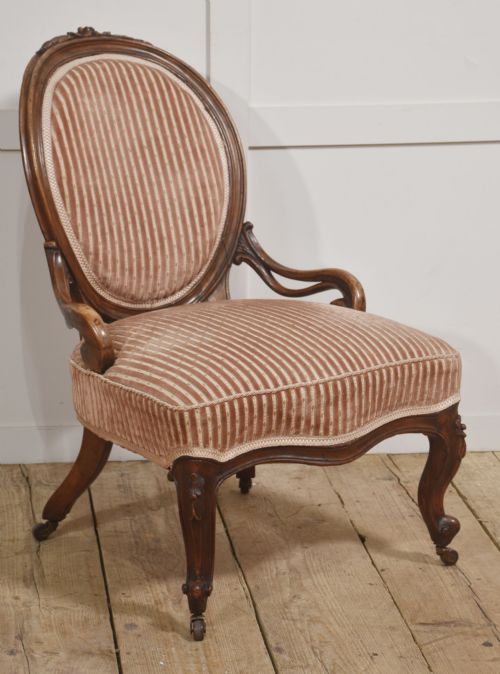


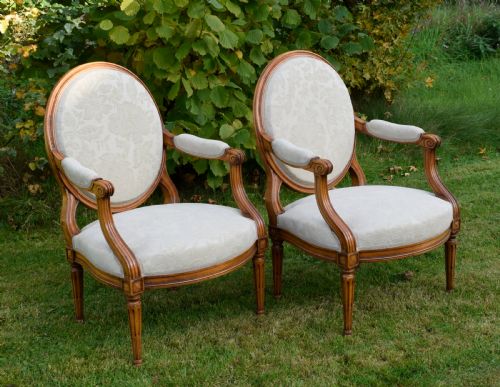


Walnut Oval Back Chair
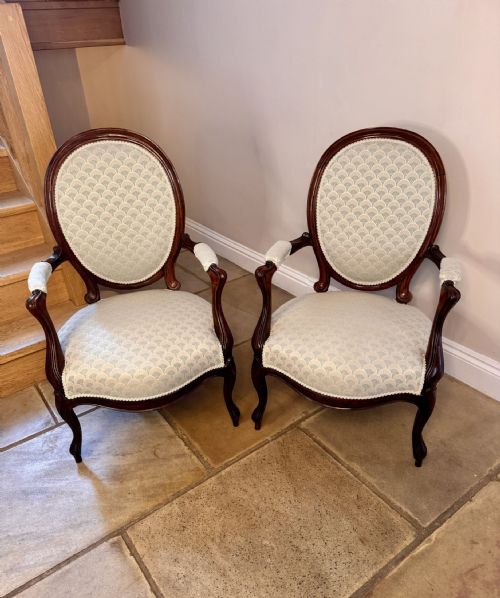
These walnut oval back chair pieces bring distinct nineteenth-century seating form and character into a room.
Walnut Oval Back Chair
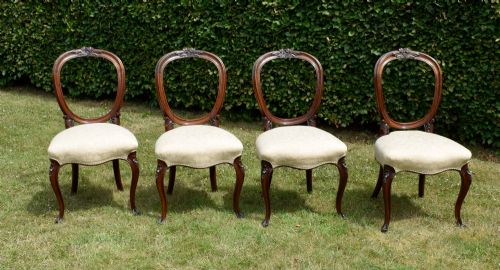
A walnut oval back chair is a seating piece defined by its curved wooden perimeter framing an open or upholstered back, appearing frequently across Victorian and nineteenth-century inventories. These forms span dining chairs, side chairs, open armchairs, and nursing chairs designed for parlour and salon settings.
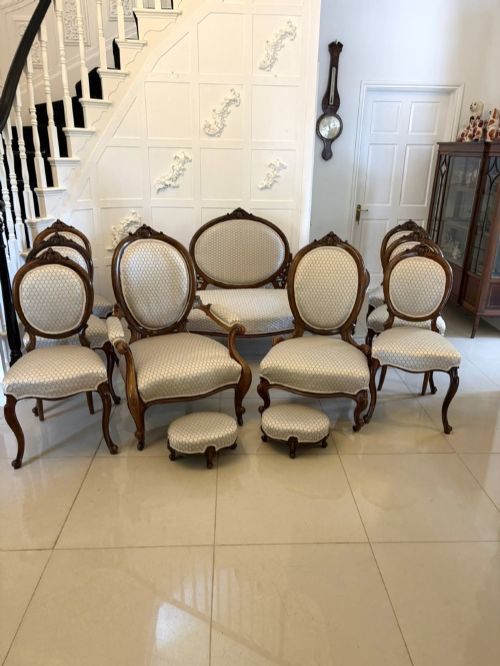
The materials and styles seen on this page range from plain Victorian walnut to elaborate French Louis XVI style and Neoclassical revival designs. Buyers encounter everything from single library chairs and intimate pairs to larger salon suites with matching upholstery.
Makers and craftsmen of the period utilised solid timber frames to support intricate carved details and plush textile coverings. The characteristic oval back silhouette remains the central visual anchor for these historic seating options.
Materials and construction methods
Makers built these frames using solid walnut timber selected for its rich grain and structural strength. This dense wood allowed carvers to shape curved oval backs and apply ornamental relief work along the crest rails and cabriole legs.
Upholstery methods involved traditional stuffing materials secured beneath fabrics such as velvet, wool tapestry, and textile upholstery. Brass tacks and detailed button-back tufting frequently finished the edges of the padded seats and oval backs.
Walnut Oval Back Chair Retail Price Guide 2026
Typical asking prices for walnut oval back chair among the pieces listed under this phrase on Sellingantiques today, from the lower quarter to the upper quarter. They describe what is for sale here now, not the wider market.
Childs bergere chairs prove that nineteenth-century children were expected to sit with impeccable neoclassical posture.
Distinguishing quality in the range
The refinement of the timber carving separates standard examples from exceptional pieces at the top of the range. Crisp hand-chiselled foliage and balanced proportions indicate superior workshop execution compared to simpler, mechanical production.
The integrity of the structural joinery and the original warmth of the polished walnut surface dictate the overall desirability. Pieces retaining deep, untouched grain patterns alongside well-preserved textile panels hold greater visual harmony.
The Walnut Oval Back Chair Glossary
- Walnut
- A hard, dark timber prized for its rich grain and durability in nineteenth-century furniture framing. It took a high polish and held fine carved details exceptionally well.
- Oval Back
- A rounded, closed or open wooden frame shaped like an egg, forming the backrest of a chair. This silhouette defines many Victorian and French revival seating designs.
- Nursing Chair
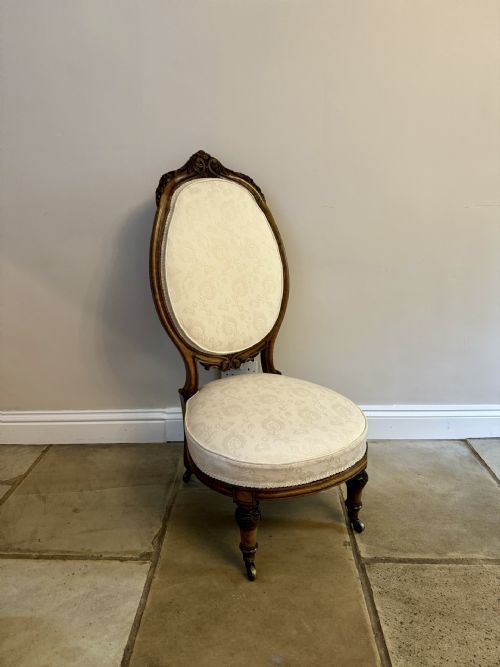
- A low-seated Victorian chair designed for comfort, often featuring an open or padded back. These pieces sat closer to the floor for domestic tasks.
- Salon Suite
- A matched grouping of seating furniture, including sofas, armchairs, and side chairs, intended for formal reception rooms. They shared uniform wood carving and upholstery fabrics.
- Button Back
- An upholstery technique where indentations are formed by pulling stitches tightly through padding and securing them with covered buttons. This created a tufted surface texture.
Walnut Oval Back Chair: Frequently Asked Questions
Where were these chairs used?
These seating pieces were designed primarily for formal reception spaces, drawing rooms, and private parlours during the nineteenth century. Lighter forms such as nursing chairs and side chairs were easily moved around domestic interiors for social gatherings.
Larger configurations like salon suites furnished entire entertaining areas with matching aesthetic schemes. Library and open armchairs provided heavier, more permanent seating for reading and private study.
How do I date an oval back chair?
Dating relies on observing stylistic markers, timber finishes, and construction techniques associated with nineteenth-century periods. Victorian pieces often display heavier proportions and characteristic Rococo revival carving.
Later nineteenth-century and early twentieth-century examples occasionally incorporate French Louis XVI revival details and lighter neoclassical influences. Examining the underlying upholstery webbing and timber ageing helps confirm the approximate decade of manufacture.
How should I care for walnut wood?
Walnut frames require minimal intervention to preserve their historic finish and prevent the timber from drying out. Keeping pieces away from direct sunlight and steady humidity fluctuations protects the polished surface.
Gentle dusting with a soft, dry cloth is sufficient for routine maintenance. Avoid using modern silicone polishes that can build up a cloudy residue over traditional finishes.
What is a salon suite?
A salon suite is a coordinated ensemble of upholstered seating furniture designed to outfit a Victorian drawing room. These sets typically include a matching sofa alongside several armchairs, side chairs, and sometimes footstools.
Every piece in the suite shares identical walnut framing, carved motifs, and upholstery fabrics to create a unified decorative scheme.