



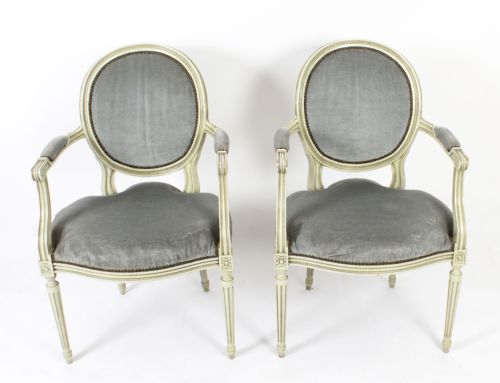

Oval Medallion Back Chair
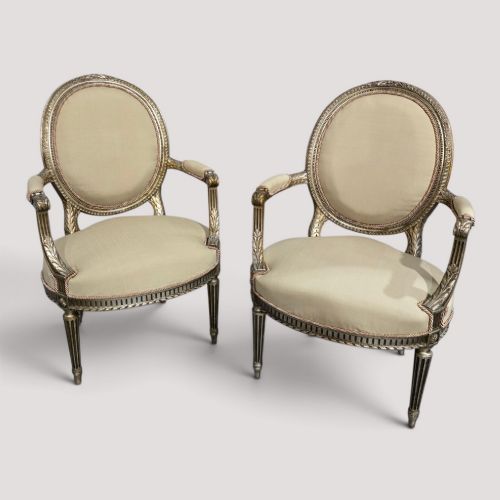
An oval medallion back chair brings classic French neoclassical elegance to a room with its characteristic rounded upholstered frame.
Oval Medallion Back Chair
An oval medallion back chair is a seating form defined by its distinct circular or oval wooden backrest, which frames an upholstered central panel. Buyers seeking this style encounter pieces originating from the eighteenth century through to the early twentieth century, reflecting enduring revivals of French classical design.
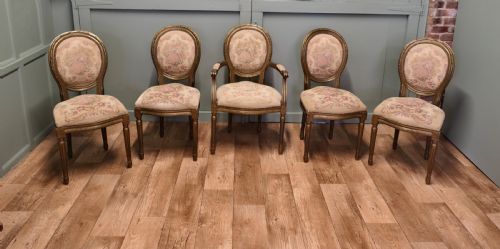
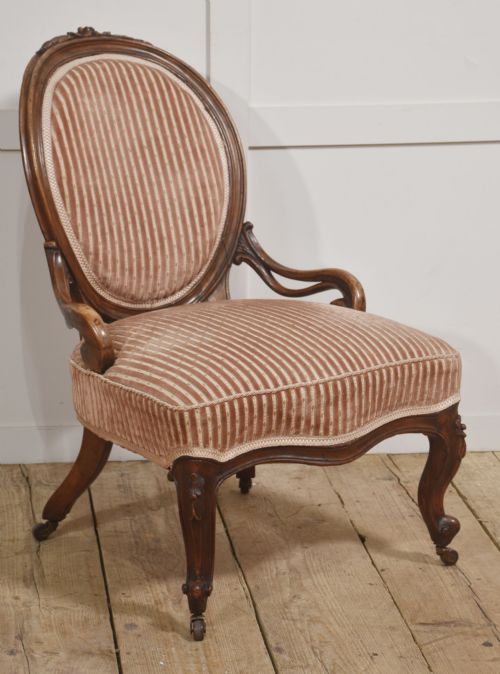
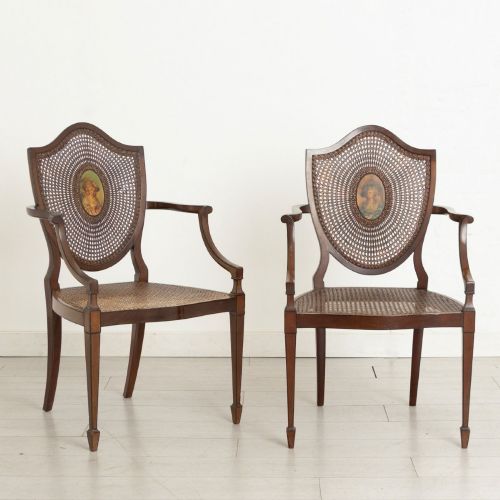
The selection on this page centres on French neoclassical and Louis XVI revival influences, alongside Victorian interpretations. Forms range from single open armchairs and nursing chairs to matching sets of dining chairs and salon suites.
Materials span painted wood, giltwood, and gilded timber, often paired with traditional textiles such as velvet, silk damask, and linen. These chairs serve primarily as decorative salon seating or statement dining chairs.
How they were made
Makers shaped the distinctive curved backrests from timber, employing carving techniques to ornament the frames with neoclassical motifs. Giltwood and painted wood finishes required skilled application of gold leaf or paint over prepared wooden surfaces.
Upholstery involved securing textiles like silk damask, velvet, and linen over padding within the open wooden frames. Brass components occasionally appear in structural or decorative capacities.
Oval Medallion Back Chair Retail Price Guide 2026
Typical asking prices for oval medallion back chair among the pieces listed under this phrase on Sellingantiques today, from the lower quarter to the upper quarter. They describe what is for sale here now, not the wider market.
One recorded set once sat within Spencer House, echoing generations of aristocratic gatherings.
What varies in quality
The standard of carving on the wooden frame distinguishes finer examples, with crisp, detailed ornamentation marking superior craftsmanship over simpler execution. The integrity of the original giltwood or painted finish also plays a role in how a piece holds its visual weight.
Proportion and scale dictate the visual success of the chair, particularly in how the oval back relates to the seat and legs. The choice and execution of period-appropriate upholstery materials complete the overall calibre of the piece.
The Oval Medallion Back Chair Glossary
- Louis XVI style
- A neoclassical design movement characterised by straight lines, symmetry, and classical ornamentation. It provides the primary aesthetic foundation for the oval medallion back chair.
- Giltwood
- Wood that has been coated with thin gold leaf or powder. This finish is frequently found on formal revival seating.
- Salon suite
- A matching set of seating furniture designed for a formal drawing room or reception space. These groupings often include armchairs and side chairs sharing identical decorative schemes.
- Open armchair
- An armchair featuring un-upholstered wooden arms that reveal the structural framing. This form highlights the carved details of the timber construction.
Oval Medallion Back Chair: Frequently Asked Questions
Where were oval medallion back chairs placed?
These chairs were traditionally used in formal reception rooms, drawing rooms, and parlours. They functioned both as seating around a dining table and as decorative accent pieces placed against walls.
In modern interiors, they work well as occasional seating in living areas or as individual desk chairs.
How do I identify a Louis XVI revival piece?
Louis XVI revival pieces draw heavily on eighteenth-century French classicism, featuring straight tapered legs and symmetrical carving. They emerged strongly during the nineteenth and early twentieth centuries as cabinetmakers reinterpreted earlier court furniture.
The presence of painted wood or giltwood finishes alongside neoclassical motifs points directly to this revival aesthetic.
What is the difference between an armchair and a side chair?
Armchairs feature structural side supports for the arms, offering a wider frame designed for relaxed sitting. Side chairs lack arms entirely, making them more compact and suitable for dining arrangements.
Both variants share the signature oval backrest when associated with this specific chair style.
How should I care for gilded timber frames?
Gilded timber requires gentle dusting with a soft, dry cloth to prevent accumulation without disturbing the delicate gold leaf finish. Avoid chemical polishes and abrasive cleaners that can strip the surface.
Keeping the chairs away from direct sunlight and excessive moisture helps preserve both the wood and the traditional upholstery.