
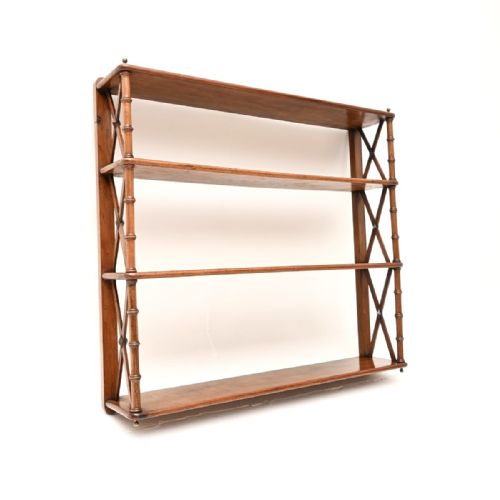
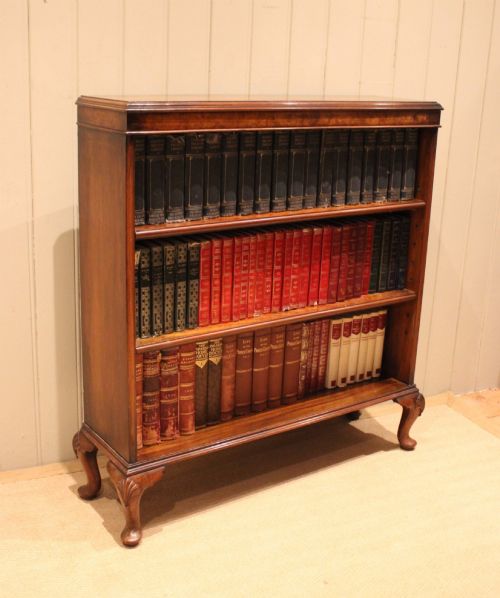

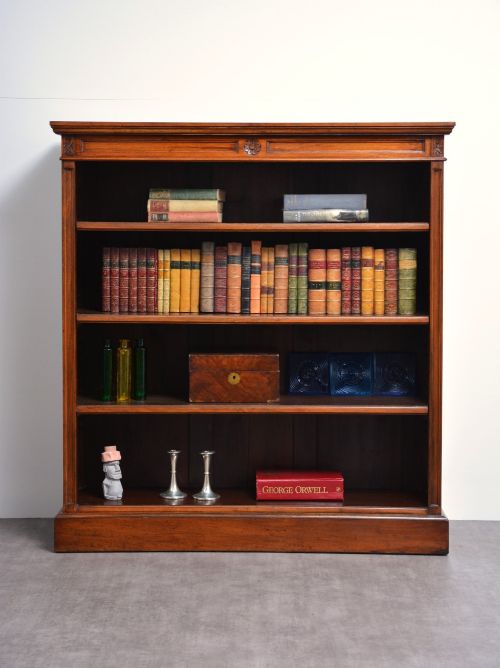
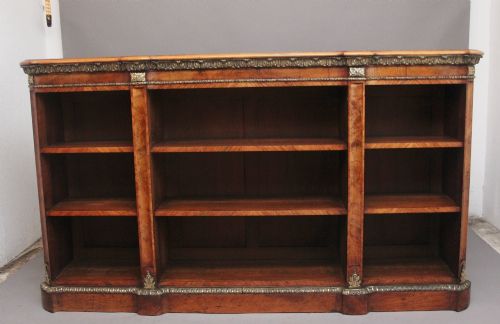
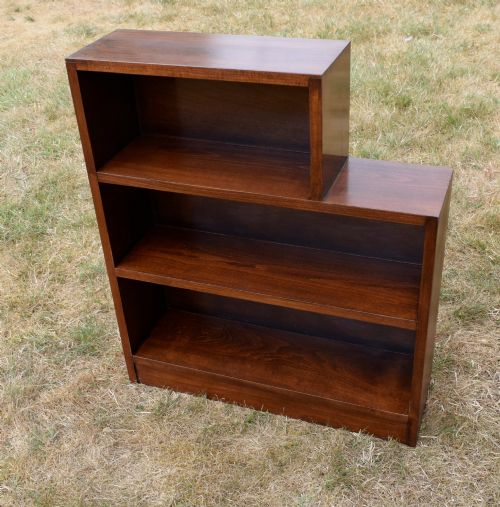
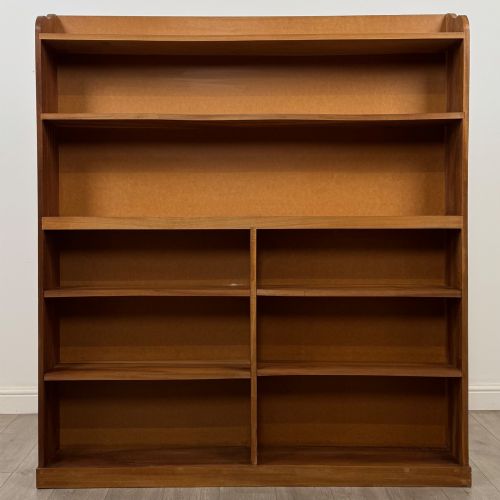
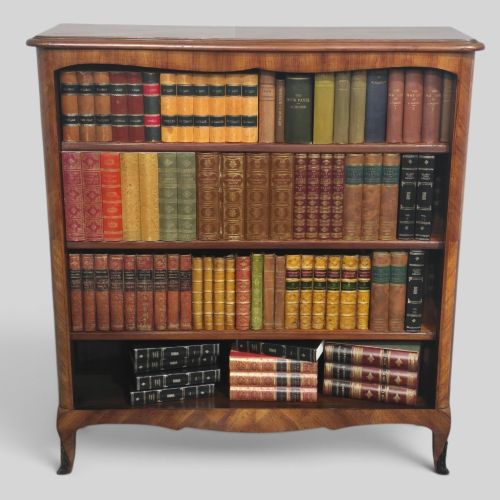
Walnut Open Shelving
Walnut open shelving brings warmth and visible grain to rooms that need accessible storage without heavy doors.
Walnut Open Shelving
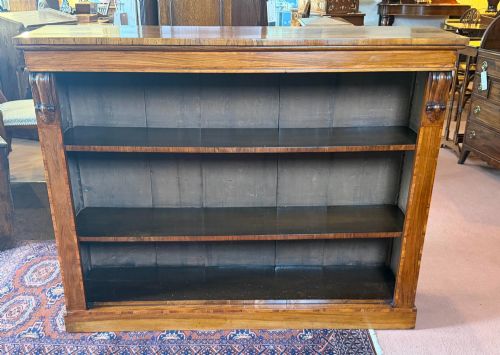
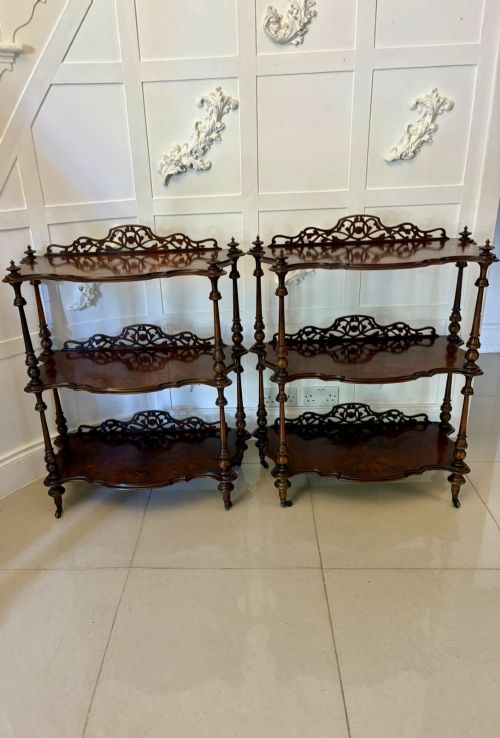
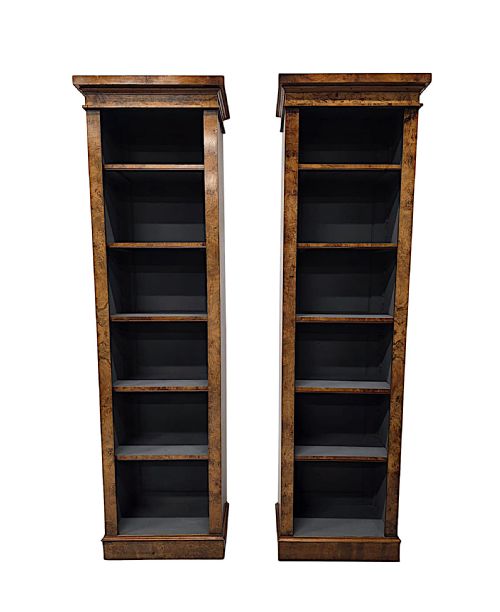
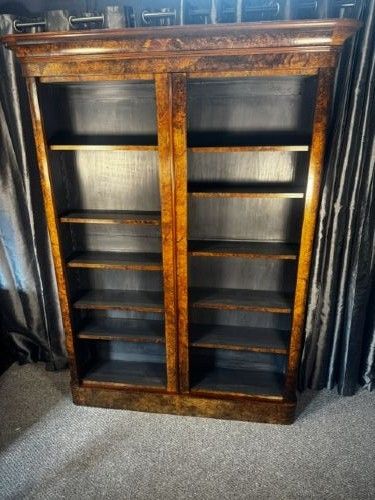
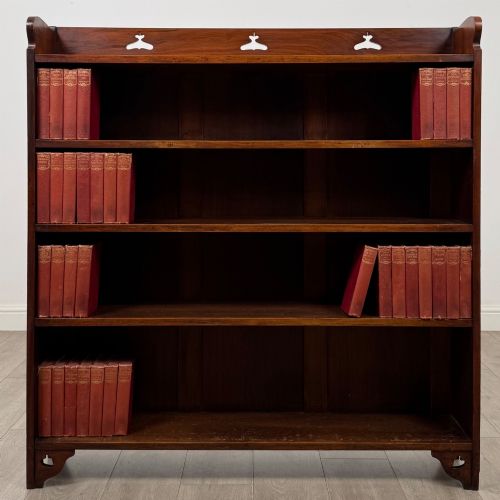
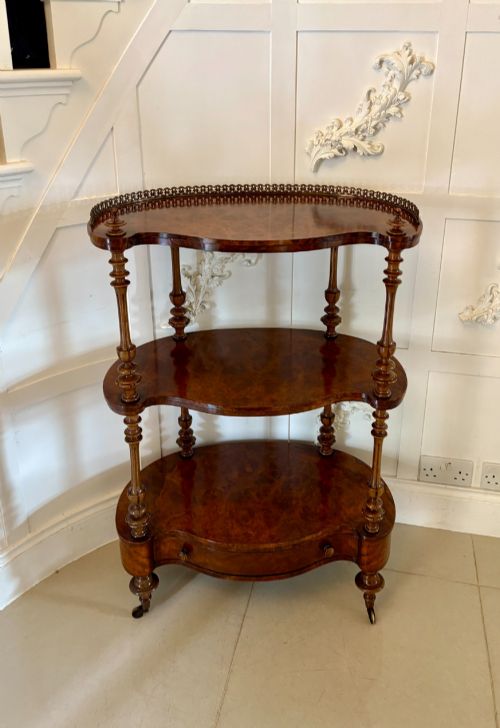
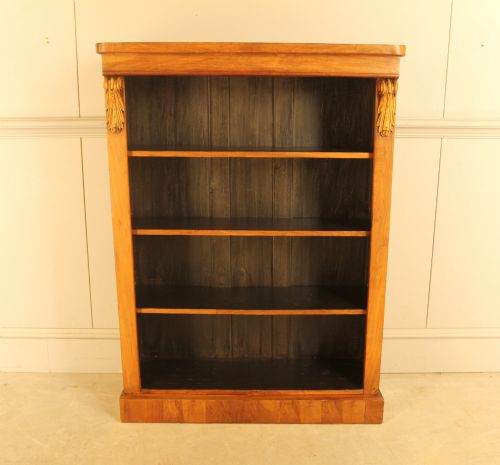
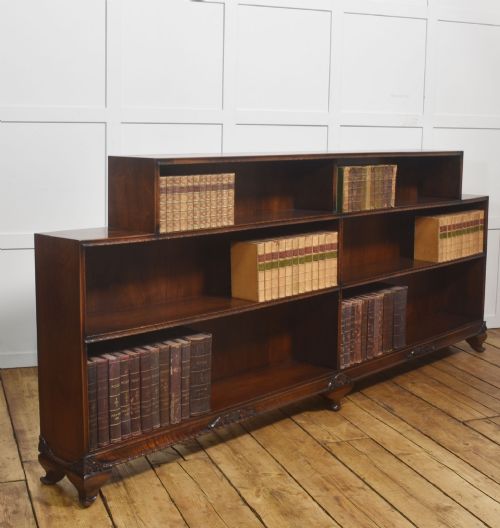
Walnut open shelving covers a diverse range of items designed for display and book storage, from straightforward low bookcases to tiered whatnots and corner units. These pieces span the nineteenth and twentieth centuries, taking in Victorian craftsmanship, Edwardian practicality, and the clean lines of Art Deco design.
The most frequent examples encountered on this page are Victorian and later bookcases featuring adjustable shelves, alongside multi-tiered whatnots and etageres. Buyers select these items to house collections and organise everyday volumes while introducing rich timber tones to an interior.
How they were made
Makers utilised solid walnut and figured walnut veneer laid over secondary timbers like pine, often selecting burr walnut for its swirling, decorative grain patterns. Cabinets and open shelves frequently incorporated brass hardware, cast or gilt ormolu mounts, and mirrored panels.
Construction techniques balanced structural stability with visual lightness, employing adjustable shelving systems and turned legs to support heavy book collections. Workshops shaped serpentine fronts and integrated inlaid details to elevate the finish of library furniture and display pieces.
Materials recorded across the inventory range from solid walnut and burr walnut veneer to brass, ormolu, and glass.
What varies in quality
The standard of a piece rests on the choice of timber veneer and the crispness of applied ormolu mounts or carved details. Breakfront proportions and complex serpentine shapes indicate ambitious workshop production rather than standard commercial output.
Judicious selection of burr walnut figures across matching surfaces distinguishes finer examples, as does the integration of robust, working adjustable shelving mechanisms that endure heavy volumes without sagging.
Johnstone and Jeanes·Gillows·Maurice Adams
The Walnut Open Shelving Glossary
- Burr walnut
- A figured wood grain taken from the growth excrescences of walnut trees, prized for its intricate, swirling patterns.
- Ormolu
- Gilded bronze mounts applied to furniture edges and corners, common in nineteenth-century decorative pieces.
- Whatnot
- A multi-tiered open piece of furniture designed for displaying ornaments, books, and small objects.
- Etagere
- A set of open shelves for display, often French in inspiration and lighter in construction than a standard bookcase.
- Breakfront
- A piece of furniture where the central section projects forward from the flanking outer sections.
Walnut Open Shelving: Frequently Asked Questions
How do I date a walnut bookcase?
Dating relies on observing structural characteristics, decorative styles, and timber choices across the piece. Victorian examples often feature rich burr veneers and ormolu mounts, while later twentieth-century pieces lean towards streamlined Art Deco silhouettes.
Adjustable shelf mechanisms and construction methods inside the carcass also provide clear indicators of the period of manufacture.
Are the shelves usually adjustable?
Many examples on this page are constructed with adjustable shelving to accommodate books of varying heights. Workshops used timber supports and peg systems that allow users to reposition boards easily.
Fixed shelves do appear on certain smaller whatnots and étagères designed primarily for display rather than a working library.
How do I care for walnut furniture?
Walnut benefits from placement away from direct heat sources and strong sunlight to prevent the timber and veneer from drying out. Regular dusting with a soft, dry cloth preserves the polished surface without damaging the grain.
Applying appropriate wax polish occasionally helps maintain the lustre of the wood and protects the finish from daily wear.