
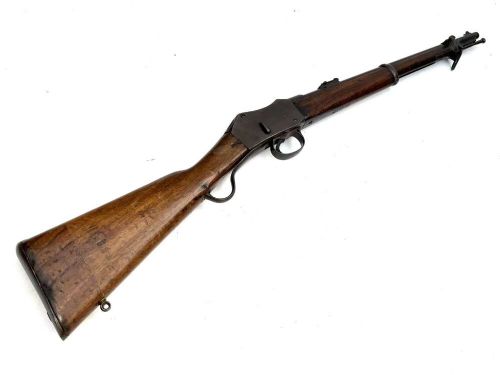
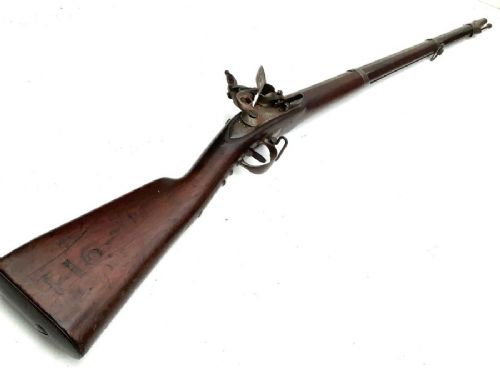


Walnut Military Rifle
These walnut military rifle examples combine historic timber with ordnance steel, offering collectors tangible links to major campaigns.

Walnut Military Rifle
A walnut military rifle represents service arms from the eighteenth and nineteenth centuries, spanning Georgian, Napoleonic, and Victorian periods.
Buyers encounter flintlock and percussion systems alongside smoothbore muskets and rifled longarms originating from British, French, and East India Company workshops.
The selections on this page feature robust service stocks paired with functional military hardware rather than civilian sporting arms.
Construction and materials
Stocks rely on dense walnut timber shaped to house long barrels and secure brass or iron furniture against heavy service use.
Metal components combine forged steel barrels with iron locks and brass trigger guards, barrel bands, and butt plates.
Listings feature walnut, steel, brass, iron, and leather across pieces dated from seventeen-fifty to eighteen-seventy.
Evaluating craftsmanship and condition
Superior examples retain crisp maker markings and clear regiment inscriptions on the wood and metal, whereas lesser pieces suffer from sanded stocks and worn stamps.
The integrity of the lock mechanism and the original match of barrel to stock define the standing of each arm within its period.
Sargant and Son
The Walnut Military Rifle Glossary
- Flintlock
- An ignition mechanism utilising a flint striking a steel frizzen to create sparks for gunpowder detonation. This system dominated military arms before percussion caps arrived.
- Percussion cap
- A small detonating charge placed on a nipple to ignite the main powder charge when struck by the hammer. It replaced the flintlock system during the nineteenth century.
- Musketoon
- A shortened version of a musket designed for cavalry or naval use. It delivered similar firepower in a more compact format.
- Socket bayonet
- A blade that fits over the muzzle of a firearm, allowing the user to convert the weapon into a thrusting pike without blocking the bore.
Walnut Military Rifle: Frequently Asked Questions
What periods do these rifles cover?
The pieces span from the mid-eighteenth century through the Napoleonic wars and deep into the Victorian era.
Dates range from the seventeen-fifties up to the eighteen-seventies, covering major technological shifts in military arms.
How do flintlock and percussion arms differ?
Flintlock weapons rely on a piece of flint striking steel to create a spark that ignites the priming powder.
Percussion arms use an enclosed cap struck by a hammer, offering greater reliability in wet weather.
Which nations manufactured these service arms?
The selection includes British regulation pieces alongside French Napoleonic models and East India Company arms.
Each national pattern reflects specific tactical requirements and domestic manufacturing capabilities of the period.
How should I display a military rifle?
Mount the piece securely on a wall bracket or display it horizontally in a dedicated glass cabinet.
Keep the timber and metal away from direct sunlight and sudden temperature changes to protect the materials.