
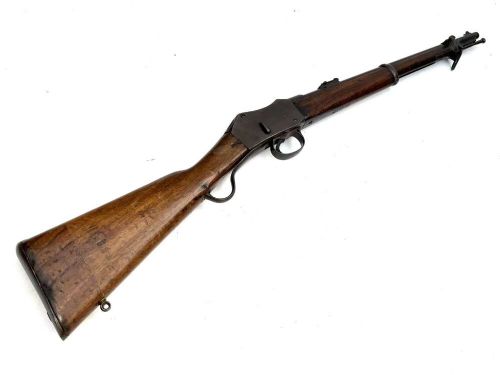
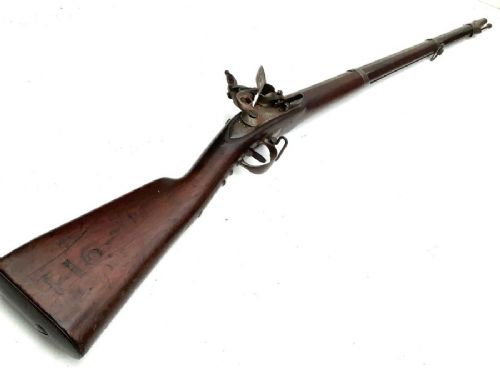


Dark Walnut Rifle
A dark walnut rifle carries the weight of history in its timber stock and iron barrel, offering collectors a tangible link to past conflicts.
Dark Walnut Rifle
A dark walnut rifle encompasses historical military arms and antique firearms fashioned from rich hardwood timber, spanning periods from the eighteenth century through to the late nineteenth century. These pieces include flintlock muskets, percussion sporting arms, and military rifles issued during significant conflicts like the Napoleonic Wars and the Victorian era.
Buyers examining this selection encounter various forms such as the Brown Bess, Charleville musket, and Enfield rifle variants, alongside French and English military arms. The stock timber provides a deep, aged grain that defines the visual character of each piece across these historical dates.
Construction and materials
The primary construction combines dark walnut timber for the stocks with forged steel, iron, and brass for the barrels, lock mechanisms, and mountings. Master gunmakers shaped the hardwood stocks by hand to house complex firing systems, ranging from early flintlock mechanisms to later percussion caps.
Metal components involved traditional blacksmithing and machining techniques appropriate to their respective periods, from eighteenth-century colonial workshops to nineteenth-century government arsenals like Tower. Leather slings and accessories occasionally accompanied these arms, completing the functional assembly.
Early militia volunteers sometimes carved their initials into the walnut stocks, leaving a personal mark that survives centuries later.
Assessing quality and character
Quality in these firearms rests upon the preservation of the original dark walnut stock and the crispness of maker markings or regimental stampings upon the metal. Examples bearing clear proof marks and intact lockplates by recognised makers command greater interest among serious collectors.
The integrity of the mechanism and the absence of excessive timber shrinkage or replacement parts dictate the overall desirability of the piece. Retaining original components such as ramrods, bayonets, and functional lock actions distinguishes superior examples from heavily restored or altered arms.
Sargant and Son
The Dark Walnut Rifle Glossary
- Flintlock
- An ignition mechanism utilising a piece of flint struck against a steel frizzen to create sparks that ignite the gunpowder charge. This system dominated military and civilian arms throughout the eighteenth and early nineteenth centuries.
- Percussion cap
- A small metal cup containing a priming compound placed on a nipple, struck by the hammer to fire the weapon. This innovation superseded the flintlock system during the nineteenth century.
- Musket
- A muzzle-loading shoulder weapon designed for infantry use, typically featuring a smoothbore barrel before the widespread adoption of rifling. These arms formed the standard infantry equipment for centuries.
- Carbine
- A shorter, lighter version of a rifle or musket intended primarily for cavalry use to allow easier handling on horseback. Their compact dimensions made them popular among mounted troops.
- Socket bayonet
- A stabbing blade fitted to the muzzle end of a firearm via a tubular offset socket that locks around the barrel. This design allowed the soldier to fix the blade without obstructing the bore.
Dark Walnut Rifle: Frequently Asked Questions
What periods do these pieces represent?
The listings span from the mid-eighteenth century through the Georgian and Napoleonic eras into the late nineteenth century. This timeframe captures significant developments in military technology and firearms design.
Collectors find examples originating from English, French, and American arsenals, reflecting the diverse manufacturing standards of each historical epoch.
How do flintlock and percussion systems differ?
Flintlock arms rely on a flint striking a steel frizzen to produce sparks for ignition, representing the technology of the eighteenth and early nineteenth centuries. Percussion firearms use a hammer to strike a priming cap placed on a nipple.
The percussion system, emerging around the 1840s, offered greater reliability in damp weather and gradually replaced the older flintlock mechanism across military and sporting arms.
How should I display a dark walnut rifle?
Displaying these arms requires a stable environment away from direct sunlight and extreme fluctuations in humidity to protect the aged walnut timber and metal surfaces. Wall mounts or specialised display cabinets with secure fixings provide appropriate support for the weight of the piece.
Ensure the firearm is securely supported along the length of the stock rather than hanging by a single point to prevent strain on the historical wood.
Are these firearms legally deactivated?
Antique firearms of this age and category are typically held as historic artefacts and collectables, though buyers must verify current legal requirements regarding ownership and registration in their jurisdiction.
Many pieces from the eighteenth and nineteenth centuries serve purely as historical display items and study pieces for military collections.
How do I identify regimental markings?
Regimental markings and unit stamps are usually engraved or stamped into the brass butt plates, lockplates, or wooden stocks of military arms. These stampings denote the specific unit or volunteer corps to which the weapon was issued.
Consulting reference guides dedicated to specific makers and military contracts helps interpret these stamps and trace the service history of the piece.