
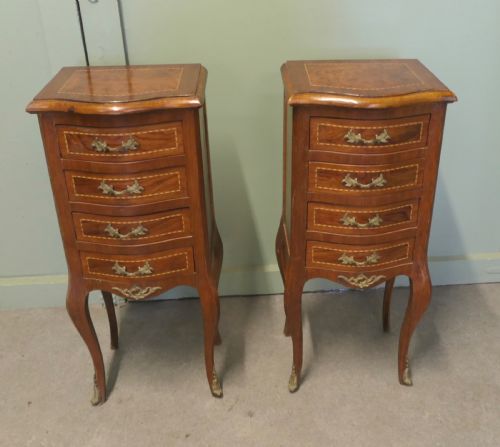
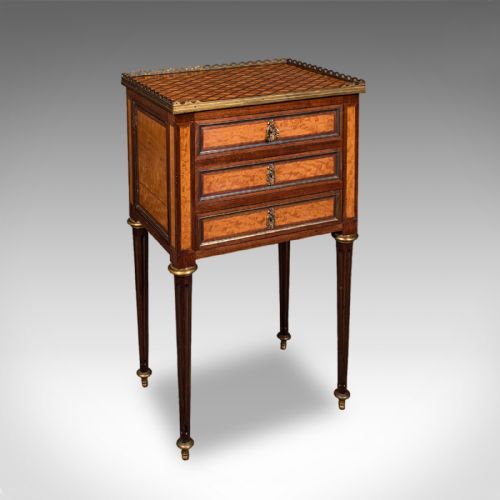
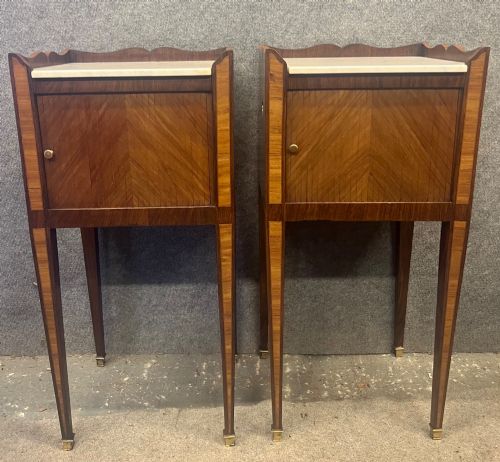
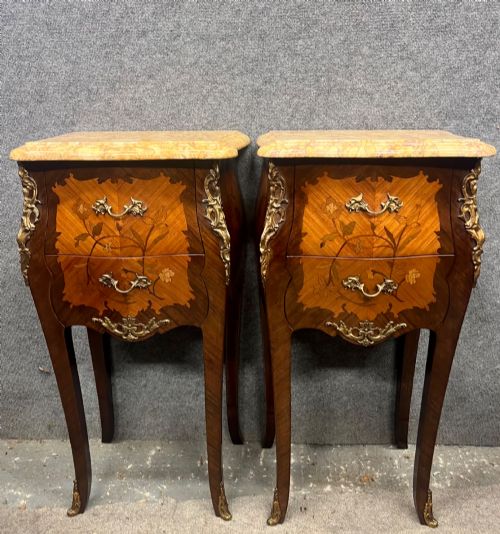
Walnut Marquetry Nightstands
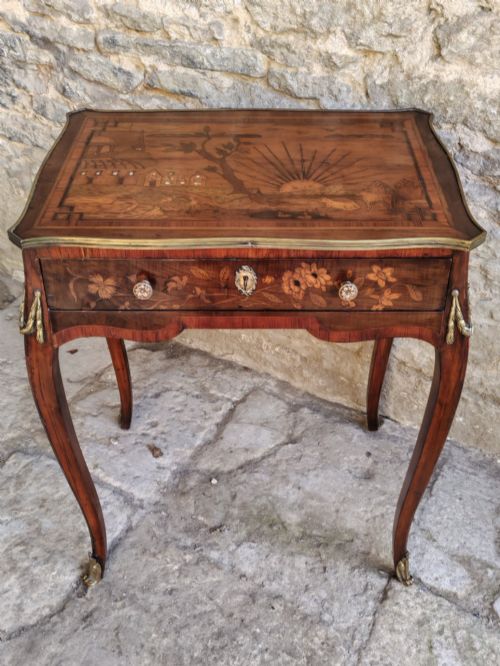
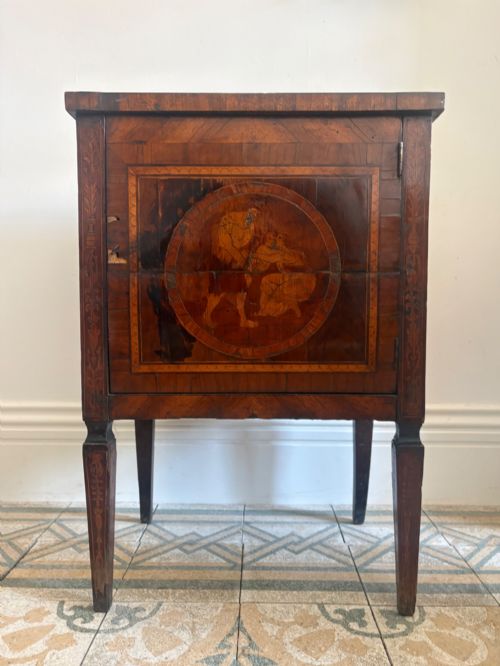
Walnut marquetry nightstands combine figured timbers with intricate inlaid floral and geometric designs to provide small-scale bedside storage.
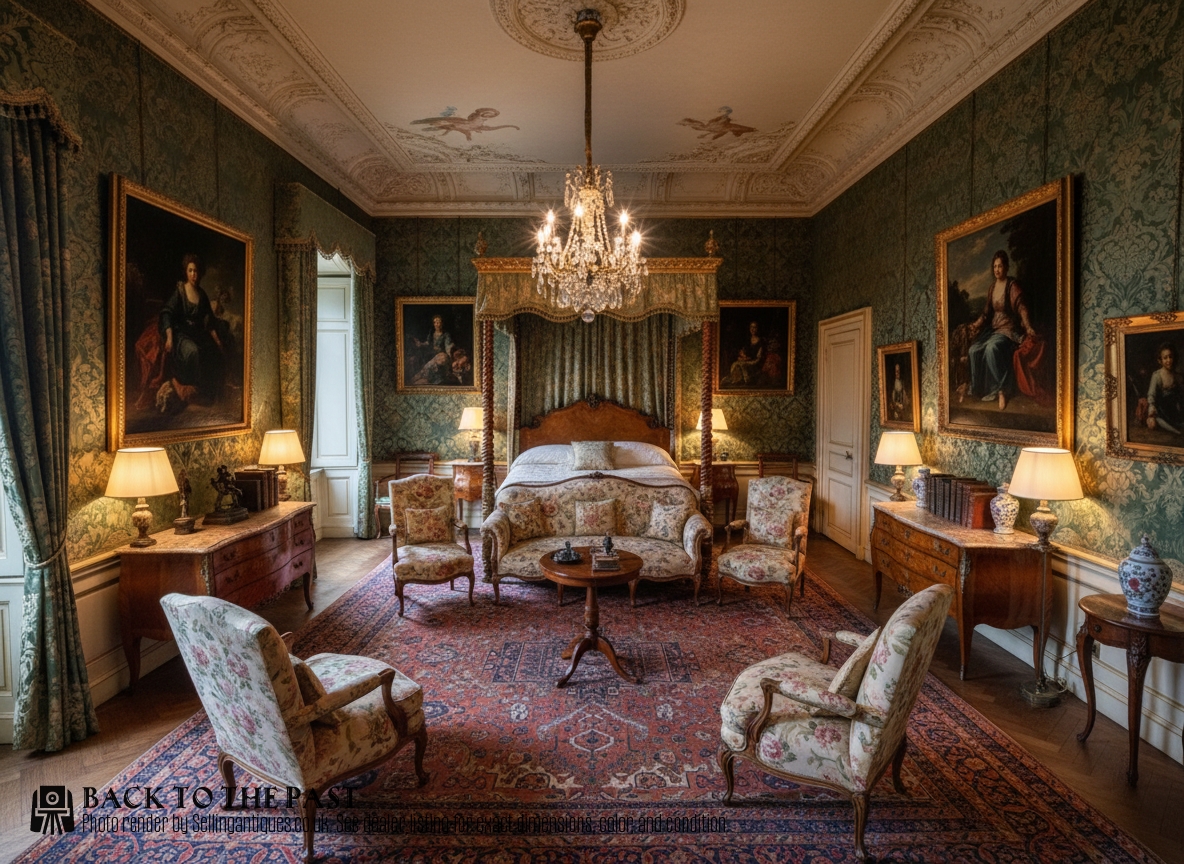
Walnut Marquetry Nightstands
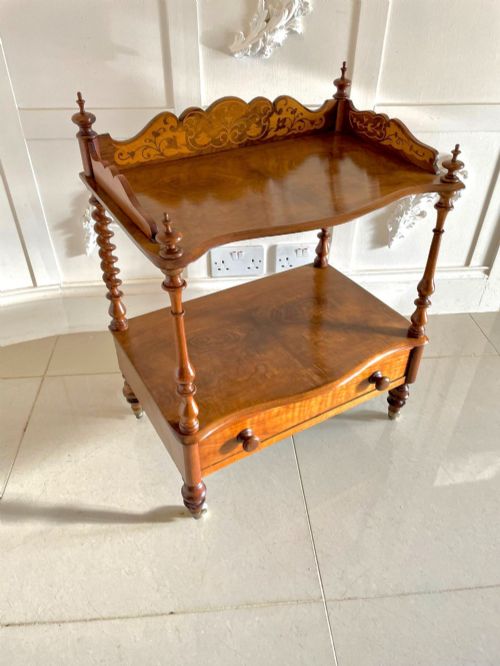
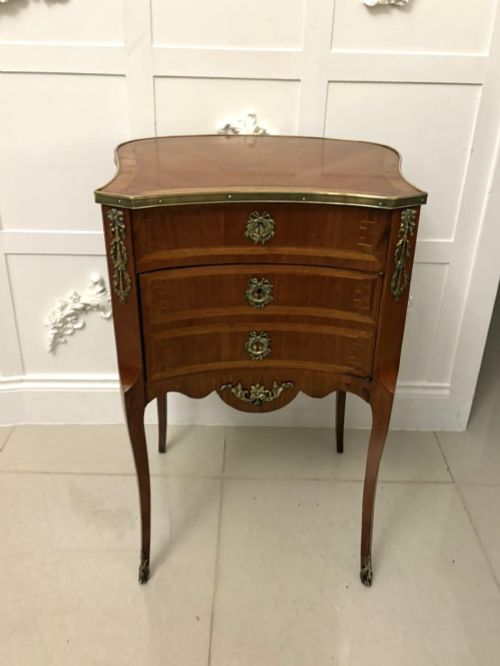
Walnut marquetry nightstands encompass a variety of small bedside cabinets, tables and chests designed to sit beside a bed. The pieces appearing here span from the eighteenth century through to the art deco period, with French Louis XV and Rococo revival designs heavily represented alongside Victorian examples.
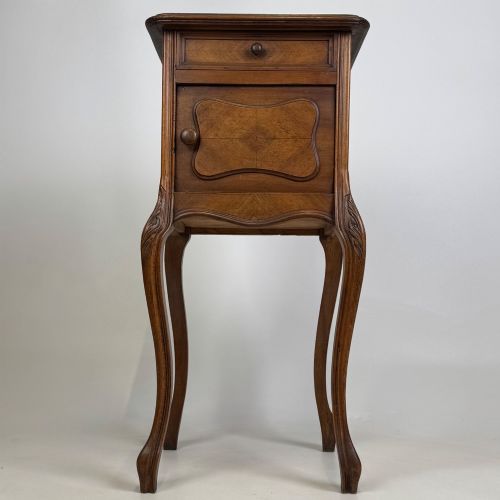
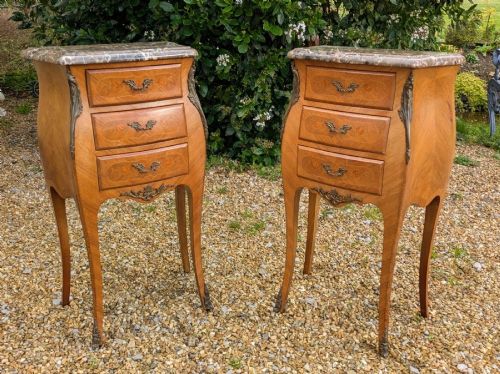
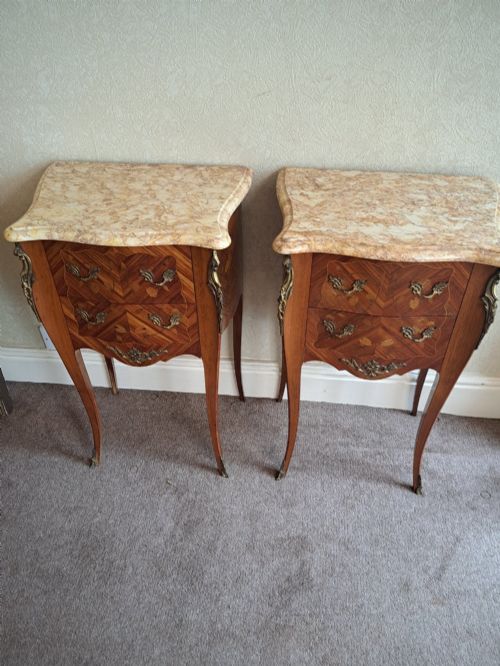
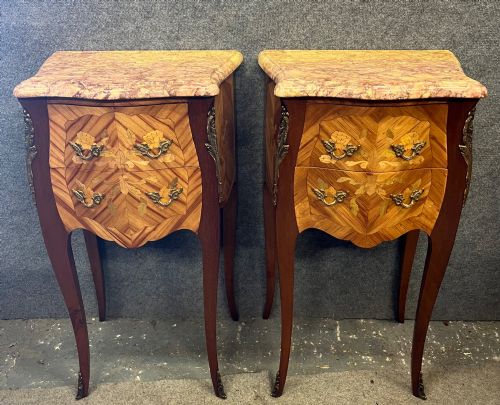
Most examples function as bedside cupboards, lamp tables or small commodes equipped with drawers or doors. Buyers encounter single items as well as matching pairs, constructed in walnut and frequently topped with marble slabs.
How they were made
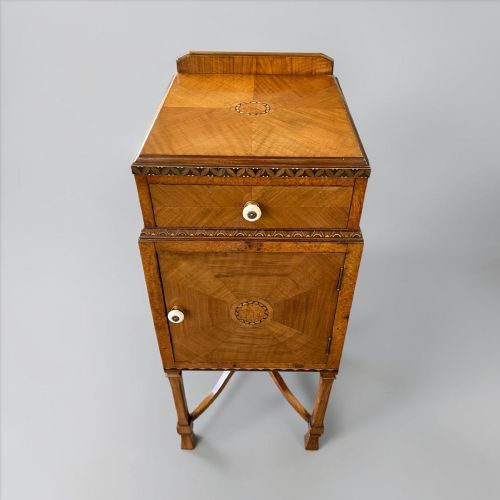
Cabinet makers utilised walnut timber, burr walnut and contrasting fruitwoods to construct the carcase and create detailed veneer patterns. Marquetry panels were assembled by cutting thin slices of different woods into pictorial or geometric motifs and fitting them together like a puzzle.
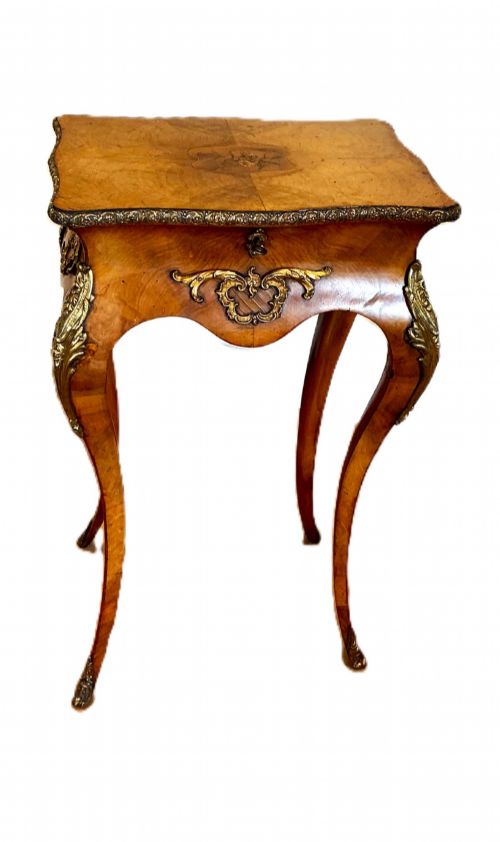
Many cabinets incorporate marble tops, brass mounts, kingwood, rosewood, and ormolu details to accent the walnut structure. Joinery techniques combined solid timber framing with fine veneer work applied to carcases and tabletops.
Listings span from the 18th century to 1930, incorporating Victorian, Edwardian and Art Deco pieces alongside French revival styles.
What varies in quality
The standard of these nightstands rests on the precision of the veneer work and the complexity of the inlaid marquetry. Finer examples display meticulous alignment in their floral or geometric patterns and employ superior grades of burr walnut.
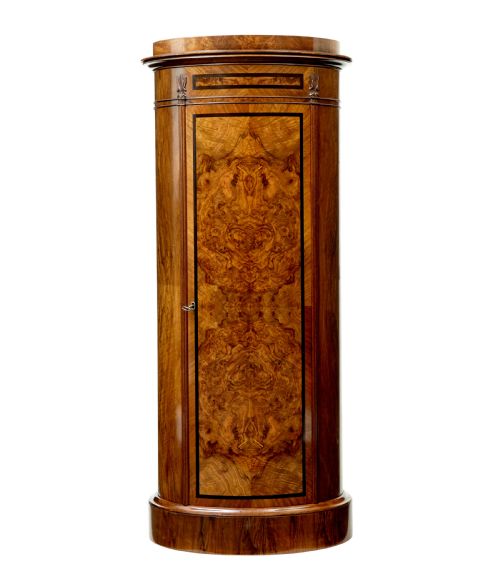
Structural refinement also divides the range, distinguishing simple occasional tables from substantial pedestal cupboards fitted with marble surfaces and quality cast metal mounts.
The Walnut Marquetry Nightstands Glossary
- Marquetry
- A technique where thin pieces of wood veneer are applied to a carcase to form decorative pictures or patterns. It differs from parquetry, which forms geometric tiling arrangements.
- Ormolu
- Gilt bronze mounts used to decorate the corners, feet and handles of furniture. This material gained popularity in French cabinet making during the eighteenth century and subsequent revival periods.
- Commode
- A low piece of furniture with drawers or doors, often used as a bedside cabinet. In earlier periods, these items were built with enclosed cupboards rather than multiple drawers.
- Burr walnut
- A prized timber cut from the abnormal growth of a walnut tree, yielding swirling grain patterns. Cabinet makers selected burr veneer for prominent surfaces like table tops and cabinet doors.
- Louis XV style
- A design movement characterised by asymmetrical curves, cabriole legs and floral motifs. Much of the nineteenth and twentieth-century French furniture adopts these flowing Rococo revival lines.
Walnut Marquetry Nightstands: Frequently Asked Questions
Are these nightstands sold as pairs?
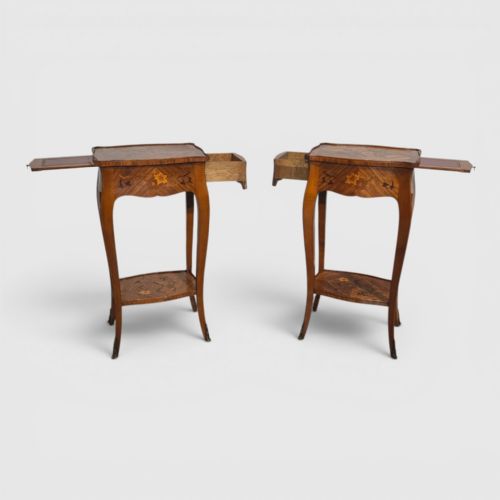
Many of the bedside cabinets and lamp tables listed appear in matching pairs, which suits symmetrical bedroom layouts. Single pieces also feature regularly among the selections.
Buyers searching for matching bedsides will find numerous twin sets dating from the early twentieth century and the Victorian era.
What are marble top nightstands used for?
Marble top nightstands provide a durable, wipe-clean surface for bedside lamps, water jugs and personal items. The stone top adds weight and stability to smaller cabinet designs.
This practical feature appears frequently on French bedside cupboards from the late nineteenth and early twentieth centuries.
How do I identify Louis XV style pieces?
Louis XV style nightstands display characteristic curved lines, cabriole legs, and flowing vegetal or floral marquetry. Ormolu mounts frequently accent the corners and aprons of these pieces.
Revival versions from the Victorian period and the nineteen-twenties emulate these eighteenth-century French aesthetic principles.
What is the difference between parquetry and marquetry?
Marquetry involves creating pictorial or curvilinear designs using various wood veneers, such as floral sprays. Parquetry arranges geometric shapes like squares, cubes or chevrons into repeating patterns.
Both techniques appear on the tabletops and cabinet doors of walnut bedroom furniture.