
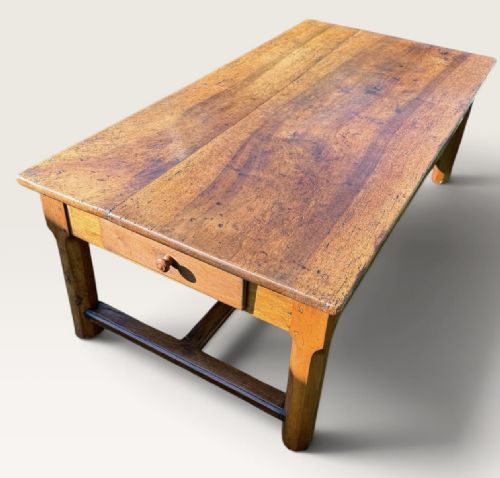

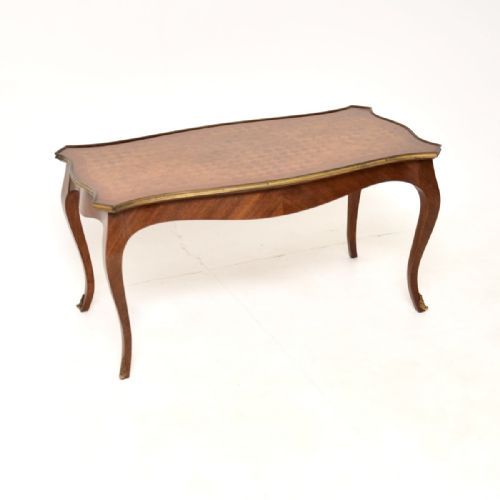
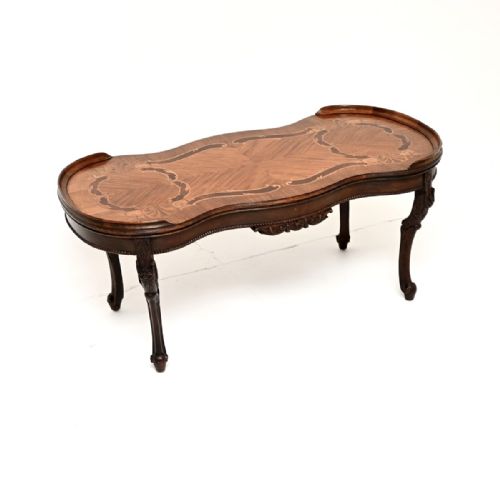
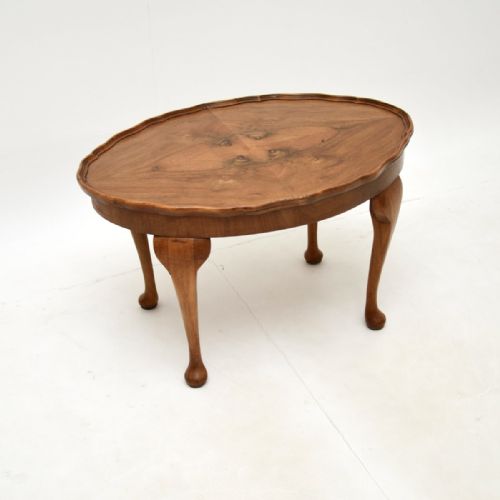

Walnut Low Cocktail Table
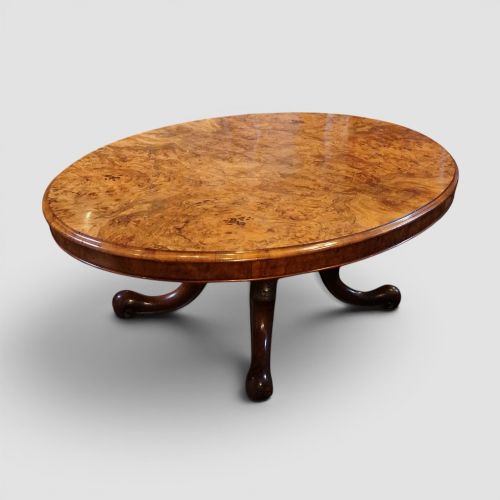
A walnut low cocktail table brings warm grain and low proportions to a sitting room, drawing the eye with rich Victorian and Art Deco surfaces.
Walnut Low Cocktail Table
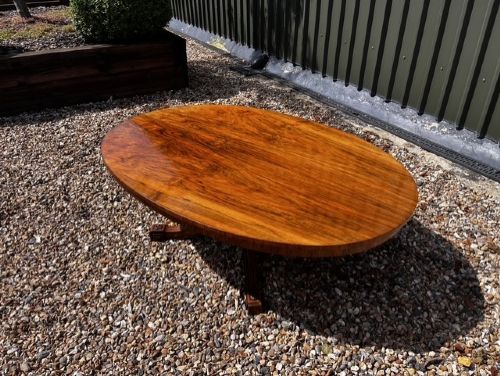
A walnut low cocktail table bridges the gap between historical craftsmanship and modern domestic use, appearing primarily as coffee tables from the Victorian period through to the 1930s. These pieces often adapt older materials or lower traditional frames to suit contemporary seating heights, ranging from round pedestal designs to elongated oval formats.
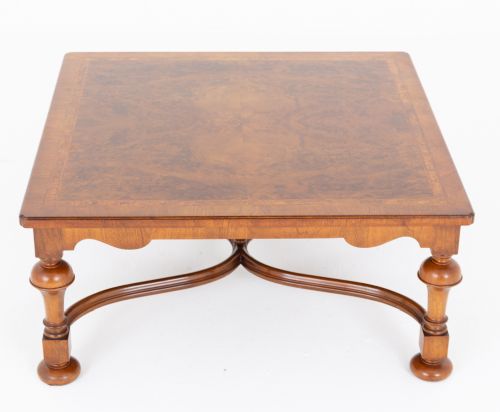
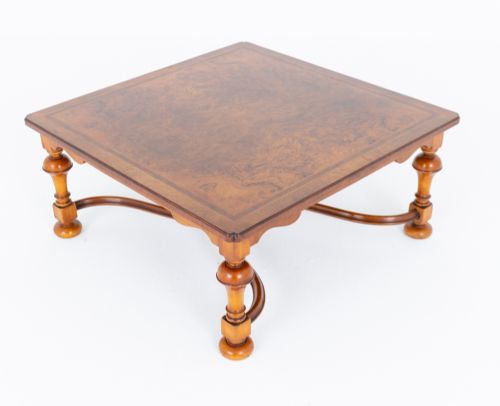
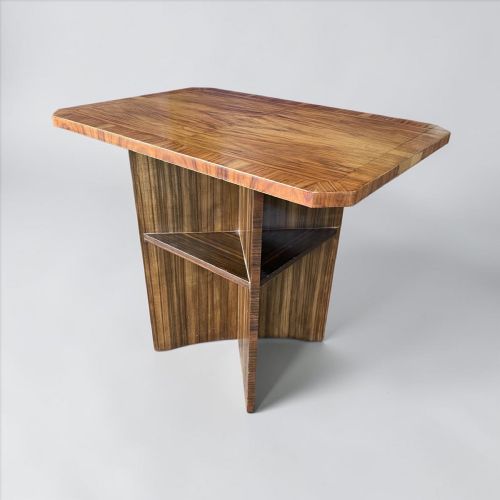
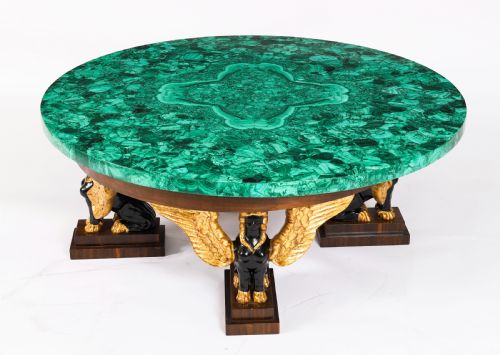
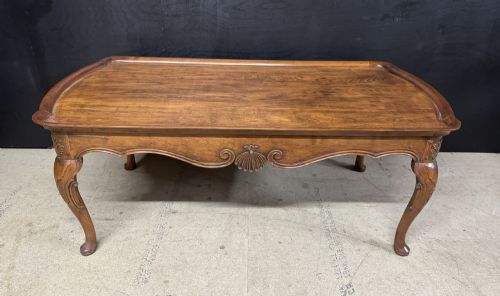
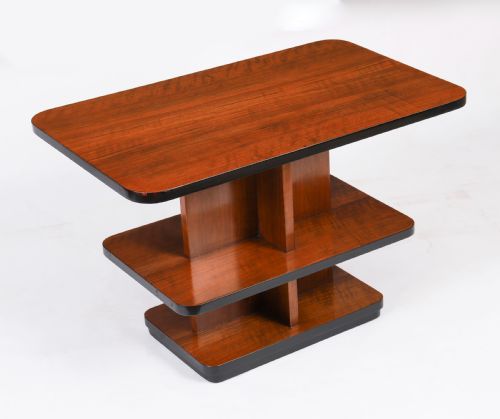
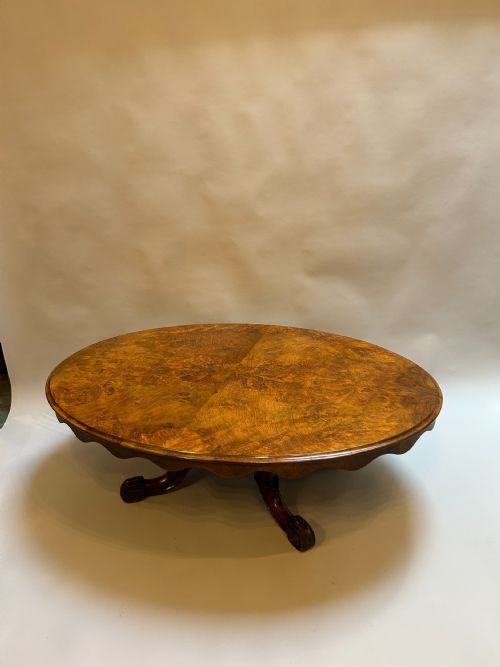
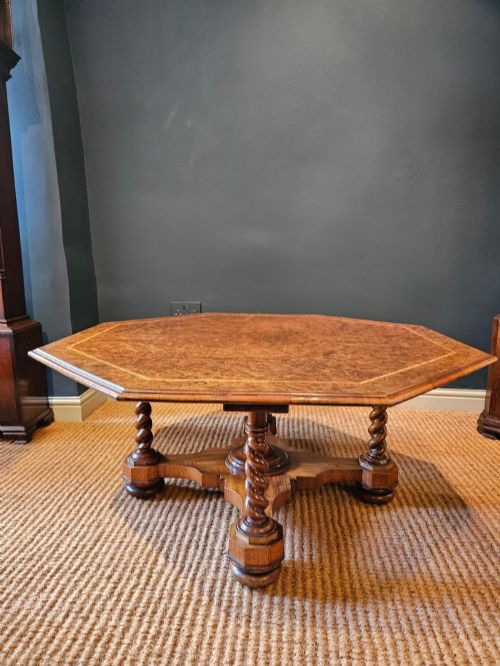
The selection on this page centres heavily on Art Deco productions and Victorian burr walnut examples, alongside Queen Anne style revivals and occasional French inlaid pieces. Buyers will encounter both simple figured timbers and elaborate carved or parquetry-topped surfaces designed to anchor a room.
Makers and workshops of the nineteenth and early twentieth centuries produced these items in various proportions, incorporating marble tops, brass details, and tiered structures. The resulting tables serve practical daily functions while displaying decades of timber patination.
Assessing quality in walnut low cocktail tables
The distinction between standard production and top-tier pieces lies in the choice of timber figure, such as richly swirled burr walnut or detailed marquetry work. Superior examples demonstrate crisp carving, balanced proportions, and careful matching of veneer leaves across the top.
Joinery execution and the integrity of the underlying timber structure dictate the longevity of each piece. Tables retaining their original French polished surfaces and authentic mounts command greater attention than those with compromised finishes.
Design styles represented include Art Deco, Queen Anne Revival, and Rococo forms adapted into low table formats.
Holland and Sons
The Walnut Low Cocktail Table Glossary
- Burr walnut
- A prized wood harvested from the abnormal growth of a walnut tree, yielding dense, swirling grain patterns. It provides highly decorative surfaces for tabletops.
- Parquetry
- A geometric mosaic of wood pieces used for decorative effect on furniture surfaces. Craftsmen arrange contrasting veneers to form repeating patterns.
- Pie crust
- A raised, carved moulding along the edge of a circular tabletop resembling pastry work. This detail appears frequently on traditional walnut tables.
- Marquetry
- The art of applying thin slices of wood and other materials to a structure to form pictures or ornamental designs. It requires precise cutting and fitting.
- Cabriole leg
- A furniture leg that curves out and then tapers inward, inspired by the shape of an animal's leg. It is a defining feature of Queen Anne style pieces.
Walnut Low Cocktail Table: Frequently Asked Questions
What periods do these tables come from?
The selection spans from the nineteenth century through the Victorian era and into the Art Deco period of the 1930s. Many pieces reflect earlier design revivals like Queen Anne and Carolean styles.
Buyers will find that construction dates often reflect the secondary conversion of older Victorian tabletops onto lowered or modern bases to suit contemporary living rooms.
How do I care for a walnut surface?
Protect the polished timber from direct heat and moisture by using coasters and mats during daily use. Regular dusting with a soft, dry cloth preserves the finish.
Avoid chemical polishes that can degrade historical French polish surfaces, opting instead for occasional specialist wax applications when the timber appears dry.
Are these tables sturdy enough for daily use?
Most examples are constructed from dense walnut timber or solid secondary woods beneath decorative veneers, providing a stable surface for everyday domestic items. Tripod bases and pedestal designs offer reliable support.
It remains wise to lift rather than drag these tables when rearranging furniture to protect joints and any delicate floor-contact points.
What is the difference between figured and burr walnut?
Figured walnut exhibits natural grain variations and linear movement within the timber harvested from standard tree growth. It offers a subtle and classic aesthetic.
Burr walnut comes from knotty tree growths, creating intense, swirling patterns of eyes and rings that provide a much more dramatic decorative impact.