


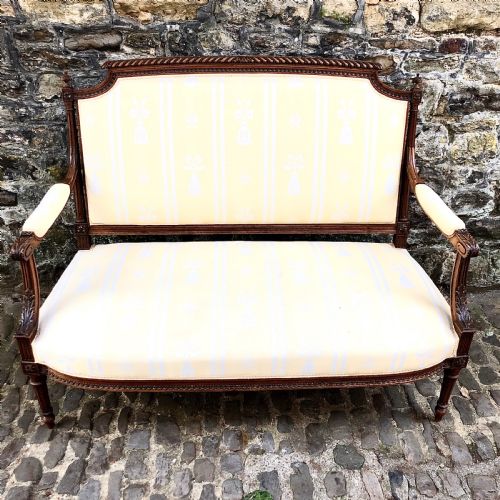

Walnut Love Seat
A walnut love seat is a compact two-seater for intimate conversation, bringing warmth of timber and elegance to any room.
Walnut Love Seat
A walnut love seat offers a compact seating option designed for two people, appearing frequently across Victorian and Edwardian periods alongside earlier revival styles. These pieces combine rich timber frames with upholstered seats, creating a functional piece of furniture that fits smaller spaces.
The selection on this page ranges from formal French Rococo and Louis-style revivals to simple English Victorian and Edwardian examples. Buyers encounter open-armed settees, conversational seats and small upholstered sofas shaped from figured timber.
Originating as intimate seating for parlours and drawing rooms, these pieces maintain their domestic utility today. They serve equally well in a hallway, bedroom or living space, providing character and practical seating without dominating a room.
What varies in quality
Quality rests primarily in the crispness of the timber carving and the selection of the walnut veneer or solid wood. Finer examples display deep, three-dimensional foliage or scrollwork executed by hand rather than simpler mechanical shaping.
The structural integrity of the frame and the retention of period upholstery methods also separate ordinary pieces from superior ones. Tighter joinery, robust internal springing and sympathetic reupholstery preserve the original proportions and comfort of the seat.
Listings span Victorian, Edwardian and revival periods, utilising walnut, velvet, damask and tapestry textiles.
Howard and Sons
The Walnut Love Seat Glossary
- Love seat
- A small upholstered settee or two-seater sofa designed to seat two people closely together. This form evolved during the eighteenth century for fashionable domestic interiors.
- Damask fabric
- A reversible figured textile with patterns woven flat into the cloth, often utilising silk, wool or cotton. It provides a traditional decorative surface for period upholstery.
- Marquise
- An upholstered armchair with a wide seat and low back, originating in eighteenth-century France. The term occasionally describes compact French double seats of similar proportions.
- Crest rail
- The top horizontal member of a chair or settee back. Carvers lavish particular decorative attention on this area with scrolls and shell motifs.
Walnut Love Seat: Frequently Asked Questions
Where should I place a walnut love seat?
These compact seats suit smaller reception rooms, grand hallways or bedroom ends where standard sofas prove too bulky. Their finished wooden backs allow them to sit away from walls in open spaces.
Positioning them near a fireplace or in a corner creates an intimate seating area that mirrors their original domestic purpose.
How do I identify the period of a love seat?
Examine the timber, the style of the carved ornament and the joinery methods visible beneath the frame. Victorian and Edwardian examples often feature heavier proportions, while revival pieces adopt specific eighteenth-century motifs.
French models typically display Rococo or Louis XV curved lines, whereas English versions lean toward Queen Anne or George II proportions.
Are these seats comfortable for daily use?
Most pieces provide supportive seating, though comfort depends on the internal spring and webbing condition. Many antique examples receive modern reupholstery to ensure daily usability.
Their compact width encourages upright conversation rather than lounging, making them ideal for reading or receiving guests.
How do I care for the walnut frame?
Maintain the timber by dusting with a soft, dry cloth and applying occasional quality wax to nourish the grain. Keep the wood away from direct sunlight and radiators to prevent splitting.
Treat the upholstery according to its specific textile type, using professional cleaning methods for delicate damask or velvet.