




Victorian Curved Bench
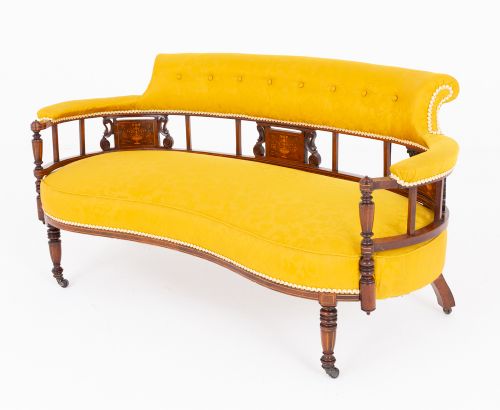
These pieces, known as a victorian curved bench, offer seating shaped to follow a line, bringing distinct nineteenth-century craft into a room or garden.
Victorian Curved Bench
When searching for a victorian curved bench, buyers encounter varied seating forms designed with rounded contours rather than straight lines. The pieces span garden furniture and interior seating, reflecting the diverse periods and styles recorded in the inventory.
Makers and designers of the era produced these curved forms in timber, metal and upholstered frames. Buyers find items intended for both intimate parlour settings and sweeping garden garden arbours.
How they were made
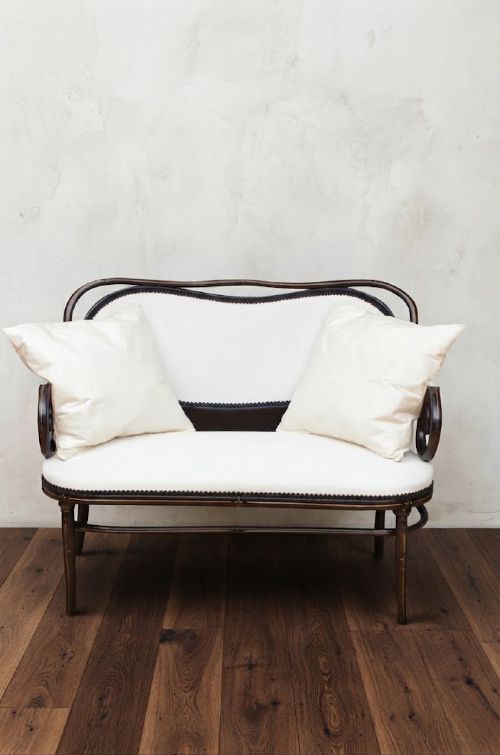
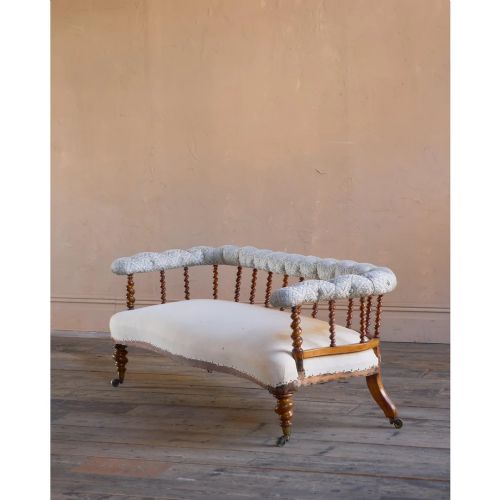
Maker construction relies heavily on traditional woodworking techniques applied to hardwoods like mahogany, walnut, rosewood, oak and pine. Bentwood methods and turned spindles create structural integrity alongside decorative aesthetic appeal.
Listings incorporate both garden ironwork and indoor seating, spanning periods from Regency to the early twentieth century.
What varies in quality
Quality differences emerge through the selection of primary timbers and the precision of joinery. Pieces utilising dense hardwoods like rosewood and walnut demonstrate finer cabinetmaking than simpler pine or oak examples.
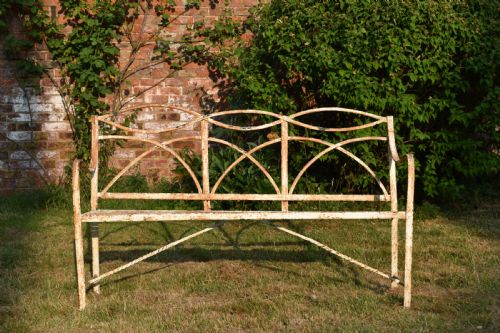
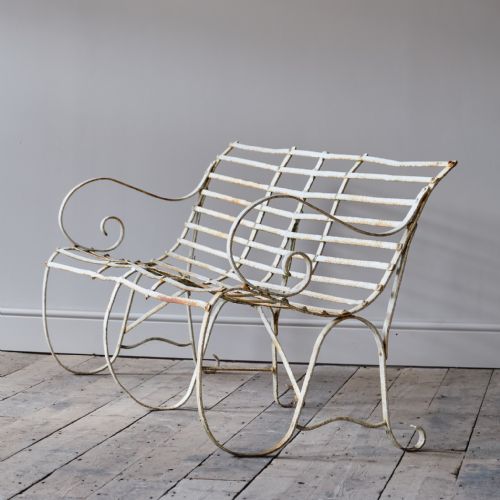
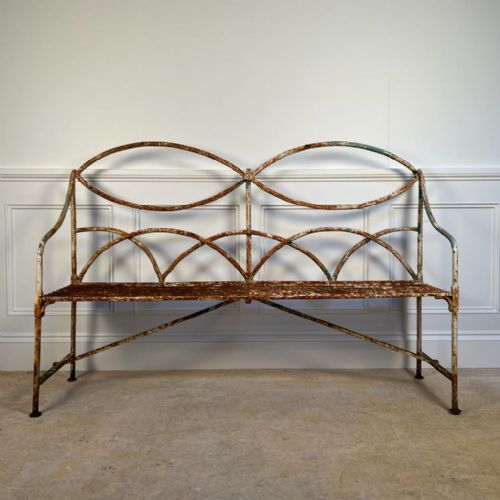
The sophistication of the metalwork or carved detail sets individual items apart. Finer garden examples show careful hand-forming in wrought iron strapwork, while indoor settees rely on the execution of upholstery and buttoning.
C. Hindley & Sons
The Victorian Curved Bench Glossary
- Settee
- A long upholstered seat with a back and arms, designed for more than one person. These indoor pieces often feature elaborate wooden frames and fabric coverings.
- Strapwork
- Ornamental work consisting of thin, flat strips arranged in geometrical patterns. This technique appears frequently on iron garden furniture.
- Bentwood
- Wood that has been shaped by heating it with steam and bending it into curved forms. This method defines specific nineteenth-century seating designs.
- Settle
- A wooden bench with a high back, solid arms, and often a storage box beneath the seat. Older vernacular examples utilise oak and pine construction.
- Canape
- An ornate French-style sofa with an upholstered seat and back. These refined salon pieces often date from the Victorian period.
Victorian Curved Bench: Frequently Asked Questions
Where were curved benches placed originally?
Outdoor versions suited gardens, arbours, and lawns, providing a resting place that followed natural landscaping or architectural boundaries. Iron and wirework endured external elements while wooden settles found positions in hallways and porches.
Inside the house, smaller curved seats and window seats fit bay windows and intimate parlour corners. Their shapes allowed them to occupy awkward spaces where straight furniture could not go.
How do I care for nineteenth-century wooden frames?
Maintain finished timbers by avoiding direct sunlight and excessive humidity shifts that cause wood to dry and split. Regular dusting with a soft cloth preserves the wax or polish surface without wearing down the original patina.
For upholstered sections, gentle vacuuming removes surface debris while professional cleaning protects fragile historic fabrics. Keeping the underlying frame stable prevents stress on glued joints and decorative carvings.
What distinguishes garden ironwork from indoor pieces?
Garden pieces utilise heavy wrought iron and wirework designed to withstand weather exposure. Their construction focuses on structural durability and strapwork patterns rather than comfort cushions.
Indoor items rely on domestic hardwoods, decorative veneers, and plush upholstery. They prioritize tactile fabrics like velvet or patterned textiles over weather-resistant finishes.
How do I identify a piece from the Aesthetic Movement?
Aesthetic Movement items often display ebonised finishes, clean lines, and influences from Japanese design. They reject excessive Victorian ornamentation in favour of artistic simplicity and structural clarity.
Such pieces frequently utilise bentwood techniques or distinct geometric forms. The resulting furniture looks lighter and more refined than heavier, traditional Victorian designs.