
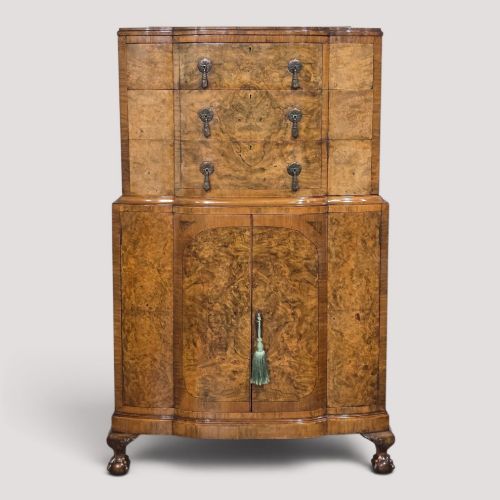
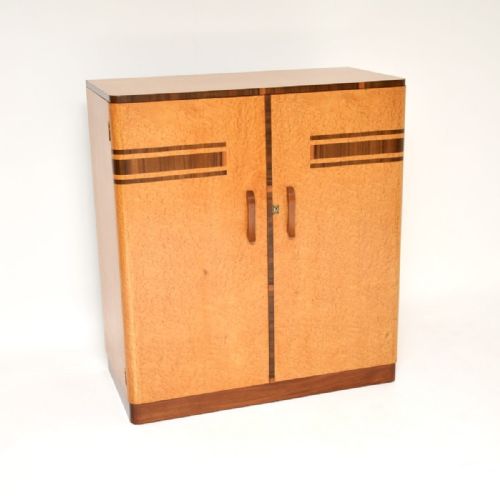
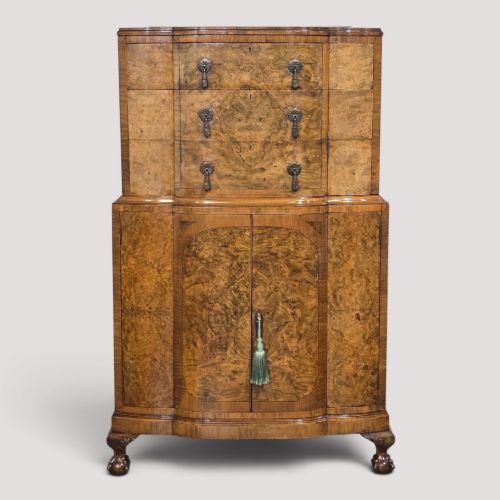

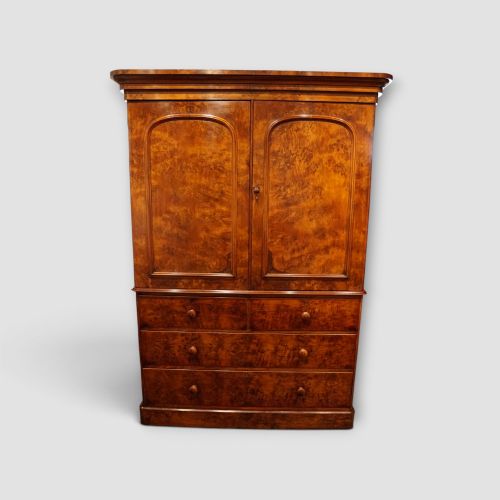
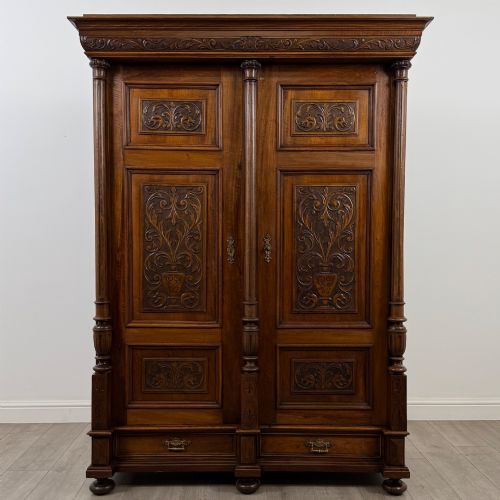
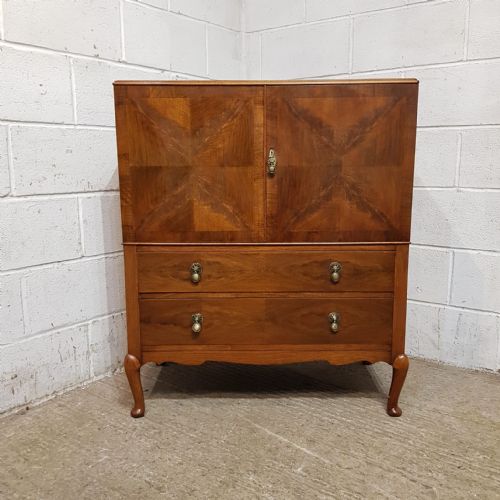
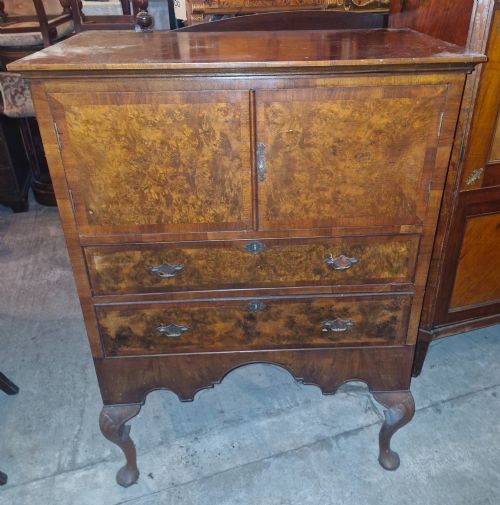
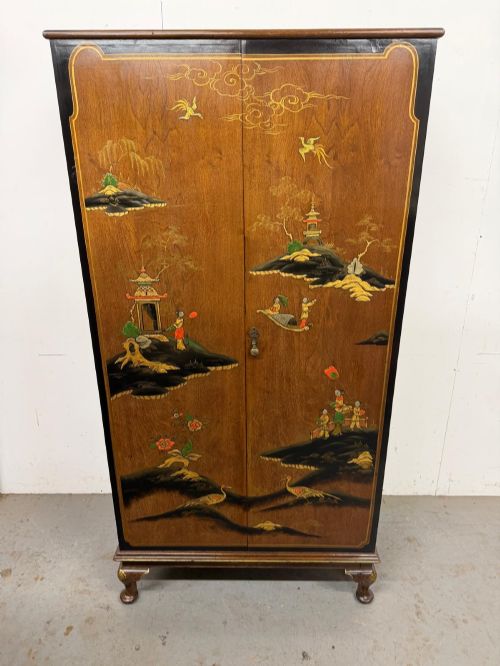
Walnut Linen Cupboard
A walnut linen cupboard offers substantial timber storage, uniting practical depth with figured grain across centuries of cabinet making.
Walnut Linen Cupboard
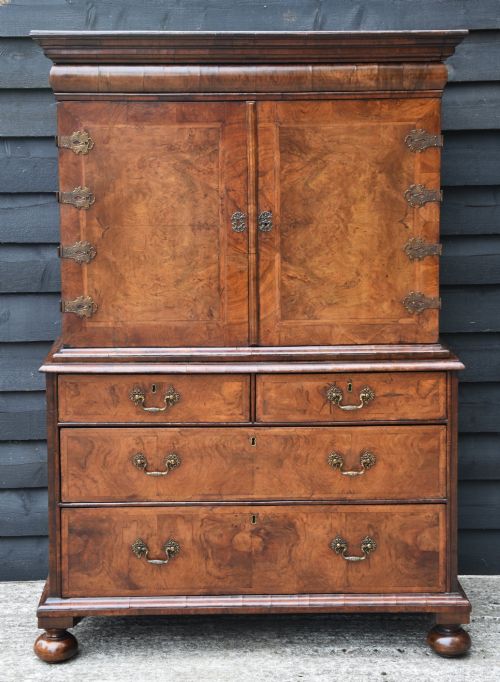
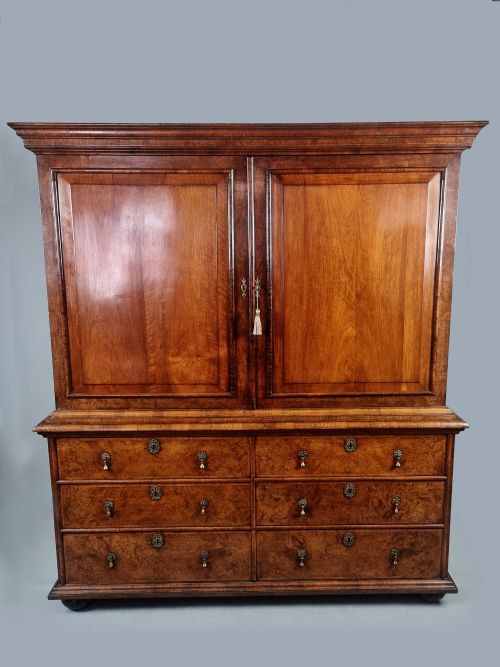
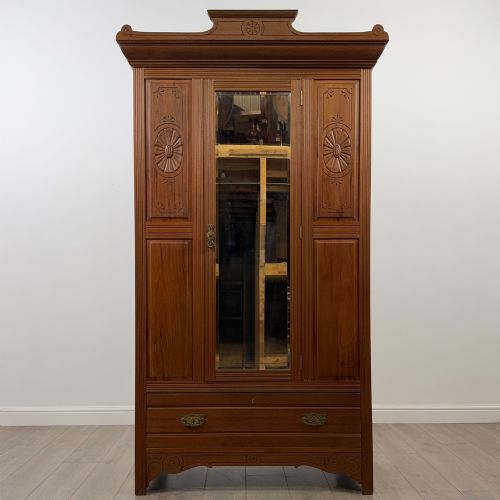
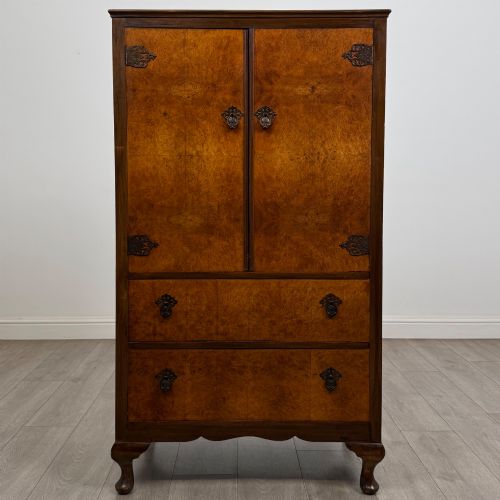
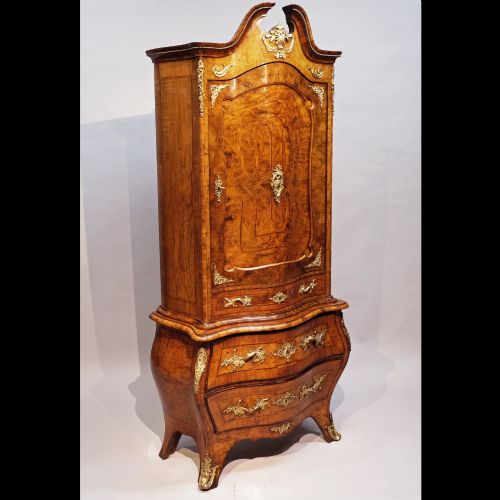
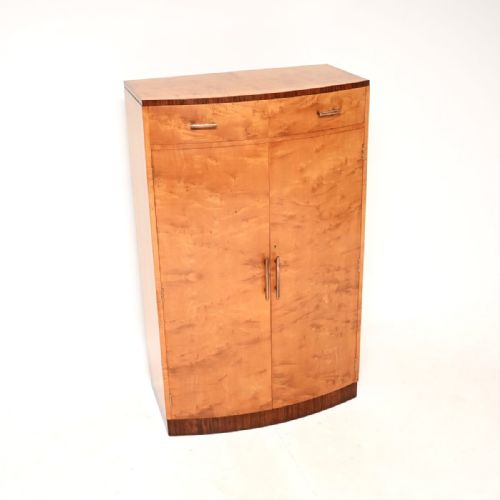
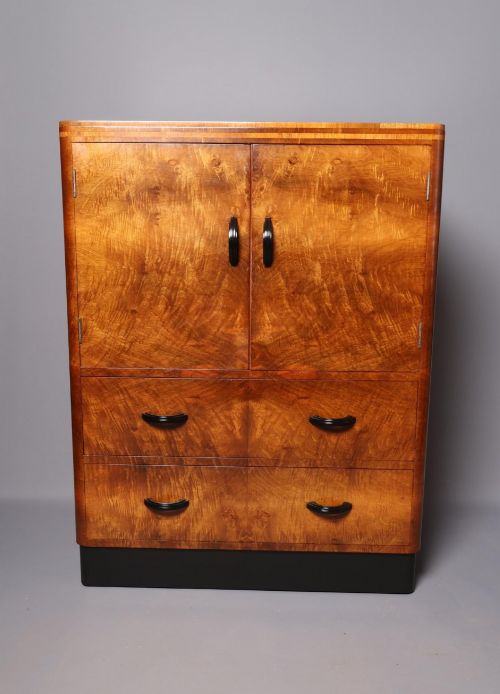
A walnut linen cupboard provides tall architectural storage for textiles and garments, combining upper press doors with lower drawer sections. These pieces span periods from seventeenth century William and Mary designs to Art Deco compactum wardrobes, recording shifts in domestic organisation.
The version most commonly met on this page is the substantial multi-drawer press or tallboy, frequently constructed in figured burr veneers. Continental armoires and English cabinet-on-chest formats also appear across eighteenth century and later decades.
Materials and construction
Cabinet makers utilised solid timbers alongside decorative veneers, laying thin slices of burr walnut and oyster veneers over firmer foundational woods like oak. Brass handles, escutcheons and iron fittings secure the doors and internal sliding trays.
Joinery methods range from pegged frames on seventeenth century cabinets to geometric veneering patterns on Art Deco compactums. Glass, satinwood and fruitwood inlays supplement the primary walnut structure.
Listings span the 17th Century to the 1930s, featuring walnut, oak, brass, and glass across English, French, Dutch, and Italian pieces.
Judging quality in walnut furniture
The division between ordinary and exceptional cabinets rests in the selection and matching of the timber grain. Symmetrical book-matching across large door panels indicates skilled workshop practice.
Structural integrity of internal linen slides and original hardware preservation separate workshop masterpieces from later adaptations. Surface patina and depth of finish distinguish well-maintained timber from stripped or over-polished examples.
Heal's
The Walnut Linen Cupboard Glossary
- Burr walnut
- A figured wood grain derived from tree growths, producing swirling patterns highly prized for cabinet fronts.
- Compactum
- A fitted wardrobe containing specific compartments for hanging clothes, drawers, and shelving within a single unit.
- Cabinet on chest
- A two-part form featuring an upper enclosed cupboard resting upon a lower chest of drawers.
- Oyster veneer
- Small circular cross-sections of branch wood laid closely together to create a distinctive repeating pattern.
- Marquetry
- Decorative inlay work using various woods to form pictorial or floral motifs across the surface.
Walnut Linen Cupboard: Frequently Asked Questions
What is a walnut linen cupboard used for?
These tall pieces serve primarily to store folded bed linens, garments and household textiles behind secure panelled doors. Lower drawers provide supplementary storage for smaller items.
Historically, they functioned as central storage fixtures within domestic bedchambers and dressing rooms before built-in wardrobes became standard.
How do I identify a William and Mary walnut cabinet?
William and Mary pieces date from the late seventeenth century, displaying characteristic rectilinear forms, oyster veneering, and applied mouldings. They frequently feature lower drawer stands raised on turned supports.
Closer inspection reveals pegged joinery, dense oak carcass timbers beneath the walnut surfaces, and hand-cut dovetails on internal drawers.
Are Art Deco walnut cupboards different from older styles?
Art Deco examples from the twentieth century favour streamlined geometric shapes and contrasting veneers like birch or maple over seventeenth century ornamentation. They often incorporate compactum interiors designed for modern clothing storage.
Older eighteenth and nineteenth century versions rely on architectural cornices, panelled doors, and traditional Dutch or English proportions.
How should I care for antique walnut furniture?
Maintain stable indoor humidity and temperature levels to prevent timber movement, veneer lifting, or splitting in dry environments. Keep pieces away from direct sunlight to preserve the natural warmth of the walnut grain.
Apply traditional wax polishes sparingly and buff gently with soft cloths to maintain the protective surface patina.