



Walnut Leg Settee
A walnut leg settee offers solid timber framing paired with generous upholstery, bringing substantial seating and rich nineteenth and twentieth century design into a room.
Walnut Leg Settee
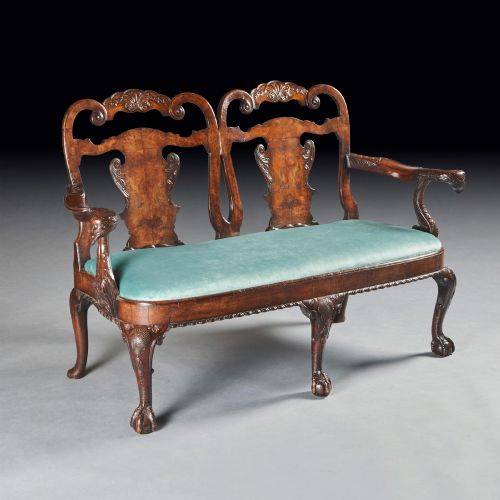
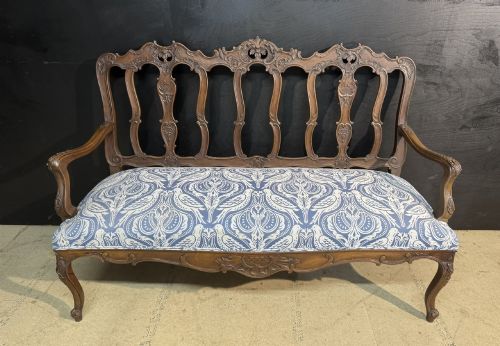
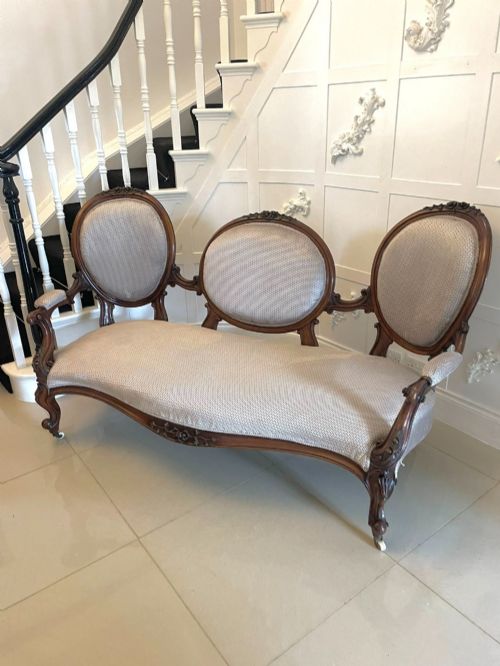
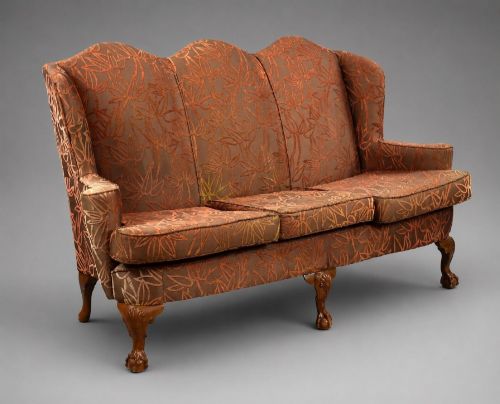
When you search for a walnut leg settee, you look at upholstered seating raised on visible timber supports, predominantly spanning the Victorian, Edwardian and early twentieth century periods. Pieces range from formal Queen Anne style revivals with cabriole legs to elaborate Victorian cameo back designs and French inspired caned settees.
You will most frequently meet nineteenth century Victorian examples featuring carved walnut frames alongside later Edwardian and 1930s revivals. Formats vary from compact two-seater settees and window seats to larger three-seater sofas and complete salon suites.
Origins stretch across British, French and Italian workshops, capturing styles from Rococo Revival and Aesthetic Movement to Georgian and Louis XV revivals. The unifying element remains the walnut frame, whether finished with a warm polished lustre or a paler bleached tone.
How They Were Made
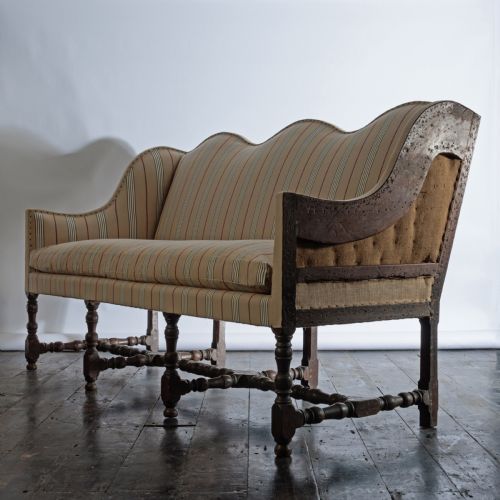
Frames are constructed from solid walnut, sometimes turned, carved with scrollwork, or shaped into cabriole and lion paw feet. Caned panels appear on French revival frameworks, offering lightweight structural detail alongside solid timber components.
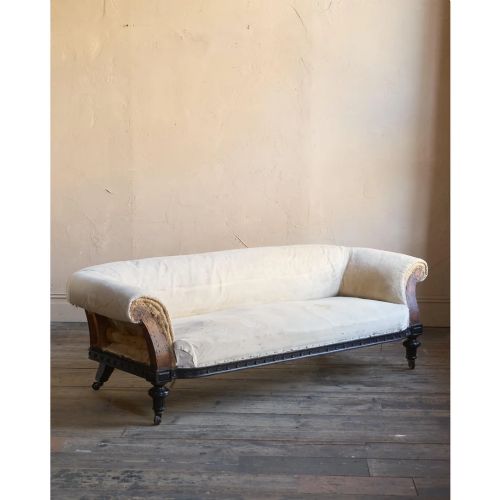
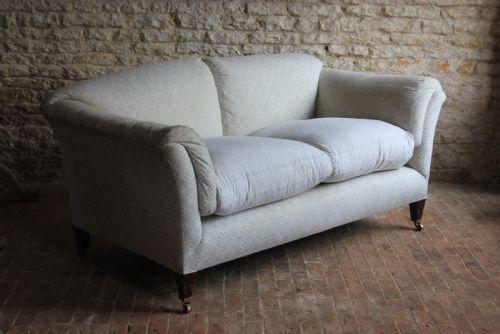
Upholstery relies on traditional textile coverings including damask fabric, cotton, velvet and original ticking secured over supportive interior padding. Brass fittings and castors frequently finish the forelegs on mid-nineteenth century pieces for ease of movement.
Upholstery choices recorded across the inventory range from heavy damask and velvet to simple cotton and original workshop ticking.
What Varies in Quality
The crispness of the timber carving determines much of the distinction, separating sharply defined hand-moulded foliage and scrollwork from softer, shallower execution. Timber selection also matters, as deeply figured grain patterns elevate the presence of exposed framework.
Proportion and structural harmony separate standard production from superior workshop output, particularly in revival pieces that reference earlier George II or William and Mary designs. Original upholstery schemes and retaining authentic castors or stretchers add considerable integrity to a piece.
Howard and Sons
The Walnut Leg Settee Glossary
- Cameo back
- An upholstered sofa back shaped with a rounded, oval or shield-like outline resembling a carved cameo portrait. This style gained popularity during the Victorian era.
- Canapé
- A French-style ornamental sofa featuring an exposed wooden frame and an upholstered back and seat. Many examples incorporate cane panelling into the backrest.
- Stretcher
- A horizontal timber rod connecting the legs of a settee to provide structural stability. They are often turned or shaped in revival pieces.
- Ticking
- A tightly woven cotton or linen fabric used as a durable base layer beneath outer upholstery. Original ticking indicates untouched interior condition.
Walnut Leg Settee: Frequently Asked Questions
How do I date a walnut settee?
Dating relies on combining the stylistic clues of the frame, such as Victorian cameo backs or Queen Anne cabriole legs, with construction methods. Secondary woods and upholstery foundations help confirm the period of manufacture.
Revival pieces from the early twentieth century often replicate eighteenth century forms, so examining the timber finish and hardware provides essential context for accurate dating.
Are these settees comfortable for daily use?
Most pieces offer supportive sprung or padded seating designed for drawing rooms and parlours. Upholstery depth varies considerably between formal Victorian frames and relaxed Edwardian seating.
Buyers planning daily use often assess the seat height and depth to ensure the proportions suit modern living spaces while maintaining period character.
How do I care for walnut wood frames?
Walnut frames benefit from minimal intervention, requiring only occasional dusting with a soft dry cloth. Avoiding direct sunlight and sudden temperature changes protects the polished wood from drying out.
Applying a specialist wax polish sparingly helps maintain the natural lustre of the timber without building up an excessive residue over time.
What is the difference between a settee and a sofa?
Historically, a settee denotes an upholstered bench designed for multiple people, often featuring an exposed wooden frame. A sofa traditionally implies a fully upholstered piece with padded arms and back.
In antique listings, the terms frequently overlap, with makers and sellers using both descriptions interchangeably for similar seating forms.