


Walnut Leather Desk
These walnut leather desk pieces combine rich timber with practical writing surfaces for everyday study.
Walnut Leather Desk
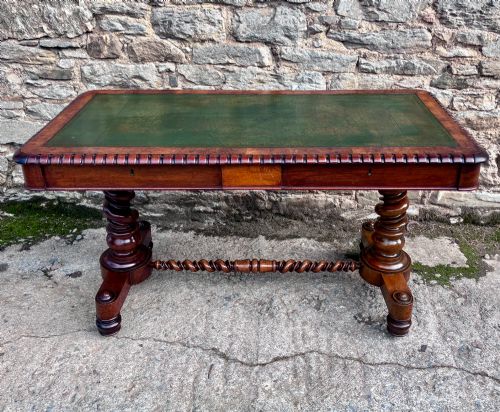
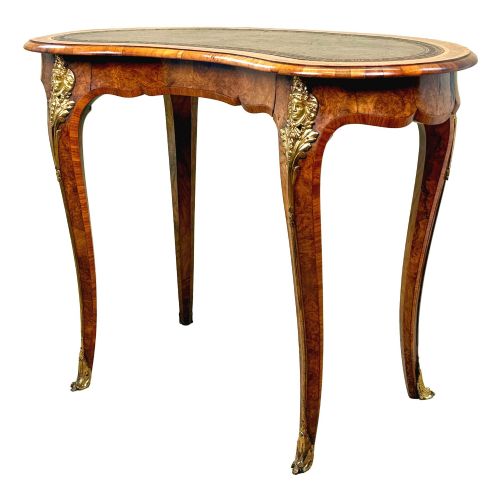
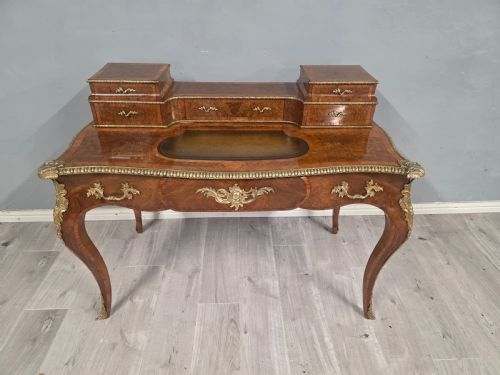
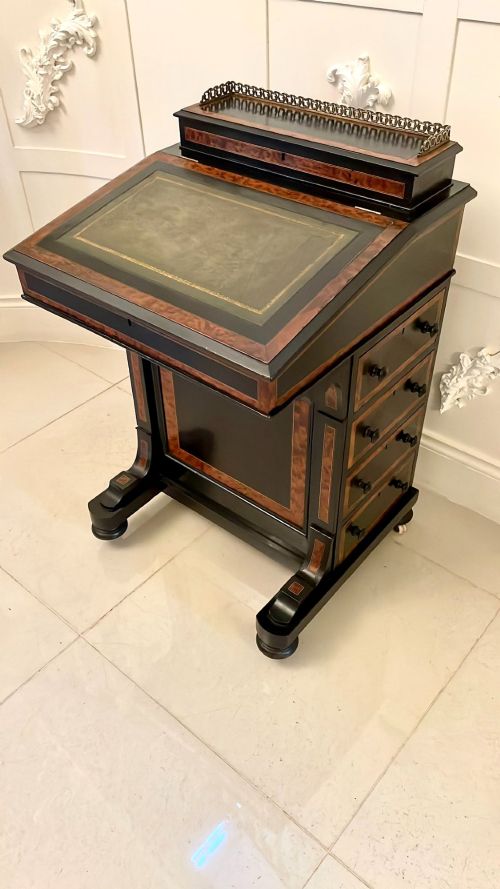
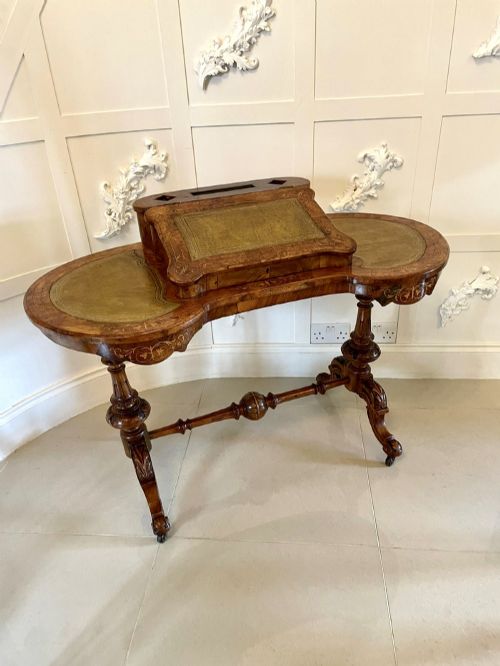
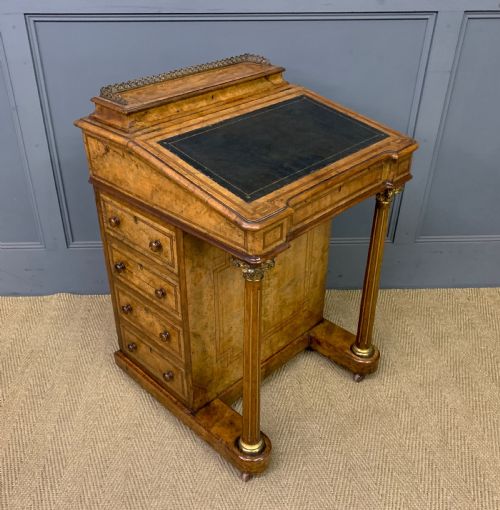
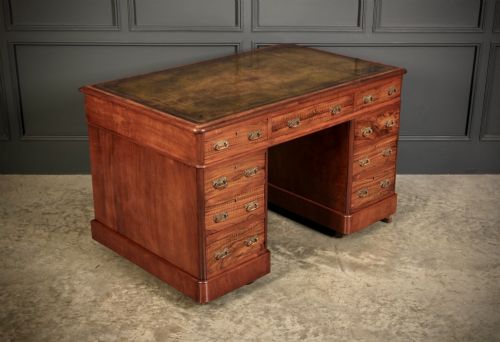
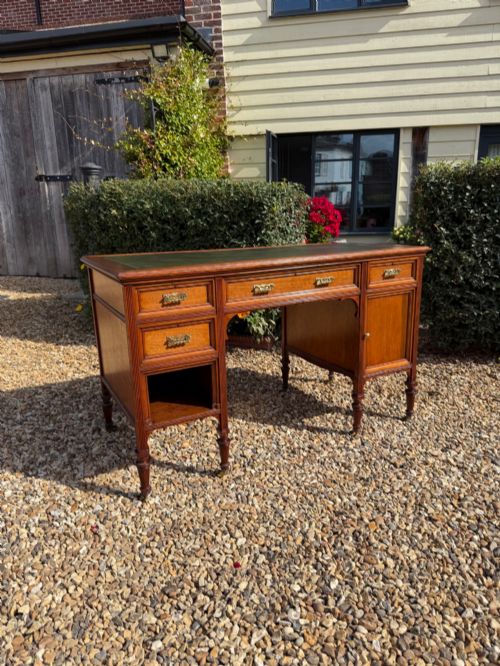
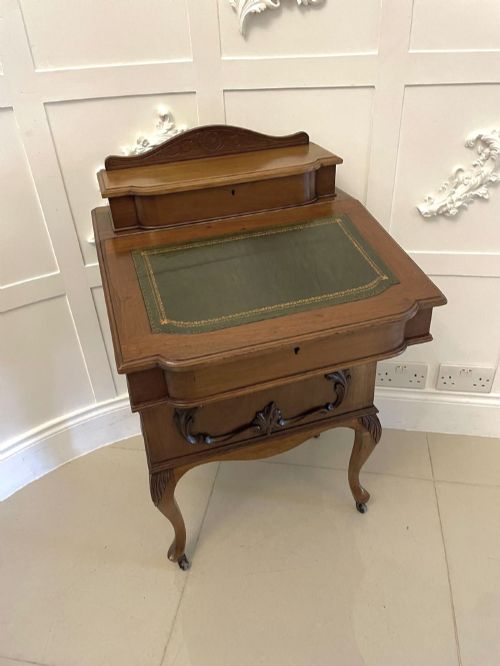
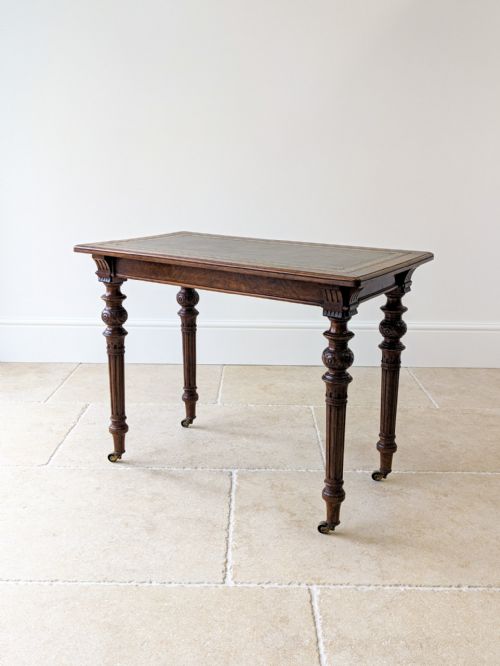
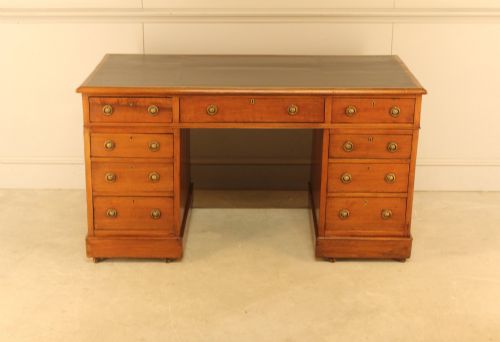
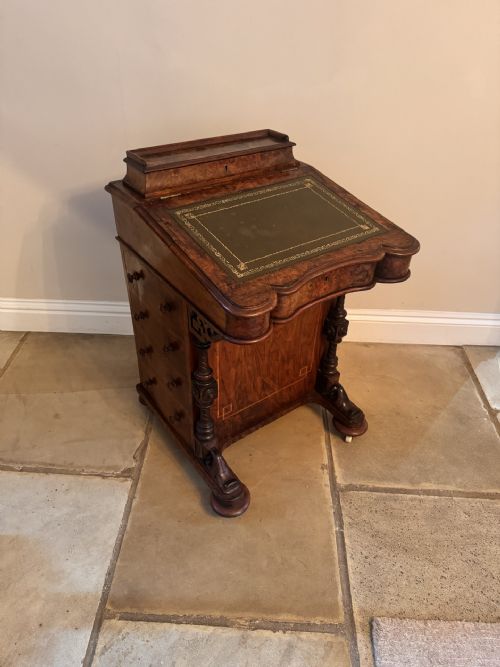
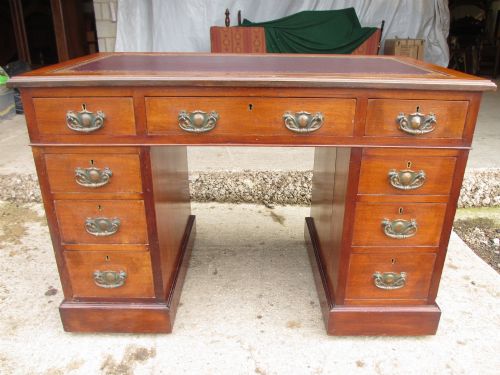
When searching for a walnut leather desk, buyers encounter a variety of forms including pedestal desks, partners desks, writing tables, and compact davenports. These pieces span multiple eras, with Victorian and Edwardian examples appearing frequently alongside later Art Deco interpretations.
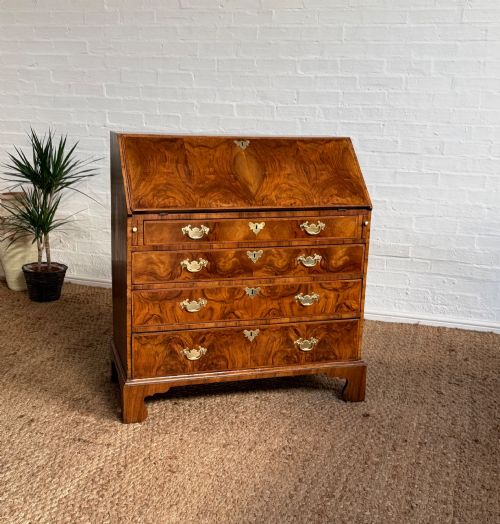
The material combination brings together figured walnut timbers with inset leather writing surfaces, often tooled with gold decoration. Cabinetmakers utilised burr walnut for its rich grain patterns on drawer fronts and top surfaces, paired with solid walnut framing.
Origins stretch from British workshops to French cabinetmakers, producing everything from large twin pedestal partner tables to smaller kneehole writing desks. Mid-nineteenth and early twentieth-century examples dominate the selections available to collectors.
Materials and construction methods
Cabinetmakers selected figured walnut and burr walnut veneers, applying them over secondary woods to create decorative patterns across large top surfaces and drawer fronts. Crossbanding and stringing in contrasting timbers often framed these panels.
Writing surfaces utilised leather inserts, frequently dyed in shades like green or red and finished with blind and gilt tooling around the perimeter. Brass handles, locks, and casters added both function and decorative contrast to the timber.
Walnut Leather Desk Retail Price Guide 2026
Typical asking prices for walnut leather desk among the pieces listed under this phrase on Sellingantiques today, from the lower quarter to the upper quarter. They describe what is for sale here now, not the wider market.
Assessing craftsmanship and finish
Quality rests in the selection and bookmatching of the burr walnut veneer across the top and drawer faces, ensuring symmetrical grain patterns. Fine examples feature dovetailed drawer construction using solid timber linings rather than modern sheet materials.
The crispness of carved details, the quality of the brass hardware, and the neatness of the leather tooling distinguish standard production from exceptional workshop output. Original finishes that retain a warm, polished depth separate well-preserved pieces from heavily restored ones.
Howard and Sons·Maple and Co·Wylie and Lochhead Glasgow·Edwards and Roberts
The Walnut Leather Desk Glossary
- Burr walnut
- A decorative timber taken from the wart-like growth on a walnut tree, producing highly swirled and mottled grain patterns. Cabinetmakers sliced this wood into thin veneers for furniture surfaces.
- Partners desk
- A large pedestal desk designed with drawers and cupboards on both sides so two people could work opposite each other. These tables often feature generous leather writing surfaces.
- Crossbanding
- A decorative border of veneer laid around the perimeter of a tabletop or drawer front with the grain running perpendicular to the centre panel. This technique frames the primary wood.
- Davenport
- A small compact writing desk featuring a sloped, leather-lined writing lid and drawers opening to one side. Victorian makers produced these popular items for domestic sitting rooms.
- Tooled leather
- Leather writing inserts decorated with impressions made using heated brass tools and gold leaf. Craftsmen applied these intricate borders around the edge of the writing surface.
Walnut Leather Desk: Frequently Asked Questions
How do I care for the leather top?
Clean the leather surface gently with a soft dry cloth and apply specialised leather balsam periodically to prevent drying. Avoid using harsh chemical cleaners or excess water that might damage the gold tooling.
Keep the desk away from direct sunlight and heat sources to protect both the leather insert and the walnut timber beneath from warping or fading.
What is a pedestal desk?
A pedestal desk consists of a large writing surface supported by two separate stacks of drawers or cupboards, known as pedestals. This traditional layout provides substantial storage space underneath.
Many examples feature a central drawer above the kneehole space, offering a practical setup for daily correspondence and paperwork.
How do I identify a Victorian walnut desk?
Victorian walnut desks typically display deep, rich timber tones, often incorporating figured burr walnut veneers on the drawer fronts and top panels. Construction details like hand-cut dovetails inside the drawers point towards nineteenth-century production methods.
Hardware such as brass drawer pulls and ceramic casters also help date these pieces to the Victorian era when paired with traditional cabinet styles.
Can I use a partners desk in a modern room?
A partners desk works well as a freestanding centrepiece in a spacious room because finished panels cover all four sides. The generous proportions provide ample workspace for modern computers and paperwork.
Placing the desk away from the wall allows full access to the drawers and cupboards on both sides of the piece.