


Walnut Leaf Table
A walnut leaf table brings warmth and rich grain to a room through centuries of clever folding mechanisms.
Walnut Leaf Table
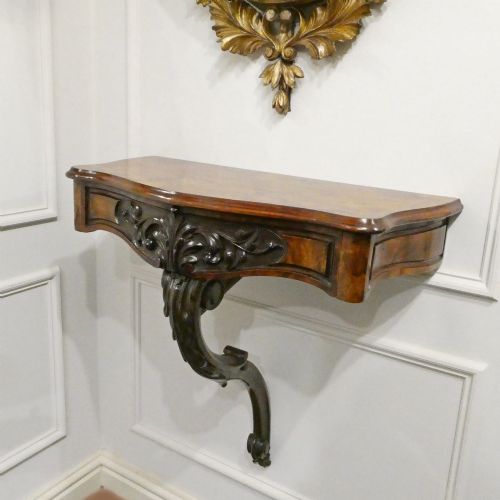
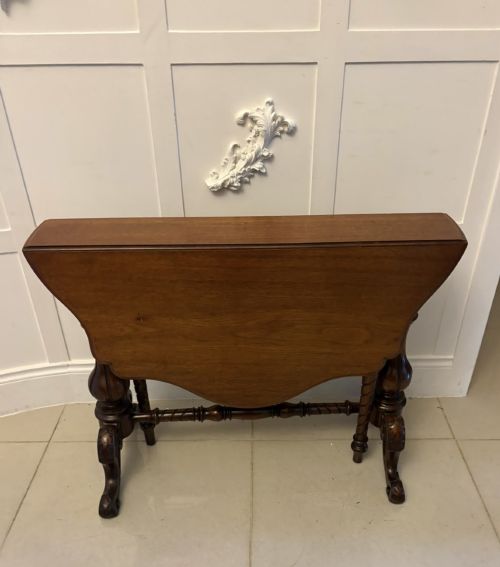
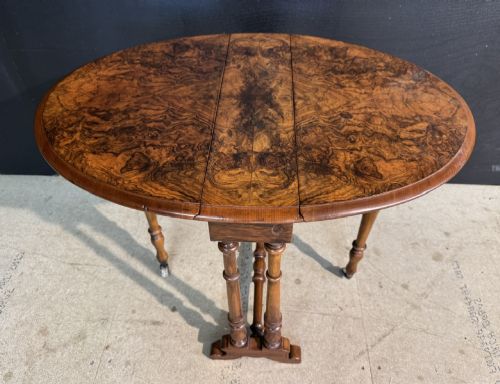
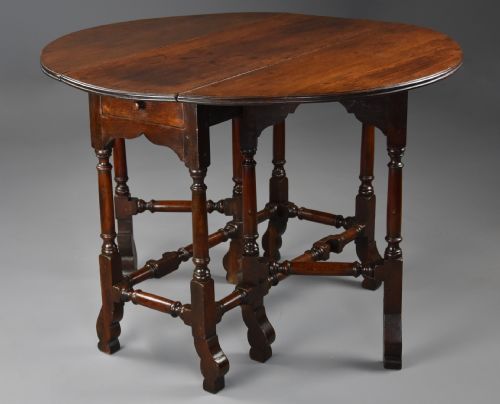
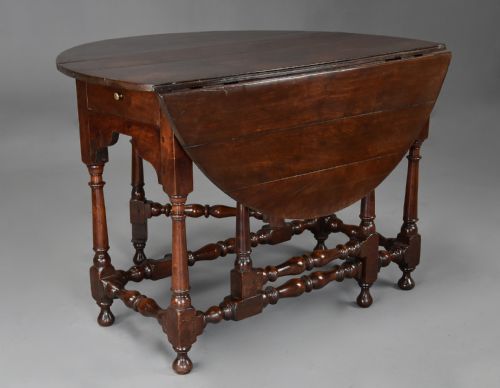
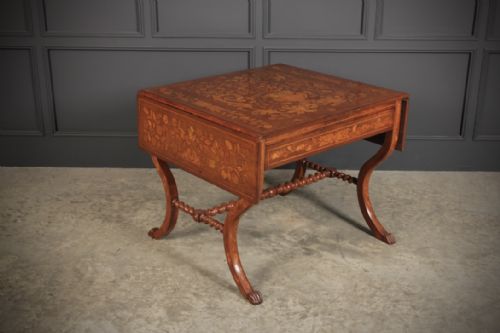
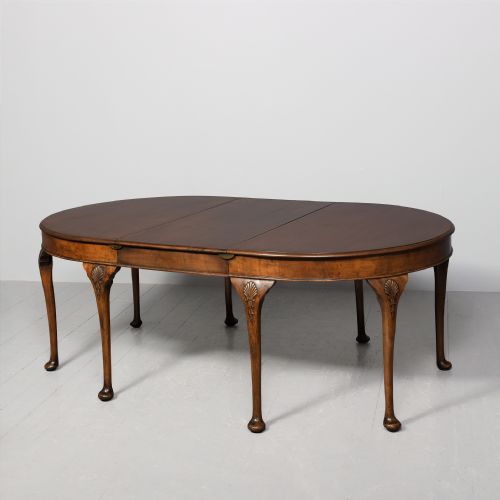
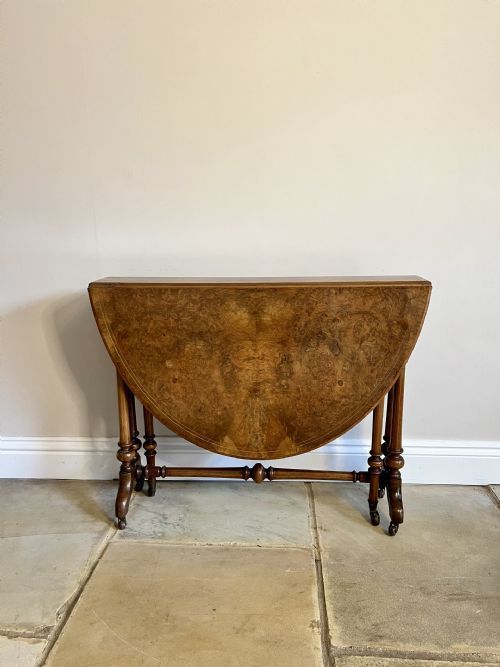
A walnut leaf table is a versatile surface designed with drop leaves, gatelegs, or folding flaps to expand when needed and tuck away tightly when space is tight. These pieces range from early gateleg forms to Victorian Sutherland tables and sofa tables.
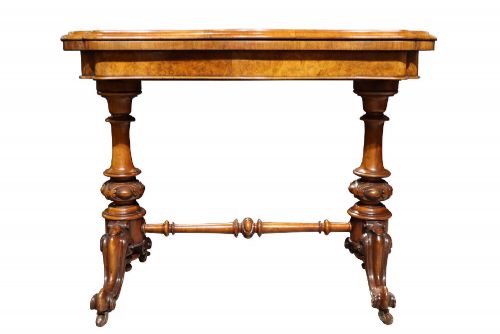
The selections here span centuries, reaching from seventeenth-century origins through Georgian and Victorian revivals up to the Art Deco period. Buyers will frequently encounter Victorian burr walnut Sutherland tables alongside earlier gateleg designs.
Makers utilised various formats including occasional tables, card tables, and dining tables to suit parlours and dining rooms. The timber grain remains the constant visual anchor across every era represented.
Materials and Construction
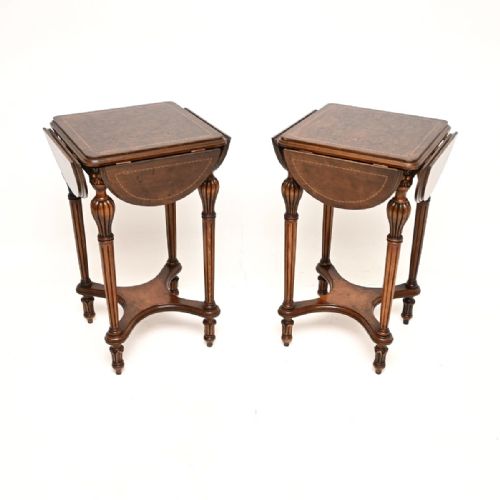
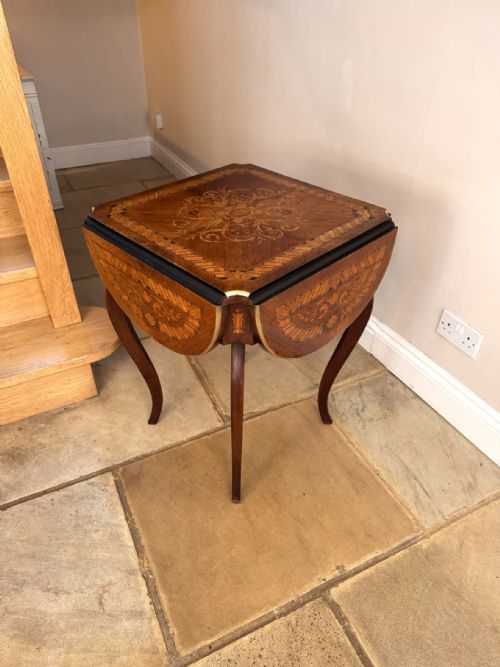
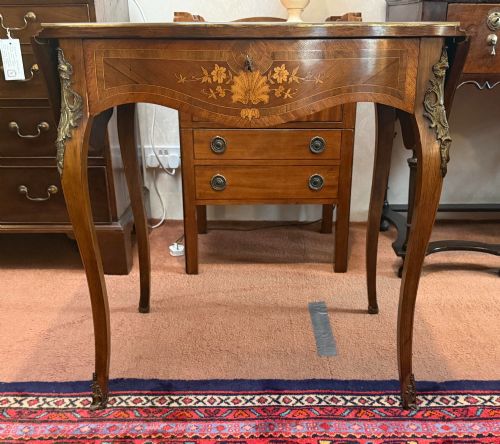
Cabinet makers relied heavily on solid walnut and burr walnut veneer, often mounting the rich veneers over secondary timbers like oak or mahogany. Marquetry inlay and parquetry added intricate geometric or floral patterns to tabletops.
Makers incorporated brass hinges and fittings to support folding leaves, drop flaps, and swing legs on pembroke and gateleg formats. Carved supports and turned wooden gatelegs provided structural stability for expanding leaves.
Walnut Leaf Table Retail Price Guide 2026
Typical asking prices for walnut leaf table among the pieces listed under this phrase on Sellingantiques today, from the lower quarter to the upper quarter. They describe what is for sale here now, not the wider market.
Listings feature walnut leaf tables across multiple eras, ranging from late seventeenth-century gateleg forms to Art Deco designs.
Judging Quality and Execution
The distinction between tiers rests upon the choice of timber and the precision of the cabinet work. Selected burr walnut displays deep, swirling grain patterns that demand expert book-matching across table leaves.
Superior execution shows in the crispness of marquetry inlay, the tight alignment of drop leaves when opened, and the smoothness of gateleg action. Finer examples maintain an original patina that highlights the natural warmth of the walnut.
Gillow
The Walnut Leaf Table Glossary
- Drop Leaf Table
- A table with hinged flaps on the sides that fold down to save space or lift up to enlarge the surface area. These leaves are typically supported by swing legs or brackets.
- Gateleg Table
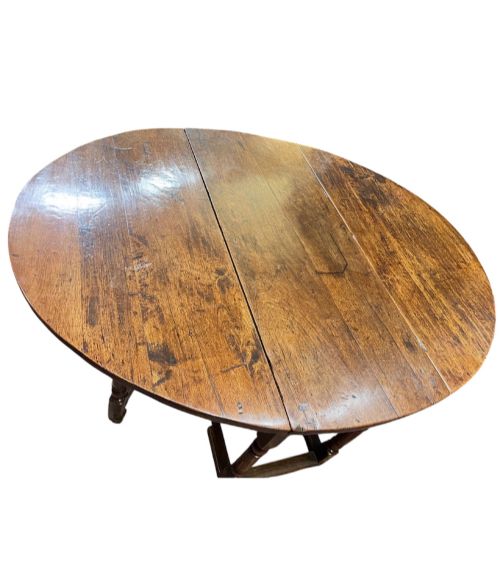
- A table featuring hinged legs that swing outward like a gate to support folding leaves on either side. This form dates back to the seventeenth century and earlier.
- Sutherland Table
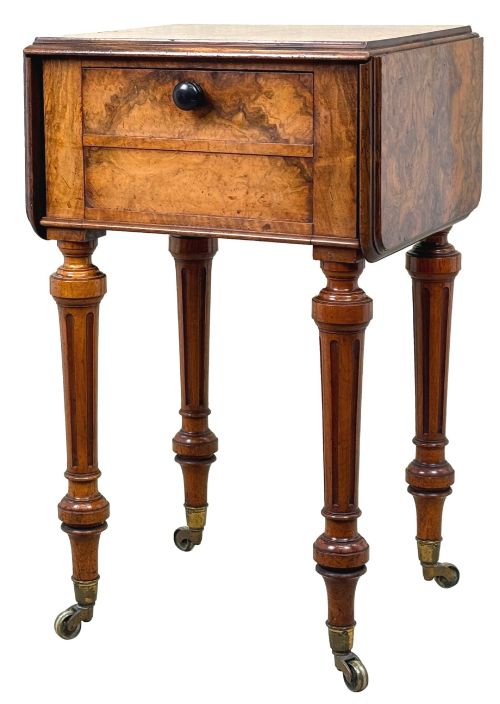
- A narrow table with exceptionally slender drop leaves that fold down almost vertically. Victorian makers produced many examples in burr walnut.
- Burr Walnut
- Wood taken from a walnut tree growth where the grain has grown in a deformed, swirling manner. It yields highly decorative veneers highly prized by cabinet makers.
- Marquetry Inlay
- The art of applying small pieces of veneer to a structure to form decorative patterns. Craftsmen utilised various woods to create floral or geometric designs.
Walnut Leaf Table: Frequently Asked Questions
How do I use a walnut leaf table in a small room?
Keep the drop leaves folded down against the sides to use the piece as a compact console, side table, or lamp stand. Lift the leaves and swing out the supporting legs whenever you need extra surface space for dining or writing.
The flexible design allows the furniture to adapt immediately to changing room layouts. Placing the table against a wall saves floor area while keeping the decorative grain visible.
What is the difference between a Sutherland table and a gateleg table?
A Sutherland table is a specific, narrower type of drop leaf table featuring very slender legs and leaves that drop almost completely vertical. Traditional gateleg tables generally have sturdier turned frames and date from earlier centuries.
Gateleg tables often serve as primary dining or centre tables. Sutherland tables function better as occasional pieces beside seating.
How do I care for antique walnut furniture?
Protect the polished wooden surface by avoiding direct sunlight and placing coasters under hot or wet items. Dust regularly with a dry cloth and apply quality wax periodically to preserve the finish.
Consistent indoor humidity prevents the timber and veneer from splitting or warping over time. Gentle maintenance preserves the historic patina and grain depth.
How can I tell an 18th century walnut table from a Victorian revival piece?
Early pieces from the seventeenth and eighteenth centuries often display solid walnut construction, simpler gateleg mechanics, and hand-cut joinery marks. Victorian and later revival pieces frequently employ burr walnut veneers, machine-sawn elements, and complex folding leaf mechanisms.
Examining the underside and interior timbers reveals the construction methods characteristic of different periods. Hardware style also helps distinguish early originals from later revivals.