




Walnut Inlay Jewellery Box
A walnut inlay jewellery box brings tactile warmth and intricate detail to a dressing table, offering a secure home for keepsakes.
Walnut Inlay Jewellery Box
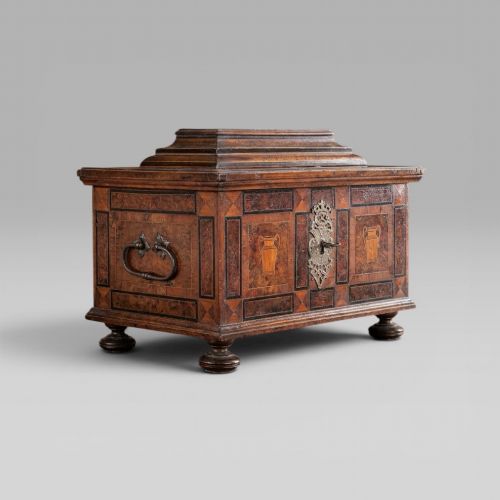
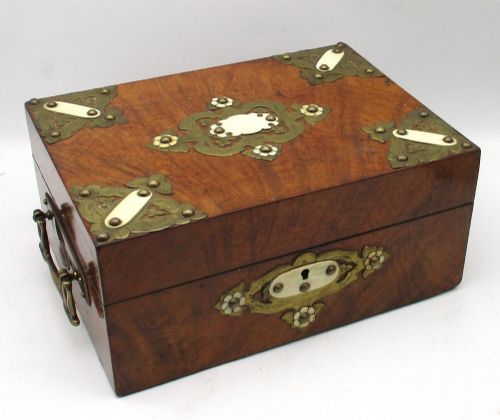
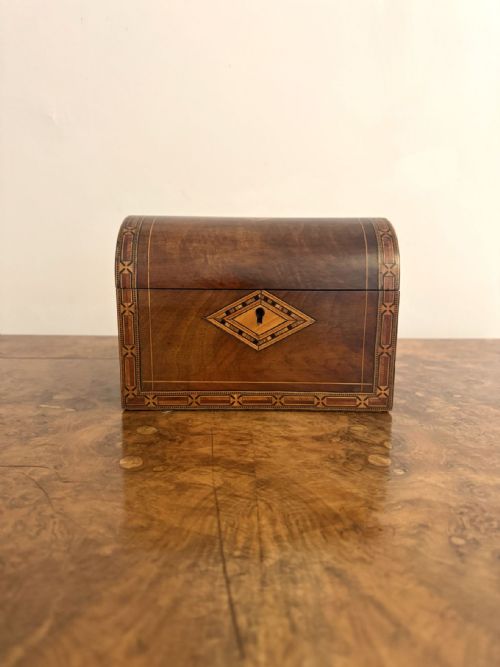
A walnut inlay jewellery box encompasses a range of lidded caskets, work boxes, and dressing chests produced across the nineteenth century and earlier. The surviving pieces lean heavily toward the Victorian era, utilising figured woods and contrasting decorative bands to catch the eye.
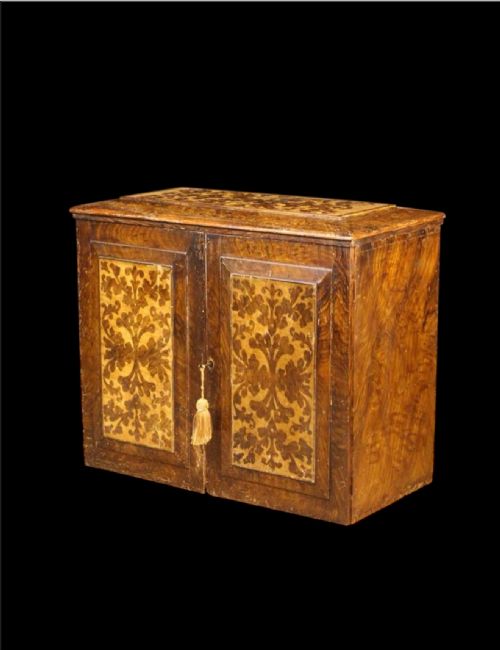
Most examples function as compartmentalised caskets designed to hold rings, trinkets, and correspondence, often featuring fitted interiors with mirrors or lift-out trays. Alongside standard jewellery boxes, the selection includes tea caddies, parquetry keepsake boxes, and small table cabinets sharing similar construction methods.
How they were made
The primary carcase relies on walnut, frequently utilised in its highly figured burr form to provide dramatic grain movement across the lid and panels. Makers enhanced these surfaces with contrasting woods and materials such as boxwood, fruitwood, rosewood, ebony, bone, and mother-of-pearl.
Intricate geometric patterns, floral motifs, and banded borders take shape through specialised techniques like parquetry, marquetry, and Tunbridge inlay. Brass hinges, escutcheons, and locks complete the construction, securing the lidded compartments and folding sections.
Listings span multiple centuries, uniting 17th-century continental caskets with Victorian work boxes and later Art Deco pieces.
What varies in quality
The distinction between standard boxes and the finest examples rests on the ambition of the surface decoration and the precision of the joinery. Complex pictorial marquetry, multi-wood Tunbridge mosaics, and elaborate mother-of-pearl or bone embellishments elevate a piece far above simple banded borders.
Internal fitting further separates the tiers of production, with superior items offering comprehensive velvet linings, fitted mirrors, secret drawers, and substantial brass hardware that remains sturdy through generations of lifting and closing.
The Walnut Inlay Jewellery Box Glossary
- Burr walnut
- A distinctive wood veneer taken from the knotted growths of walnut trees, prized for its swirling, organic patterns. It forms the primary decorative surface on many nineteenth-century boxes.
- Tunbridge ware
- A specialised form of woodworking originating in Kent, featuring tiny mosaic tiles made from different coloured woods to form pictorial or geometric designs. These geometric patterns adorn the lids of various Victorian trinket boxes.
- Marquetry
- The art of applying thin veneers of various woods to a structural carcase to create decorative pictures or abstract patterns. It appears frequently on Italian and English caskets.
- Parquetry
- A geometric mosaic of wood pieces used for floorings and box lids, creating sharp patterns like cubes or chequers. It provides a crisp border or central field on keepsake boxes.
Walnut Inlay Jewellery Box: Frequently Asked Questions
How do I date a walnut box?
Dating relies heavily on construction techniques, secondary woods, and decorative styles such as Victorian marquetry or Art Deco forms. Hardware like cast brass escutcheons and handmade screws also offer strong clues to the decade of manufacture.
Examining the interior paper linings, mirror frames, and locking mechanisms helps narrow the period further, as manufacturing standards shifted noticeably between the Georgian era and the late nineteenth century.
Are these boxes suitable for daily use?
These boxes function well for storing rings, modern jewellery, and small keepsakes, provided they are handled with care. The internal compartments and velvet trays protect delicate items from scratching.
Heavy daily use requires gentle treatment of historic hinges, delicate inlays, and old locking mechanisms to prevent unnecessary wear on the timber.
What is Tunbridge inlay?
Tunbridge inlay involves assembling thousands of tiny polygon-shaped wooden strips to form detailed mosaic images, particularly floral scenes or geometric borders. Craftsmen then sliced this block into thin veneers for application onto box lids.
This meticulous technique creates a colourful, tapestry-like surface that remains exceptionally smooth to the touch despite the multitude of individual wood species used.
How should I clean the wood surface?
Maintenance requires only a soft, dry cloth to remove dust from the intricate inlaid surfaces and carved walnut mouldings. Avoid modern chemical polishes, which can build up on the grain and damage fragile historic finishes.
Applying a microcrystalline wax occasionally helps protect the timber and maintain the soft lustre of the antique polish without harming delicate bone or metal details.