


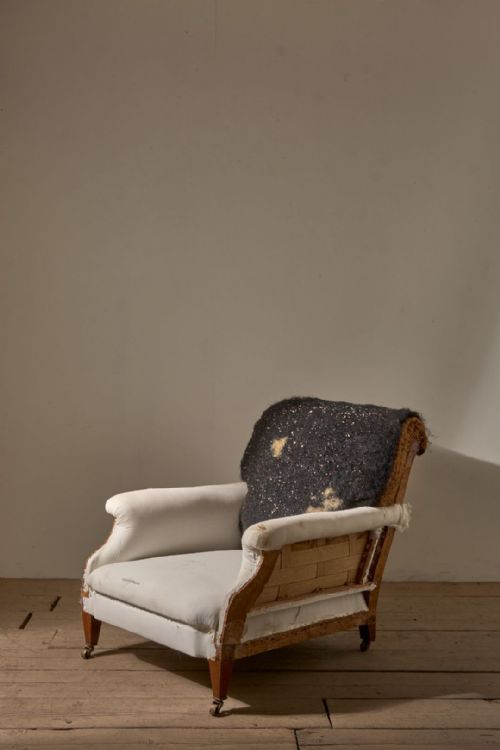
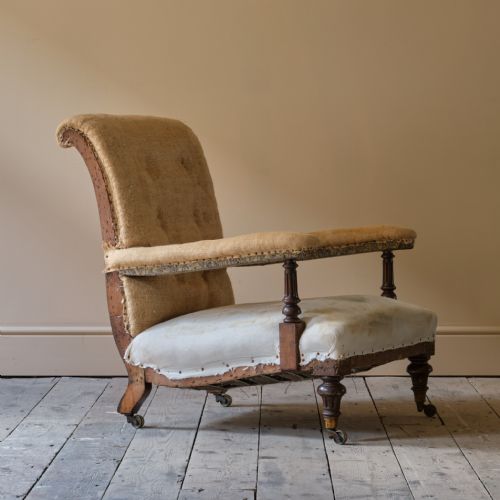
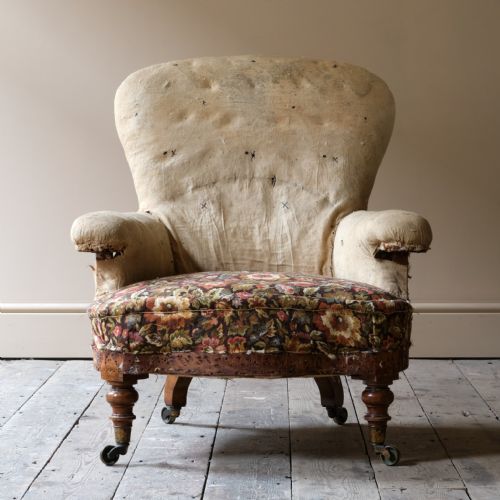


Walnut Howard Armchair
A walnut howard armchair brings deep country house comfort and exceptional English upholstery traditions into a room.
Walnut Howard Armchair
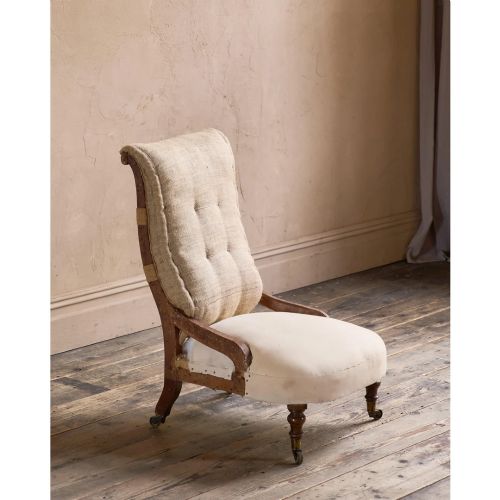
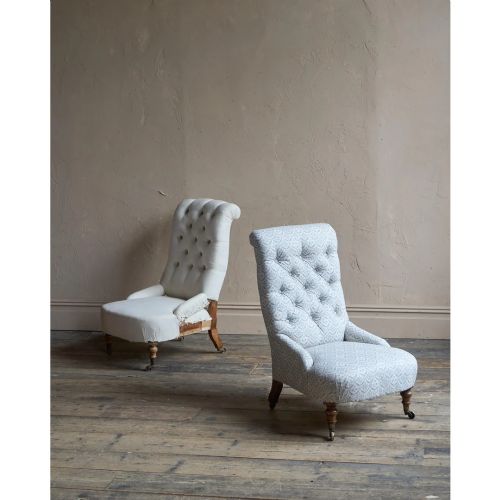
When you search for a walnut howard armchair, you encounter seating designed for relaxed Victorian and Edwardian domestic spaces. These pieces span the nineteenth and early twentieth centuries, appearing in forms such as open armchairs, tub chairs, and low bedroom chairs.
The pieces on this page divide broadly into two categories: genuine makers' works bearing traditional stamps, and later or contemporaneous pieces created in the distinct style associated with that workshop. English country house aesthetic defines both groups, balancing generous proportions with understated structural elegance.
Materials and Construction
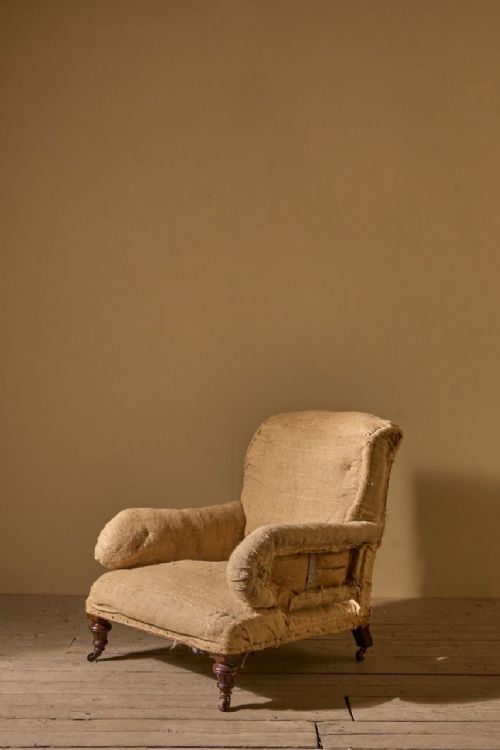
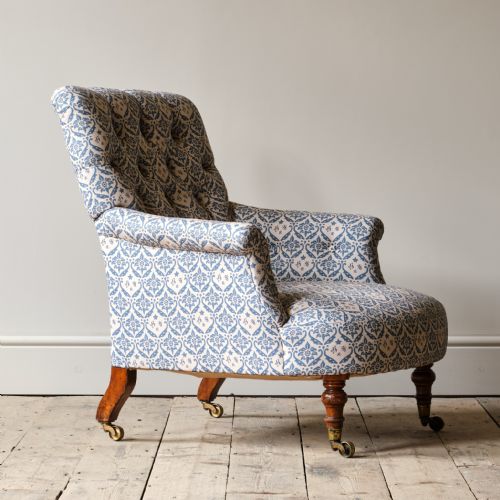
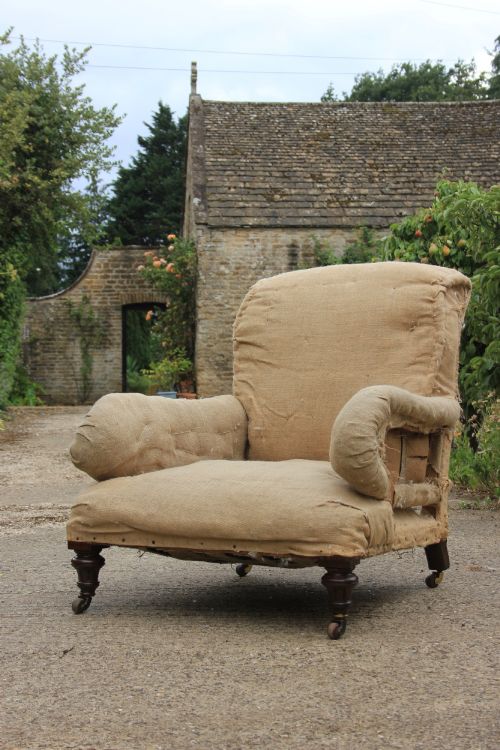
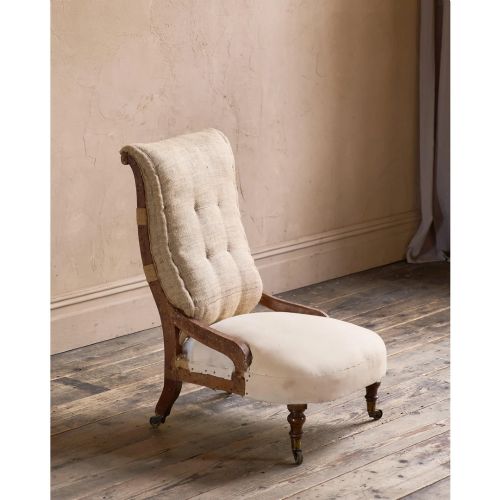
Makers built the frames of these armchairs using hardwood and walnut, turning the wood for legs and supports while concealing internal bracing beneath layers of hessian, calico, and cotton. Brass castors frequently finish the feet, allowing these heavy chairs to move smoothly across carpets and floors.
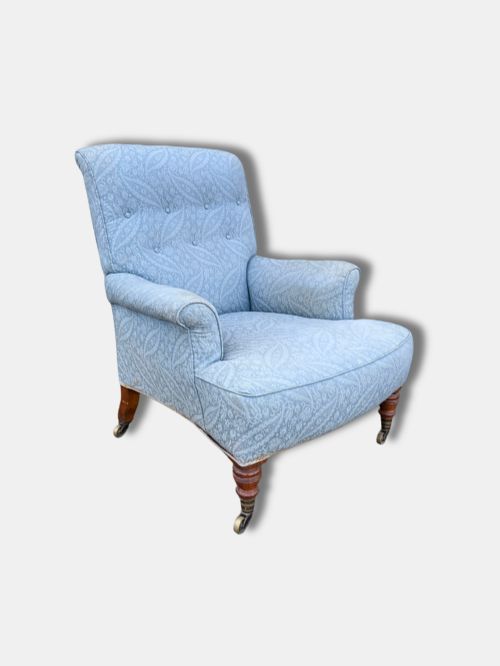
Traditional upholstery techniques provide the characteristic depth and resilience of the seat. Layers of stuffing sit above coil springs, and finishing fabrics range from plain ticking to printed cottons, velvet, and kilim.
Walnut Howard Armchair Retail Price Guide 2026
Typical asking prices for walnut howard armchair among the pieces listed under this phrase on Sellingantiques today, from the lower quarter to the upper quarter. They describe what is for sale here now, not the wider market.
Listings feature walnut frames paired with brass, hessian, and traditional ticking across the nineteenth and early twentieth centuries.
Distinctions in Standard
The integrity of the underlying walnut frame and the retention of original maker's stamps separate standard examples from notable ones. Frames that retain their original timber components without excessive repair hold greater authority.
The subtlety of the turning on the legs and the quality of the internal springing contribute to the overall execution. Pieces retaining early or original textile coverings demonstrate the original maker's intended proportion and finish.
Howard and Sons·SF Cullen
The Walnut Howard Armchair Glossary
- Ticking
- A tightly woven cotton fabric traditionally used as a durable base or outer covering for upholstered furniture. It appears frequently on pieces associated with nineteenth-century workshops.
- Bridgwater
- A specific model of armchair characterised by low arms and deep seating proportions. It represents a recognised form within nineteenth-century seating design.
- Hessian
- A coarse woven fabric made from jute plant fibres, utilised inside the chair structure to contain stuffing materials. It forms a foundational layer beneath outer upholstery.
- Castor
- A small wheel mounted on a swivel attached to the foot of the chair leg. Brass versions allow movement while protecting floor surfaces.
- Grafton
- A named model designation seen in nineteenth-century armchair production. This term identifies a specific proportion and arm shape within the maker's repertoire.
Walnut Howard Armchair: Frequently Asked Questions
How do I identify a genuine maker?
Authentic pieces often carry legible paper labels, stamps on the legs, or numbers marked directly onto the wooden frame.
Examining these structural markings helps distinguish pieces produced in the principal workshops from contemporaneous interpretations.
What fabrics were originally used?
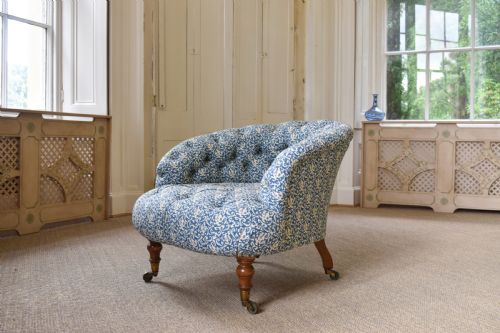
Traditional coverings included heavy ticking, plain cotton calico, velvet, and patterned prints like those associated with William Morris.
Many examples survive in their initial foundation cloth, while others wear later textiles applied during professional restoration.
Where should I place this chair?
These generous seats suit studies, drawing rooms, and bedrooms where deep proportions invite prolonged sitting.
Their restrained walnut legs and low profiles allow them to integrate easily beside fireplaces or within reading corners.
How do I date an armchair?
Dating relies on observing the turning of the walnut legs, the joinery methods of the hardwood frame, and any visible maker's documentation.
Victorian examples often feature heavier proportions, while Edwardian pieces sometimes show slightly lighter structural lines.