


Walnut Headboard and Footboard
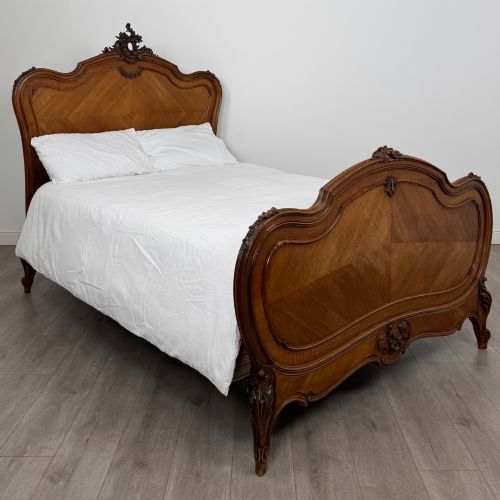
A walnut headboard and footboard anchors a bedroom with rich timber grain, bringing architectural presence and period character to the space.
Walnut Headboard and Footboard
A walnut headboard and footboard comprises the timber ends of a bedstead designed to support mattress frames while defining the aesthetic of the sleeping chamber. When you search for a walnut headboard and footboard, you encounter complete bed frames rather than detached panels, often configured as double, king size or single beds.
The pieces listed here span the nineteenth century through the 1930s, embracing periods such as the Victorian era, the Edwardian period, and the Art Deco movement. You will frequently find French regional variants alongside English examples, reflecting diverse continental design traditions.
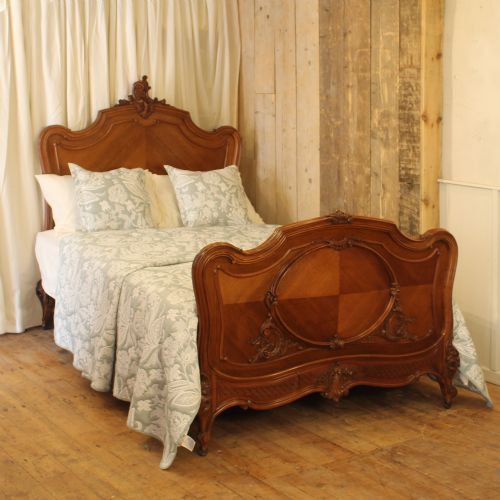
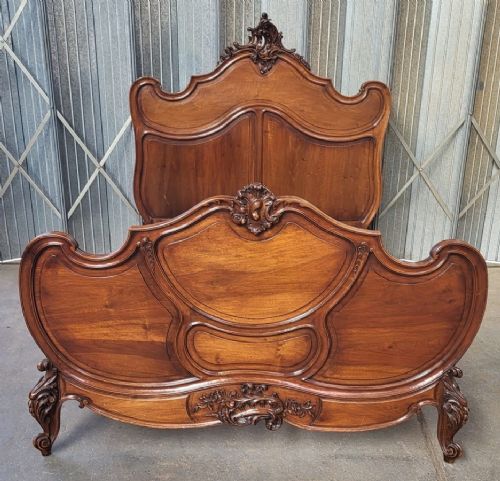
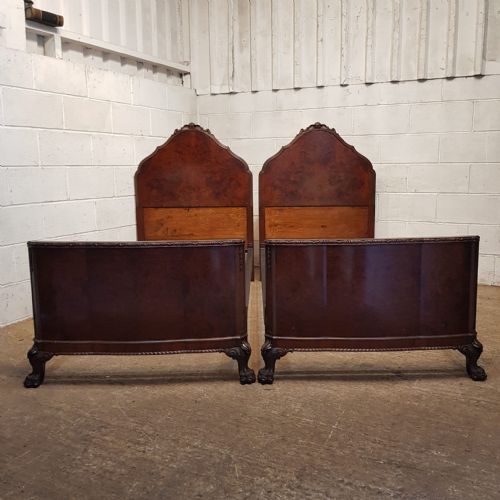
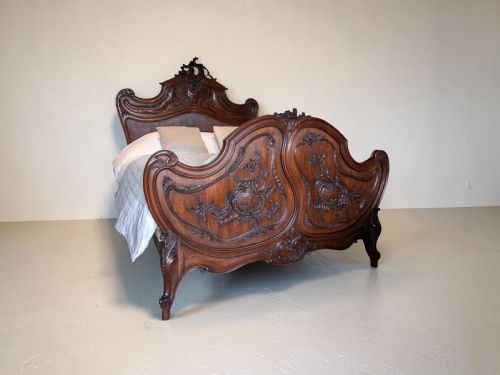
Formats range from curvaceous Art Deco creations to carved French Louis XV styles and geometric Edwardian pieces. These items serve as functional sleeping furniture while operating as the primary focal point of a period bedroom.
Materials and construction
Cabinet makers utilised solid walnut, walnut veneer, and highly figured burr walnut across these frames, often highlighting the natural swirls and patterns of the timber. Selected pieces incorporate contrasting veneers such as satinwood, alongside parcel gilt detailing or marble elements on associated bedside cabinets.
Construction techniques combined traditional joinery with decorative carving, particularly in French Rococo Revival and Louis XV style pieces where moulded contours define the wood. Art Deco frames rely on streamlined curves and symmetrical veneer layouts rather than heavy carving to create visual impact.
The listings here feature walnut headboards and footboards spanning from Victorian and Edwardian eras through to 1930s Art Deco designs.
Markers of distinction
Quality in these bedframes rests upon the selection and matching of the timber veneer, where book-matched burr walnut creates a harmonious, symmetrical pattern across the expanses of wood. The depth and crispness of hand-carved details further separate standard production pieces from finer workshop outputs.
Proportion and structural integrity dictate the standing of a piece, with superior examples maintaining balanced lines and robust joinery that withstands modern mattress sizing. The integration of complementary materials, such as contrasting satinwood inlay or original parcel gilding, elevates the sophistication of the design.
Waring & Gillow England
The Walnut Headboard and Footboard Glossary
- Burr walnut
- A type of wood veneer taken from the warted growth on a walnut tree, prized for its swirling, highly ornamental grain patterns. It creates a rich, textured surface across large panels of headboards.
- Louis XV style
- A revival design characterised by asymmetrical curves, cabriole lines, and naturalistic floral carvings, popular in French furniture. This aesthetic gives many nineteenth-century bedframes their characteristic flowing silhouette.
- Art Deco
- A design style from the 1930s featuring geometric symmetry, streamlined curves, and polished wood surfaces. Pieces from this era often showcase figured walnut without heavy carving.
- Veneer
- A thin layer of superior timber applied over a secondary wood base to provide a decorative surface. Walnut veneer allows makers to display striking grain patterns economically.
- Bedstead
- A framework of a bed consisting of head and footboards connected by side rails. This term encompasses the complete structural assembly rather than just the mattress support.
Walnut Headboard and Footboard: Frequently Asked Questions
Will these fit modern mattresses?
Many antique bed frames conform to standard sizing such as double and king size, though older French dimensions can occasionally vary slightly from contemporary UK measurements. It is wise to check the internal width and length specifications of the frame before purchasing a mattress.
Custom mattress makers can also supply bespoke dimensions if the historic side rails require a non-standard width. This ensures historic frames remain entirely practical for daily use.
How do I care for walnut wood?
Walnut benefits from occasional polishing with traditional beeswax to nourish the timber and maintain a soft lustre. Keep the wood away from direct heat sources and strong sunlight to prevent the veneer from drying or fading over time.
Dusting regularly with a soft, dry cloth preserves the finish without damaging the delicate grain patterns. Avoid silicone-based polishes which can build up on antique surfaces.
How do I identify Art Deco beds?
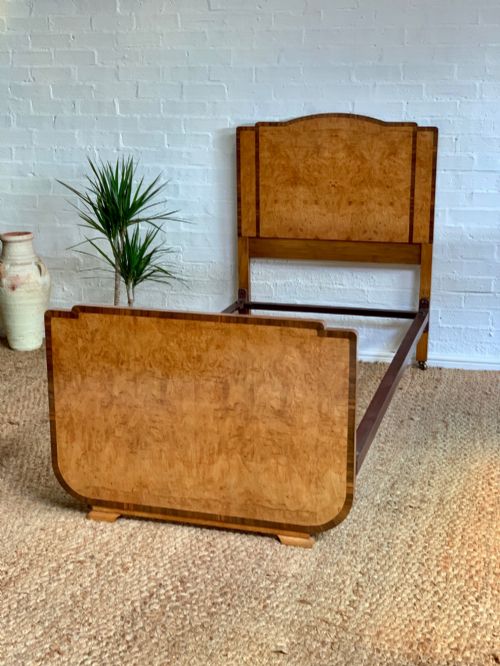
Art Deco bed frames typically date from the 1930s and are defined by smooth, curvaceous lines and symmetrical figured walnut veneers. They generally lack the heavy ornamentation or historical revival motifs found in Victorian and Edwardian furniture.
Instead, their visual appeal relies on the natural geometry of the wood grain and streamlined silhouettes. This makes them distinct additions to contemporary or period interiors alike.
Are side rails included with frames?
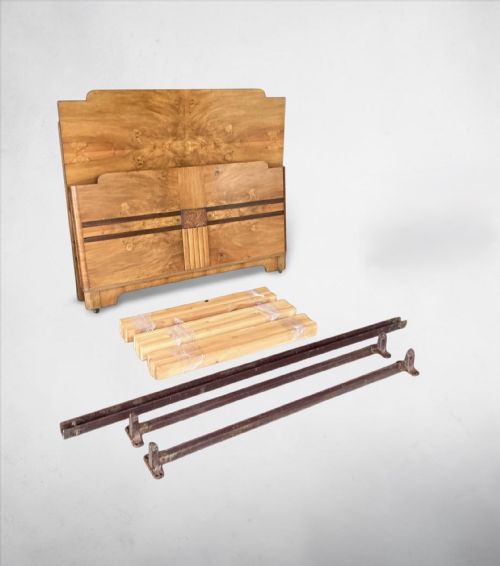
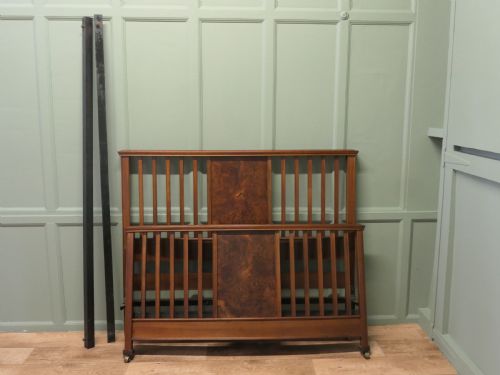
Most listings for antique bed frames include the matching headboard, footboard, and original or replacement side rails necessary for assembly. These components lock together to form a complete bedstead ready for a slat system or base.
Confirming the presence of side rails ensures the structure can support a modern mattress foundation. Dealers specify the complete configuration within the description.