
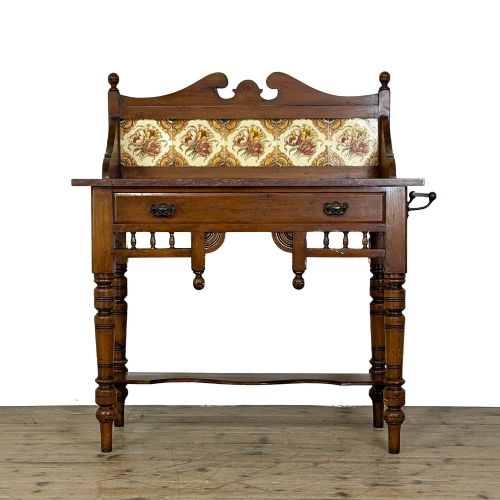
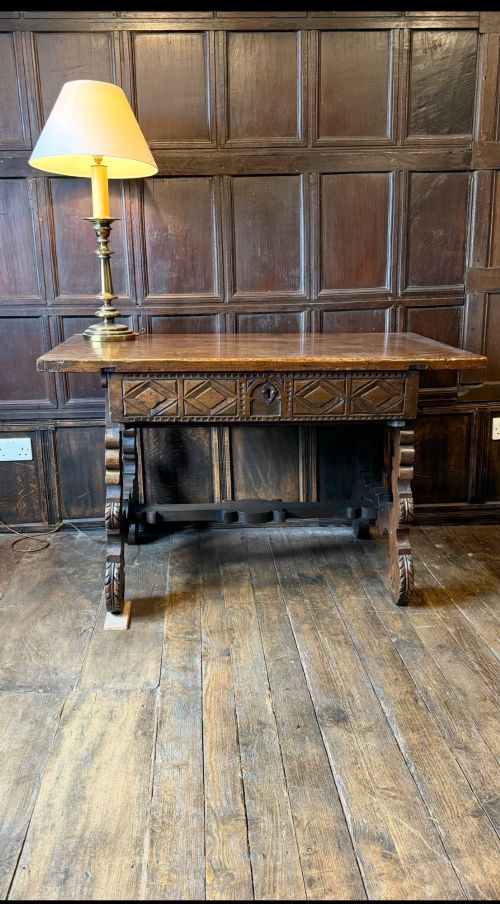
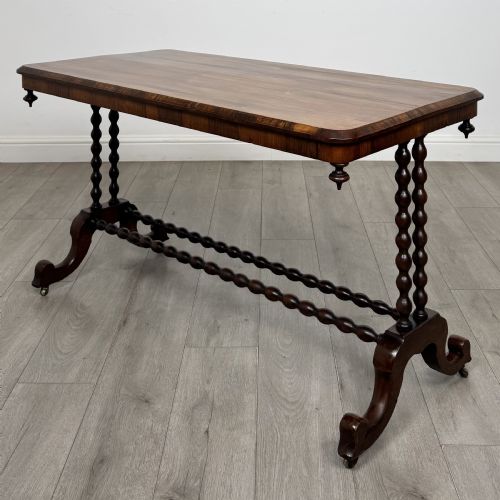
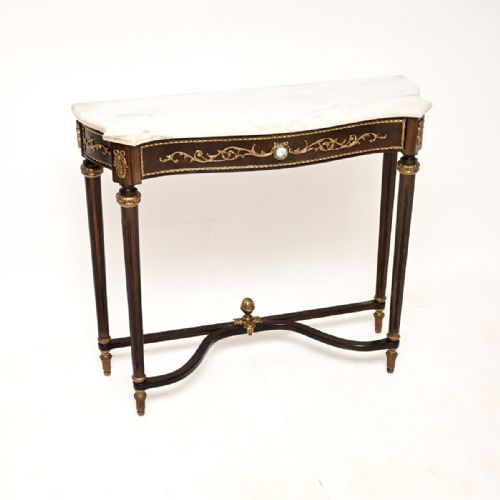
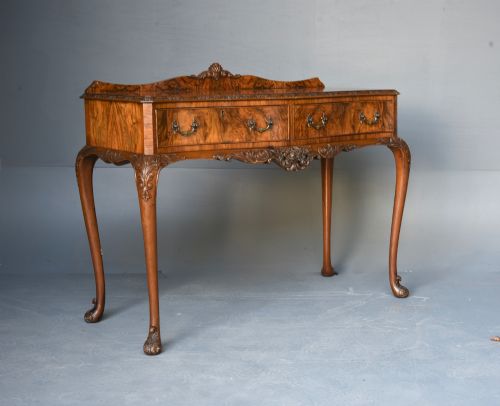
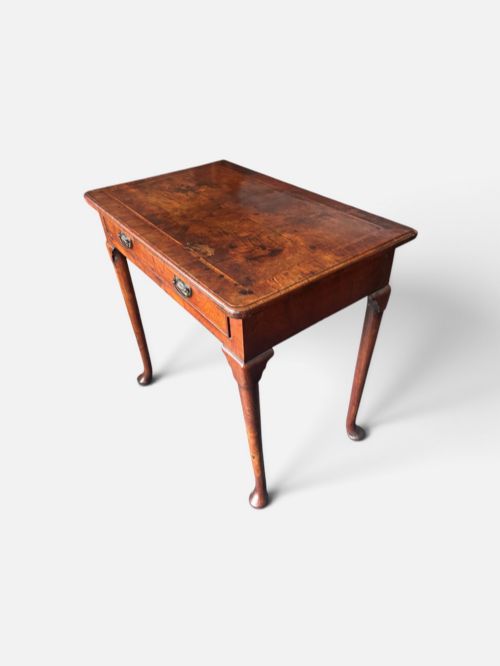
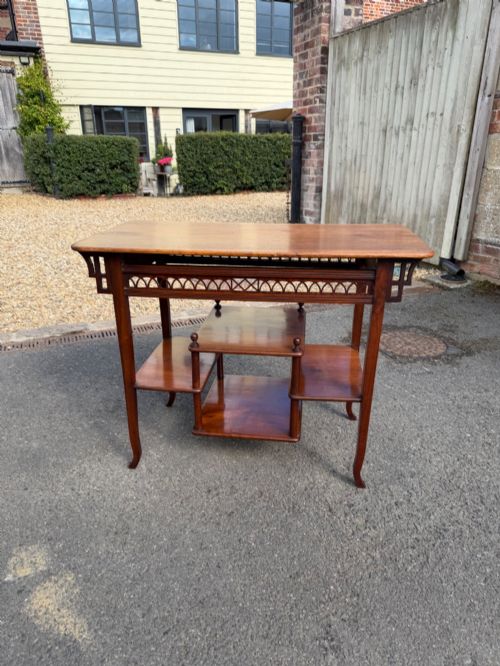
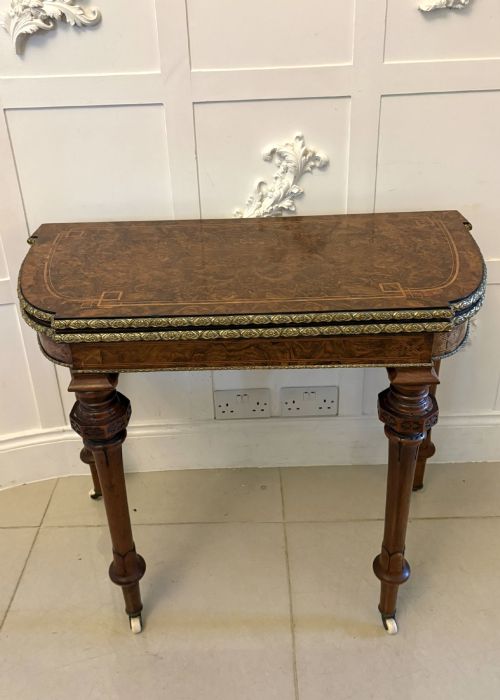
Walnut Hall Console Table
A walnut hall console table brings rich timber grain and narrow proportions into an entranceway, offering a practical surface for post and keys.
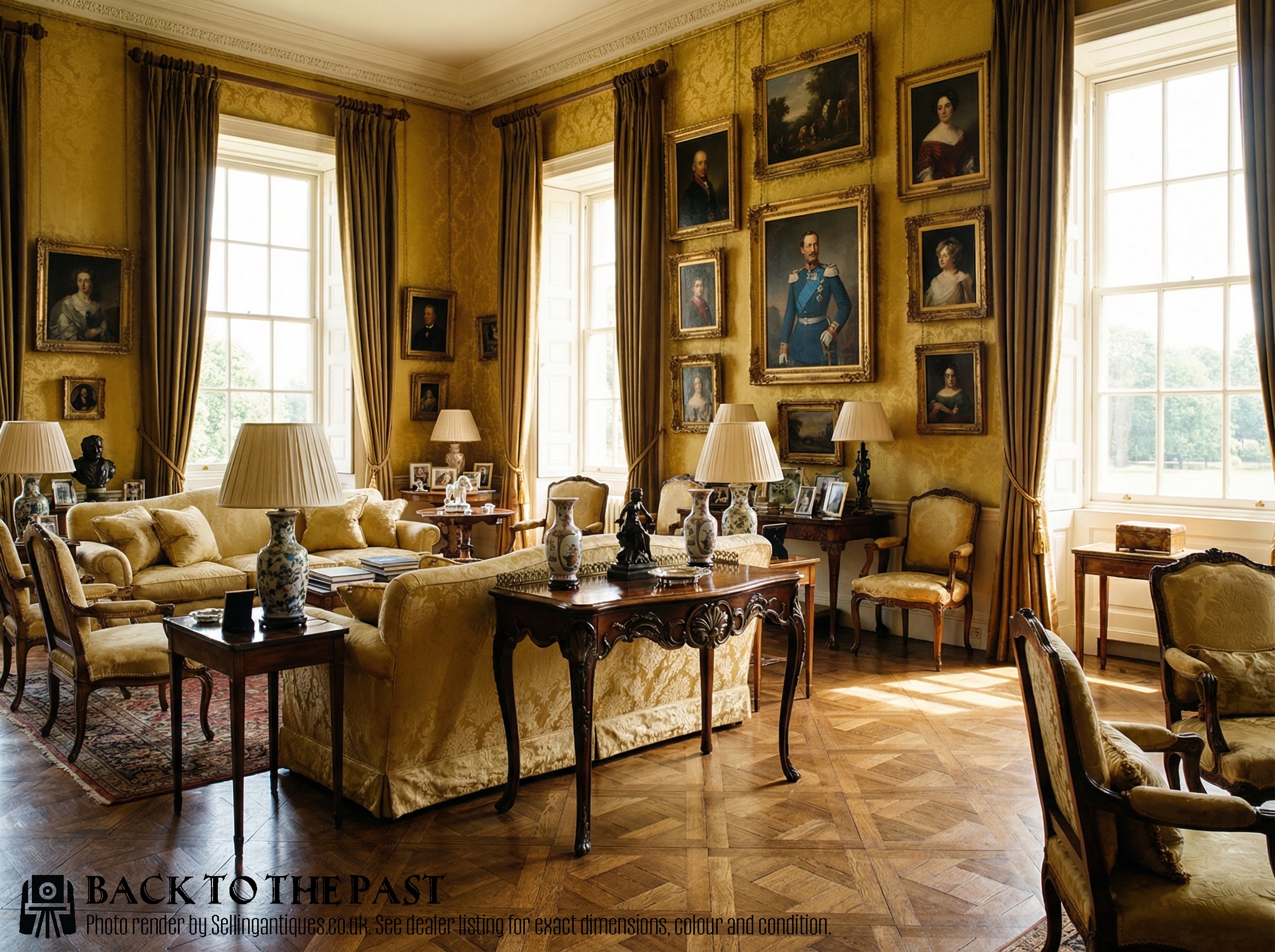
Walnut Hall Console Table
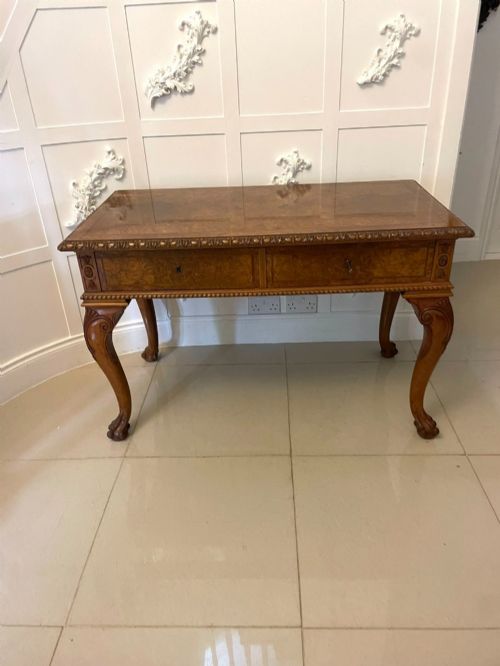
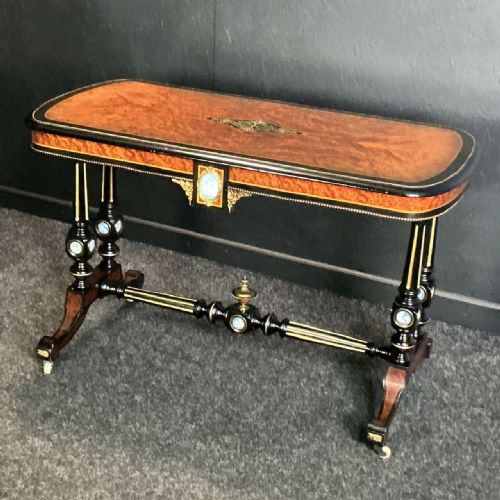
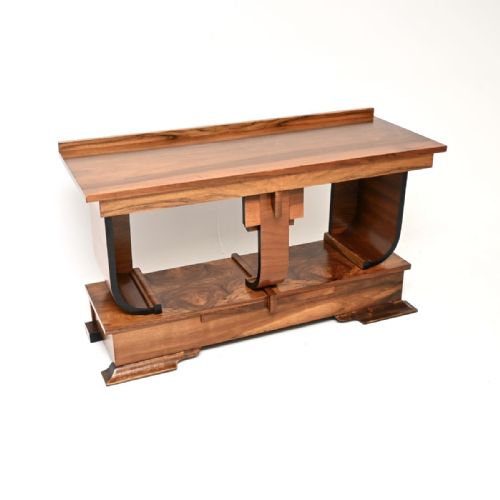
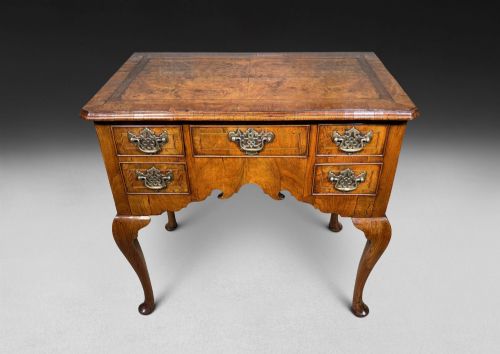
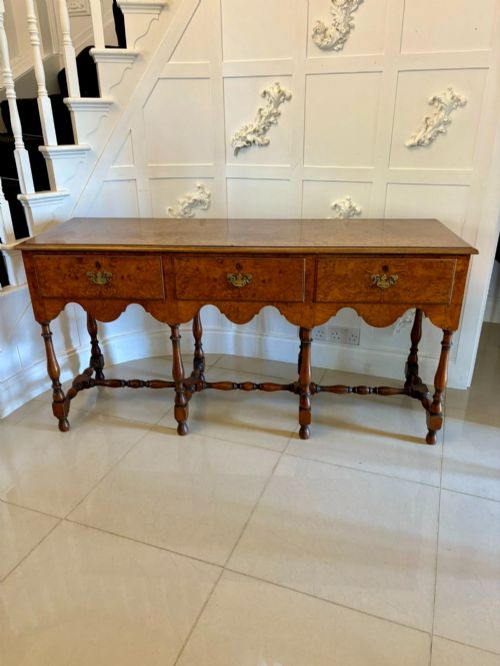
A walnut hall console table serves as a slim, decorative furniture piece positioned against an entryway wall. These tables span several centuries of design, covering formal Georgian lowboys, ornate Victorian pieces with ormolu mounts, and clean-lined Art Deco interpretations.
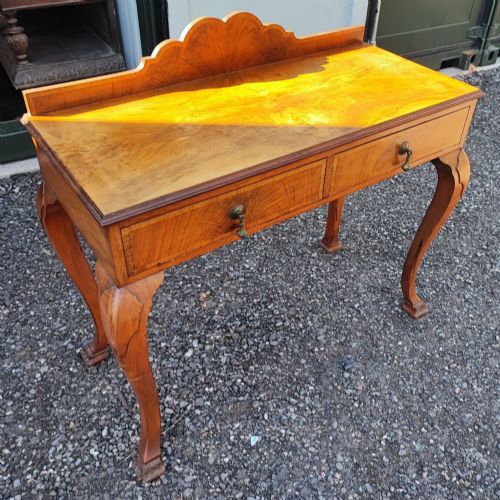
The selection ranges from traditional 18th-century forms to 20th-century revivals styled after Queen Anne or George II periods. Many examples utilise figured veneers and demi-lune shapes designed specifically to fit narrow domestic hallways.
Materials and construction methods
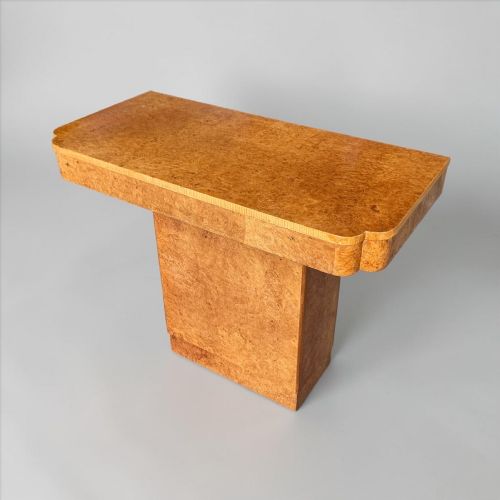
Cabinet makers utilised solid walnut alongside decorative burr walnut veneers to create rich grain patterns across the tabletops. Secondary timbers like pine often form the internal drawer linings and structural carcases beneath the polished surface.
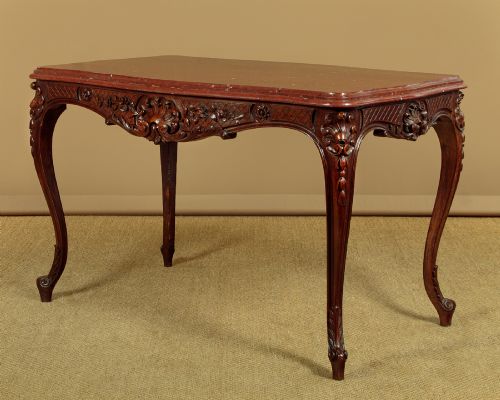
Higher-status examples incorporate brass hardware, ormolu mounts, marquetry inlay, and carved details such as cabriole legs. Marble tops also appear on continental European pieces, adding weight and a cool stone surface to the wooden frames.
Some antique tables feature hidden drawers cunningly built into the frieze, perfect for storing secret love letters or modern car keys.
Assessing quality and craftsmanship
The standard of a walnut hall console table rests upon the choice of timber and the precision of the veneer work. Book-matched burr walnut grain flowing symmetrically across a top indicates superior cabinet making.
Structural integrity, crispness of carved wooden details, and original brass or bronze mounts differentiate ordinary production pieces from exceptional examples. The depth of the hand-finished polish also influences the visual richness of the timber figure.
Hille·Maple and Co.·Gillows·Liberty and Co
The Walnut Hall Console Table Glossary
- Burr walnut
- A figured wood grain obtained from tree growths, producing swirling patterns highly prized in cabinet making. It is typically sliced into thin veneers for tabletops.
- Lowboy
- A small traditional table with drawers, commonly standing on four legs, which frequently serves as a side table or hall console. This form dates back to the 18th century.
- Ormolu
- Gilded bronze mounts applied to furniture for decorative effect. These metal ornaments appear frequently on Victorian and continental console tables.
- Demi-lune
- A half-moon shape used for tables designed to sit flat against a hallway wall. This curved form saves floor space in narrow entrances.
- Marquetry
- Decorative patterns formed by inserting pieces of contrasting veneer into a wood surface. This technique decorates formal tops of the Georgian and later periods.
Walnut Hall Console Table: Frequently Asked Questions
Where should I place a walnut hall console table?
These narrow tables suit entrance halls, corridors, and landings where floor space is limited. Their shallow depth allows them to sit flat against a wall without obstructing passageways.
Positioning one near an entrance provides a convenient surface for everyday items while introducing timber warmth to the threshold of a home.
How do I care for a polished walnut surface?
Keep wooden furniture away from direct sunlight and strong heat sources to prevent the burr walnut veneer from drying out or splitting. Dust regularly with a dry cloth and apply occasional wax polish to maintain the sheen.
Avoid placing wet items directly onto the unsealed wood or marble surfaces. Using coasters and mats preserves the historic finish.
What is the difference between a console table and a side table?
Console tables traditionally stood against a wall, sometimes supported by front legs with the rear fixed to the wall structure. Side tables are fully freestanding pieces finished on all sides.
Many hall tables combine these functions today, featuring four sturdy legs while retaining the narrow proportions required for corridors.
How can I tell a Georgian console table from a later revival piece?
Georgian tables exhibit authentic period construction methods, hand-cut joinery, and natural timber ageing consistent with the 18th century. Revival pieces made during the Edwardian era or the 1920s often use machine-cut elements while copying earlier Queen Anne or George II styles.
Examining the secondary timbers underneath and the wear patterns on the feet helps determine the true age of the piece.